Tech Controller to Flyer to Professor of Project Management
Disclaimer: The views expressed by the hosts and guests on this show are their own. They don't represent any branch of service, employer, or organization they're affiliated with.
Listen
Chapters
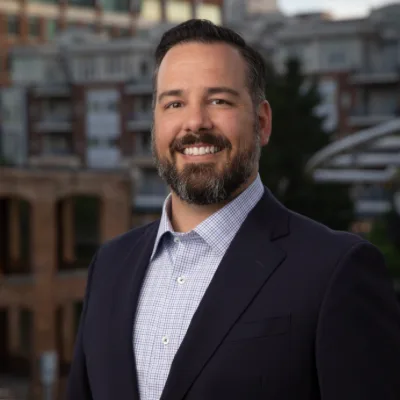
Dr. Michael J. ShickMSPMPMP®
Twenty-one years in the Air Force, from enlisted tech controller in the late '90s to combat systems officer in electronic warfare and navigation. Retired out of the Pentagon leading the Invisible Wounds initiative. Now assistant professor and assistant school director at Western Carolina University, with a project management master's from George Washington and a doctorate in business administration. He also runs ROSEMET LLC, a project management company.
Show highlights
- He'd been on the internet exactly once, in his high school library, when the Air Force assigned him to computer networking. He created his first email address in tech school.
- He ran projects for years before he had the word for it. His first exposure to "PMP®" was overhearing lieutenants say it in passing in the comms squadron.
- He chose a project management master's over an MBA on one rule: if he only had to do it once, it had to be the thing that made him useful.
- Whether you serve four years or forty, the ride comes to an end. The only question is whether you started planning before someone else picked the date.
- Forbes put a project coordinator near $72,000 and a PMP® near $120,000. PMI's own Earning Power survey puts the PMP® median at $135,000. A degree doesn't come with a number attached to it.
- Western Carolina, where he now teaches, ran arguably the world's first project management master's, and the PMP® itself was developed on that campus.
Dr. Michael Shick took the ASVAB, scored high on the electrical section, and the Air Force told him he was going to be a tech controller. He asked what that was. This was the late '90s, and he'd been on the internet exactly once, in his high school library. In tech school his classmates talked about users and PCs, and he went to the back of the book to look up the acronyms, except the terms were too basic to be listed. He created his first email address that year. His first duty station had him tracing analog lines through walls to the telephone block in the morning and closing ports on a switch in the afternoon.
The project management was there the whole time, just with nobody's name on it. He was designing network architecture and writing requirements against other people's budgets before he'd heard the letters PMP®, which arrived as something lieutenants said in passing. When it became clear that a master's degree helped an officer get promoted, he applied one rule to the decision: if he only had to do this once, it had to be the thing that made him useful. He picked project management over the MBA, went to George Washington, and came out with a framework for what he'd been doing on instinct. The doctorate came later and came out of the work itself. He'd supported wounded warriors at installation level. By the time he was at NORAD and US Northern Command the ops mission ran in the day and the research ran in the evening: whether feeling supported by your organization changes the work outcomes of people carrying PTSD.
What makes this a good first episode isn't the career history, it's the argument underneath it. Mike left the military twice, once by separation and once by retirement, and both times what saved him was having started early. His line is that whether you do four years or forty, the ride comes to an end, and the only real question is whether you began planning before somebody else picked the date. He's deliberately agnostic about how you do it. CAPM® if you're junior enlisted, PMP® if you've got the three years and want the salary that comes attached, PRINCE2® if you're aiming at the British market, a scrum certification if you're heading for software. He now teaches at Western Carolina University, which ran arguably the first project management master's in the world and hosted the campus where the PMP® itself was developed. He'd rather you got the credential somewhere than got it from him.
Transcript
AI-assisted transcript, lightly edited. May contain errors.
Hey, everyone. Welcome to, what will be the first episode of the Veterans in Project Management show. Excited to be joined by, as always, Dr. Michael Shick. Mike, how's it going?
Stuart, it's a, pleasure to see you, my friend. I'm getting ... I'm e- extremely excited to kick this off with you. we have talked about this for quite some time, and you have the ability to be able to talk about people's experience as they're in the service, and then transitioning out, whether it be through separation, retirement, medical retirement, what have you, into project management f- field is exceptionally exciting.
I remember, you know, the first time that I got out of the military, I separated, for about two years and then went in, and now I'm retired. you know, the challenges were pretty similar. So I'm excited to help- ... those folks be able to, navigate this space as they move on to their, next career.
So thank you for having me. Listen- Thank you for your willingness to jump on board and have this discussion with me and host this show along with me, my friend.
No, I'm excited by it as well. I mean, we've been chatting back and forth for a couple of years, and the commonality of our experience having completely different routes and backgrounds and, you're way more on the, the veteran side than I am, but the project management element was that kind of common language even though we're doing different things now.
The idea of kind of capturing these stories. So let's, let's do a bit of a different episode than the future ones will be, because the future ones are really gonna just focus on people's stories and that separation and transition into project management as a fantastic career path after, military service.
Let's do a quick, slightly different version here. Let's do your journey, and then also let's start briefly with what this show is gonna be. Because I think if we can set the scene for people and really share this idea that everyone comes through their career in a unique way- But everyone gets to the point of having to leave, whether it's through separation or retirement or, intentional retirement or m- medically retired, everyone hits that point, and at that point things change.
And what I'm really excited to share in this series that we're doing with people is what got them to that point, what their experience was, what they realized as they moved forward, and this idea that project management is a very big discipline that covers lots of industries, but that commonality of what we actually do in service sets us up in a very strong way in civilian life, and there's some of those lessons that can be learnt.
So from your perspective, this show that we're doing with people, the people who you've spoken to in the past that kind of led us to this place, what are some of the key things that you're hoping that people take from listening to something called Veterans in Project Management?
Yes. Well, I th- there's a lot to unpack there, with everything that you said, Stewart.
As you know, project management is a vast, has a vast, background in industries and ways to go about it through methodologies and frameworks and, everything in between. Each, each organization could be doing more of that traditional predictive waterfall type of approach, a- but they do it differently.
And then you've got Agile and Scrum. You've got PRINCE2 project,which is Projects In Controlled Environments 2. You know, there, there's just a whole slew in how industries and how organizations leverage it i- is quite, vast. And so through our conversations and looking at the overall footprint, that's kind of our aim,is not necessarily make this about Project Management Institute certifications, which in the United States and Canada, North America,and arguably across the globe is ubiquitous.
It's all over the place. But there are other frameworks that are necessary. And there's people who aren't in, the f- you know, working in industry with a certification, and how are they getting in? what's the impact that they see? How have they been able to formalize themselves? Because the military positions people exceptionally well to, to do projects and program management.
And so just to level the bubbles, if you will what is a project? The project is something that is finite. it has a definite start and definite end. It is complex, interconnected, and unique generally speaking. Now, there's a lot of argument, depending on what circle you're in practitioner circle versus academia, et cetera, that says, "Hey, you know, it, it's gotta be so unique that it's never been done before and the likelihood it's never gonna be done again."
Look, I'm a, I'm a practitioner, I'm an academic. I do research in this area. and, but that said, my- this is my opinion on it, and, you know, we'll let the robust discussion play out how it is. From my perspective, especially in, in coming from a military member, I'd be put in positions where I would, you know, be responsible for a project.
Now, it may not be a new type of project that hasn't ever been done before, but it certainly was new to me and new to anybody else who did it. And so-
And you in that moment in time, like the whole uniqueness and it has to be... It's a bit of a, an overly academic argument on some maybe perfect principles that don't survive contact with the real world.
I think the majority of projects that exist have at least some component, if not a large component, of something that's been done before, or a variation of something that's been done before, kind of a reworking of something that's been done before. So it is funny to hear people kind of get academically bent out of shape on the pure definition of something, and really it's the practitioner's view, and I'm definitely on the practitioner side, the practitioner's view of, have you ever really been out in the world?"
Because this is, this is what the rest of it is. And if people get in that mindset of discounting one or undervaluing one versus the other, it's, the rubber meets the road in reality, and the reality is, A, there's a lot of rework improvements, developments, and all of that lives around or thrives around good project management principles and definitions as well.
Yes. Well, and look, I get it to a certain degree. You know, words have meanings, definitions have meanings, right? So, and then when you're, when you go onto the research side, you have to define everything that you do, every variable- ... that you're going to assess. And then, from an, an academic perspective, a research perspective, you have to be able to justify why it's this versus that.
So I get it that we have to be explicit o- on our language. What I would say is bridging that gap between the, the research and academia into the actual practical aspects and delivering value to organizations, we need to understand that there needs to be some flexibility. Now, please let me be clear, is the difference between project and operations.
You may treat it, something new that's gonna be finite, as a, a project that right off the bat. But then your organization turns that into more of the operational model, so now you're going to operations management. You're doing the same thing over and over again. You're looking at the cycle times, the- You know-
attack time, et cetera. Yeah. but that's where the transition is, and, that doesn't do away with the methodologies or frameworks that you're going to do. It's just that shift in motion. But then you could still turn it into a project by le- leveraging Lean Six Sigma. So- Right ... it's being able to see trends-
Attack trends
between them.
Yeah, and to, as you describe it that way, this probably is underlying bias coming out, 'cause I, my background is more operations than pure project management. So my, career side of things is more on ITIL service management, so it's PRINCE2 certified as well, but on definitely coming from the operations side and interaction with projects rather than the projects interactions with operations.
So that'll be funny as we're talking about it more, we'll probably see those slight two different perspectives coming across again. But actually that's, I mean, we're talking here mainly veterans in project management. It's a project management angle that we've got to it, but those cross certifications into some of the other disciplines around operations and, the business life cycle, ITIL risk, business analysis, all of those elements, again, we might end up primarily talking with project managers, but the skills that people have eminently transferable into those other disciplines.
And particularly I think if they fall into an operations role, knowing that certification leads to a much bigger, broader world, it's, yeah, it really is the gateway into a huge career set once you have separated or retired.
Well, oh, 100%, and here's the other thing is having left the military twice,you know, from the separation then the retirement side, it...
Here's what I found interesting. So if I can, Stuart, I'll just give you a quick little snapshot of my background.
Yeah, let's set the scene.
Yeah, so, I'm an Air Force veteran. I did a little over 21, total active duty time. I have some reserve time, m- mostly as part of Reserve Officer Training Corps, in college.
But I started off enlisted, and I was, what's called a tech controller. Now, the, that career field no longer exists. we were considered water walkers because we were the, the technical aspect to computer networking before computer networking was a thing. Now, I originally went in the late '90s, and you wanna talk about, Somebody w- was probably, who quite frankly stumbled into it, the Air Force said, "Hey, you're gonna be a tech controller."
I was like, "That's great. What is that?" And there, you know, it's all started back when there was long haul circuits coming from overseas and messages being able to, you know, go from Europe to the US or Asia to the US, et cetera. So the precursor to the internet. And so you're looking at analog, you know, the...
When you think analog, think of your mobile phone or- ... back when there were still landlines, you know, tho- and not going over the internet. This is,
It's, Right ...
I, and I'll tell you, I never had an e- email address before I went into this career field. I literally created my first ever email address when I was in tech school.
Right. You know, they were,I think it's pretty safe to assume the vast majority of people know these terms now. And it was arguable in the late '90s, I'm talking like '98, '99, but people were talking in my class about users and PCs and things of that nature. And e- embarrassingly enough, I was like, "I don't know what those are."
I was trying to go to the back of the book and look up w- you know, the acronyms, and it w- they were so basic that they weren't even in the acronym list. So,
You were below the assumed knowledge threshold.
Oh my goodness. I think I was on the internet once in my high school library. That's how, you know, divorced of it was, I was to it.
You know, everybody I got in there, they chose that career field and they're like, "Hey, I can do what- whatever you want with a computer." Clearly I was not that guy at that time. What
was your background before then? Like, when you, had you done any technical, education, or it really was, "Hey, join up, and this is what you're doing, and sink or swim"?
Yes. Well, you know, I took the ASVAB and I scored high in electrical and, so I was well-positioned for it. Right. to, and therefore said, "Hey, this is what you're gonna do." And I said, "Well- This
is it ...
sounds great." So, I got to my first base and it was all network engineering. Network infrastructure, was my first base.
and then I started doing network security, so firewalls, proxy servers, those type of things. But, my first duty station, they still had modems on base and things of that nature. So not only was I troubleshooting the network, but I was on the telephone block trying to find where- ... where the, the analog line was going from the modem through the walls to the telephone block to the inside plant, and I mean, just everything between digital and analog, that's what I ended up doing.
The
good old days.
Oh, yeah. It was great. But, you know, here's the thing is I started seeing project management in place because IT project management, happens. It-
Right ...
talk about a vast career field, because I'd ha- I'd go out and I'd be troubleshooting a, a modem, and then I'd jump on a switch and I'd look at what ports were closed or, you know, on, then over to a router and doing access lists and a lot of the, the routing type of stuff.
And then I'd get a phone call from a, a different office that's looking at building to the architecture. So I started getting into, to network architecture design and, building out requirements for these individuals, what they need based on their capacity and budget and things of that nature. So that's really where I kinda saw it.
And then I got, I got s- picked up for an ROTC scholarship, and I did a two-year ROTC scholarship 'cause I really wanted to fly. And while I was in ROTC and school full-time, I became a, a defense contractor. And so I worked for, w- at the time it was called Front Range Consolidated Network, and it was a group of bases where I managed 80,000 users and now I was strictly doing firewall and, tier three level support for project...
not projects, for this network. So, you know, they, the base would troubleshoot. If the base couldn't figure it out, then they'd push it over to us, and then we'd troubleshoot. And so I was bouncing all over the place, I'll be honest with you. But a- again, project management was To me, at least at that point, it was just making it happen.
Right. You tell me something needs to happen and I'll, okay, like I'll give this person a call, I'll give that person a call. Did you- Do you have this kind of
money? Did you see it as, without the name for it, did you see it as a discipline and understood that project management was a thing that... or was it just this is what we do day-to-day and it makes sense that we do it this way 'cause it's logical, and why wouldn't you do it?
I guess did you see it as a separate discipline back then even though you didn't have a name for it?
I started hearing about it because I heard some of the lieutenants,in the co- communication squadron saying, "Oh, PMP." This is when PMP, was kind of my first exposure to it- Okay ... in project management writ large.
It was in passing. That's to the extent. I'm like, "Oh, okay, the, so they're talking about making things happen." All right.
Right.
Okay, cool. No, I, you tell me that it needs to be done and I'll figure out how to make it happen. But it always kind of, it was under the surface quietly.
Okay.
y- I figured there was much more depth to it, but I just, you know, the, that, that was the extent.
Well, I ended up, going on the, back into the Air Force, commissioned going in, and I was,combat systems officer,electronic warfare and navigation. And I was dual qualified in both of those positions. But of, of course, once you have IT, on you, you get rolled into any IT position.
Immediately I started leading the, communications, flight within my flying squadron. And, you know, the, the way the Air Force was structured at the time was if you wanted to get promoted, probably a good idea, among other things, to get a master's degree. Well, I was watching what everybody else was doing, and there, there's a lot of opportunity to earn master's degrees.
And for anybody watching this, they recognize that as well. for me, I was particularly interested in if I've got to do it, I only want to do it once. And so I want to get something that is gonna be useful. And originally I looked at an MBA and I liked the idea of a, a Masters of Business Administration, because that kind of fit the overall general administration type of perspective.
but I h- had this- tickle, so to speak, of project management. Like, what is this? Like, I get that I can figure out, you know, what finance is, what accounting is, what is, organizational behavior. Yeah, that's great, but, you know, I keep seeing people get stuff- say, "Get stuff done. Deliver value." You know, you've got this objec- objective that you need to achieve.
How do you do that? Like, is there a way to formally do that? Well, I started looking at all the programs, and I came acoss- across George Washington University, and they had a fantastic project management program. And I was like That's, that is what I think I wanna do. So I applied and was fortunate enough to get picked up for it, based on, you know, my beating, beating my way through project management.
I, I did have, a few years of project management experience writ large, just didn't formalize it. Now, well, here's this transformative experience to really develop and hone my skills as a project manager, and so I jumped on it. Right. I looked at everything else, and that's the pathway I wanted to go.
And I'll tell you, notwithstanding that it was a fantastic program, but project management helped me significantly throughout my entire career. Because I, not only did I have the mentality of no-fail missions on pretty much everything, like I would say I wasn't unique on that. That's pretty much a mentality for most, if not all people, certainly most people in the military.
But now I had a framework to understand it, and after going through GW, and there's a lot of other fantastic programs out there, I was able to really excel because now I could take s- look at risk management through a m- mathematical or quantitative approach. I looked at it through a qualitative approach.
I was able to transform into that project manager and professionalize, be professionalized in the field, so to speak. Now, that didn't stop me from wanting to get a business administration because, you know, talking about the operations management side of things, but that, I, the way I saw it was I wanted to make sure that I could have short-term delivery of value.
Right.
N- a- and when I say short-term- So it would
be applicable?
Yes. I, I, when I say short-term delivery, I'm talking about from a project perspective- Yeah ... not, you know, something that I deliver value that breaks five minutes later. but a- and later I ended up, from an academic perspective, I ended up earning, my doctorate in business administration because of the administration side of things.
Because my philosophy is, and the way that I look at it, is all right, it's important to be able to look at business a- and an organizational structure that is meant to be- Arguably into perpetuity, so forever. It's not supposed to die down. You're supposed to continue to create value and deliver to customers, so on and so forth.
So you're looking at the administration side. If you know how to manage projects with this finite and the infinite, and then be able to merge those two together, that is a particularly interesting perspective from my point of view. Because you're looking at change management, you're looking at innovation.
If you're doing it right, you're looking at entrepreneurship. So how do you merge the, the, the finite with the infinite? And understanding both and being able to do both i- is necessary. And so as I progressed, I did various different jobs, from flying to some, some ground stuff. I got pulled into what's called a Half Pack Hands program, so I did a- I did that for a few years.
I ended up supporting Wounded Warriors, was a strategist,at NORAD. Did a bunch of work with,with NORTHCOM,unsurprisingly. but and then, I ended up retiring f- out of the Pentagon leading the Invisible Wounds initiative. I also had... I was an action officer,with policy portfolio underneath me, looking at things like resilience and suicide prevention and-
some other, you know, l- harder... Well, suicide prevention, all of these are important topics. But some, like interpersonal violence and sexual harassment and those type of things.
but- It's always surprising how broad the breadth of opportunity is. I think the skills that are transferable around projects and, and delivering outcomes, you kind of think of it as the, the first hit thought is that tactical thought.
But even people who go in, maybe in that sphere of influence, want to start demonstrating skills in being able to deliver projects, and that project breadth is kind of subject agnostic, then you really do get picked up. It's surprising how many people get picked up for quite broad roles and responsibilities that can really stem right across the support infrastructure.
Yeah. Do you see that a lot? Do you see people who really went in down one path and then get tagged and tagged for something else?
Yes, it depends on the career field. I had, I had more of a unique experience, I would say, in the military. I-- Look, being in the military, if I was being quite frank, was the best decision that I made.
I don't believe I would've been able to experience the things that I was able to experience, be able to achieve what I was able to achieve had it not been for the military. and quite frankly, I'm, I'm-- I, I believe it was a privilege for me to serve. there was, there were some, certainly some challenges.
I flew... I guess within the grand scheme of things, I didn't fly as much as, a lot of the other folks that were rated, 'cause I got pulled in and I had, a lot of ground combat time along with my flying, combat time. In fact, I have nearly three times the amount of ground combat missions as I do flying, missions, based on my platform.
And so that gave me a very different perspective. And then the effects of my ground combat time a- and some of my flying time eventually disqualified me from flying, so I got to do and see some other things. So all supporting operations and still being part of operations, because even though I was disqualified due to medical conditions, you know, I still filled rated positions.
I still f- you know, just desk-based r- Yeah ... rated positions. But, you know, based on some of these experiences and what I did with the Invisible Wounds initiative, I worked for fantastic leadership. I can't speak highly, a-any more highly of them than, you know, I already do. they're absolutely phenomenal.
was when I was pursuing my doctorate, it was dissertation-related. And so what I did is I looked at the work that I was doing to support wounded warriors. Now, a lot of people, when they hear wounded warriors, they think of the Wounded Warrior Project, which they do a lot of fantastic things in a not-for-profit setting and, it's a fantastic organization.
I'm a member of theirs. The, but there's wa- was and is, at least at the time of thi- this recording, the Invisible Wounds Initiative, and Wounded Warrior programs that were specifically directed by the US Congress to develop- ... programs for service entities. and so those are military entities to support their own wounded warriors.
Now, I saw a, you know, a lot of individuals that were suffering from invisible wounds. And so when I went to do my dissertation, I looked at it and I was thinking quite hard about, you know, the, the medical evaluation process, individuals who were suffering based on second and third order effects to the very job that they were doing on behalf of their organization and the government and so on and so forth.
And I was like, "There's got to be a way that we can retain." And so what do leaders look for? What would I be looking for if I had troops that, you know, were struggling? And so that,between that and, you know, at the time our faculty director at my doctoral program, her and I were sitting there chatting and she was like, "Why aren't you looking at things in PTSD?"
As I was thinking about my dissertation. And, you know, to be frank, I was struggling with my own bout of it and pretty bad at the time. and so I was looking at this and I was like, "You know what? I wonder Is this something that, you know, therapy has its place, and I certainly, you know, it's important that people get the support that they need through therapy.
But what about from the organizational perspective, the commander perspective, the supervisor perspective? What does that look like? And does that really matter? And so I set up a study that looked at,PTSD symptom severity, you know, at, on the forefront to the organization. So looking at perceived organizational support.
So, I'll do my best to not geek out on the, the, the academic, verbiage, but essentially if somebody has PTSD and they go into an organization, does it matter that, they feel supported? And if it matters that they feel supported, then what does that do for work outcome? All right? And what I found, this should be not a shock to a whole lot of people, but mathematically, quantitatively, I was able to show that, hey, when symptom severity goes up, they have a, the perception that the organization cares about their wellbeing and values their contributions is reduced.
And when it's reduced, guess what? Performance is not that great.
That's
what I assumed. their work pro- ou- output is not good.
Right.
their,the timeliness of the work that they do struggles. Their interpersonal, mental and interpersonal relationships struggle. physically there's negative impact.
But I... What else I was interested in is what about an authentic leader? How does that moderate, strengthen or weaken the relationship? Well, unfortunately, a- at least in this study, the relationship didn't have a significant impact on- Right ... the overall perceptions of organizational support. I am working out on a study where that shows something different.
I don't wanna get ahead of myself, so I'm gonna leave it there maybe add some suspense. But- ... ultimately, taking my project management experience and my passion to support, individuals suffering from invisible wounds, particularly post-traumatic stress disorder, I found myself in a unique position to be able to help the Department of the Air Force writ large.
And so- Yeah ... through- So
that doctorate was before you retired?
Yo, 100%. So-
Okay. I was thinking that it was after for some reason. So that academic, thinking of people listening, the pr- s- the group of people who are still in at the moment, that amount of academic work that you did through your career, was that pretty even all the way out?
You just had a passion for it or an aptitude for it, and you were really following those things all the way through? Or did you see that as a, something that you wanted to do later in your career because you had the bandwidth or the opportunity, or you just started looking at those opportunities? Or was it more of a structured plan towards, "Okay, I know I'm gonna retire at some point, so this is kind of landm- signposts along the way towards that retirement point"?
How, what was the motivation behind it?
Yes. All of the above.
Right.
so, Certainly the undergrad, 'cause I wanted to fly in the Air Force, y- you know, the, in, in be behind the yoke or the stick, whatever, I looked at commissioning. And then my master's in project management was because I wanted a way to cr- be able to create value, figure out, the inputs, tools, techniques, and outputs, to borrow a phrase from PMI.
really think about the framework and how you actually effectively manage a project. But my tour, my last Afghanistan tour, I, I got home and, you know, I was thinking through what I really wanted to do and, you know, I wanted to get into academia. if, I told my wife, "If we had all the money in the world," which we don't, but if I, if we did, then I'd wanna go get my doctorate and move into academia.
And so I started looking at pathways to be able to do that. And, you know, I won't go just for the sake of time into too much detail on that, but, I found a program that met my requirements, because still I was actively flying at that time, that,that helped enable me to get there.
But here's the thing, Stuart One thing that I saw from my enlisted time going in was the requirement to start planning while you're in service for life after service. Because whether you do 30 or 40 years, depending on the branch, or you do four years, the ride comes to an end. Right. And then what?
You can have, you know, if you're one of the few that are able to just retire from there, fantastic. You know, go live your dream, do your thing. But ultimately, r- regardless of if you're a transportation individual, you're an aerial refueler, you're an infantryman, you know, and everything in between, that r- the ride comes to an end.
So what the heck are you going to do? Do you wanna wait until you're six months out and jump on a, you know, program like S- SkillBridge? It's a fantastic program, but what skills are you going to have entering into that? Or are you hoping to get trained for the next? You can do both at the same time. You can deliver value in your organization, and if you decide to stay the full 20 plus years, then you're positioned through education or certifications or what have you, to be able to deliver value and you'll reap the rewards, through your fit rep or your performance reports or what have you.
Or you can wait till the last minute and then add to the stress of trying to figure out when the time's done. You may be one of those lucky individuals that has a career that automatically translates into something else. that's fantastic. Is that what you want to do when you're out? Or are you ready to wash your hands and move on to something new and start a new adventure in your life?
These are questions that I certainly ask myself. I'd recommend others ask themselves. Ultimately, you know, you, to, to the extent that you have, you can kind of pave your own path. That's interesting ... certainly my career didn't end up that way. I mean, I could have not predicted, what I was- Right
gonna do in my career. But, if I just may real quick, and I'm sorry to, to,be long-winded on this.
No, go for
it. But, By being well-positioned, and I saw this particularly by when I got out when I was enlisted, I always kept it in mind that what if something happens and, yeah, maybe I'm not, I don't choose, but what if I'm not, I'm forced to not do whatever it is I want to do?
To be able to have the other direction, that's, that's important. So to go back and answer your question after the long-winded response that I had, I, I had it in mind kind of what I wanted to do, particularly about halfway through my, my time as an officer, a- with the hopes that I could go into academia.
So I earned a doctorate to make sure that I went g- had the opportunity to go into academia, and I'm happy to say that, you know, that thanks be to God it worked out. and now I'm a, an assistant professor and a assistant school director for, at Western Carolina University, and, So- Talk about a fantastic transition.
Particularly, I'm an assistant professor of project management- Right ... at Western Carolina.
Very aligned, yeah.
very aligned. And, and- I think
that approach that you took to having such a, a clear view of what the next step was, like you really had, "This is what I wanna do," and then put the steps in place to get to it.
The actual transition as you retired, was that immediately then fulfilling it with the, the position that you've got now, or was there still some period? Did you literally go out of one door and into the other door 'cause it all aligned perfectly, or was there a period of time where you retired and then took some time, or it took some time to look for the next thing?
How smooth was that, the plan versus the reality?
Well, academia is, certainly a lot different than standard industry, 'cause industry is looking to hire somebody and then have them start within the next week or two weeks, maybe a month if you're lucky.
Right.
academia, I was hired in, I believe, May of 2022,
and then I started January of 2023, and that is not uncommon.
Right.
Just the way that the existing, positions filled or as people moved on, so it's very, that academic year, it kind of really- Yes ... two or three points in the year and that's it.
Yes. It, it- Yeah ... it's not a fast-moving type of thing. And so I went into terminal leave.
I retired at the end of 2022 and, moved right into my job with Western Carolina. And, you know, interestingly enough, when I was working on my doctorate, I was looking at various different programs that had project management, m- master's degrees. And I was, like, doing a survey of all the places, being realistic about the options and kinda what I was looking at for the career, where I, my wife and I and children wanted to live, et cetera.
Everything lined up at Western, you know? But when you go into academia, you- you're kinda at the whim of what's available, when it's available. Right. And then there's no guarantee that you're going to be hired into that position anyway. Because there's a, a few positions, and a lot of people are interested in moving into them.
And it just so happened everything lined up and it worked out. But here's what's particularly interesting, from my perspective. George Washington's a great program. There's a lot of great programs out there, but here's the thing. Western Carolina has a legacy of leadership, and I'm not saying this simply because I'm there or that they're asking me to say any of it.
This is just the reality is that there's a legacy of leadership there. And what do I mean by this? Is Western Carolina University was,y- arguably the first project management master's program globally. I haven't seen anything to counter it. I've seen many things that imply it. So I can't say- Right
definitively, but it appears to be the case. Certainly PMI, the Project Management Institute, and the faculty of, Western Carolina worked together to develop the program right out of the gate in, the late '70s, early '80s. On top of that, the, very first project management journal, so just to give a, some historical context.
There, there's a few project management academic peer review journals out there IPMA,I, I believe, hosts the, International Project Management Journal. then you've got PMI, the Project Management Institute hosts and oversees the Project Management Journal. Now, before the pro- it was the Project Management Journal, it was the Project Management Quarterly.
The, the faculty of the Project Management Quarterly, or for Western Carolina, saw the transition into the Project Management Journal. The first editor-in-chief was a faculty member from- ... Western Carolina University. The, director for certifications for PMI was a faculty member at Western Carolina University.
The, there were four, govern- board members that oversaw the, the journal. Four of them were faculty members from Western Carolina. Right. On top of that, the journal was published wi- with, Western Carolina or i- in the area, so leveraging some of the Western Carolina's, you know, resources, whether it be through stakeholders, et cetera.
But here's what else is interesting. So one of the few remaining living, authors and participants of developing the Project Management Professional certification, can attest to this. I,Was done on Western Carolina University's campus. Right. So even, like arguably the most universally used certification globally all started at Western Carolina.
And last point that I would say is, there was a, an accreditation that was done in, '83 before, GAC, the Global Accreditation Center, started their, accreditation for now well over 100 programs globally. ultimately Western Carolina was The first in the US, arguably the world. It goes back and forth with a- another institution, in Canada, but, there's a little bit of, friendly rivalry.
Rivalry. But ultimately the point is this was not my, necessarily my design to try and go to where it kind of all started, so to speak, but that's where it ended up and where I ended up at Western and, you know, it's a fantastic program. The faculty there are all practitioners and as well as scholars.
Everybody's a tenure or tenure track. I mean, it's just a great group of faculty all focused in on project management.
So where's the... Right. That, so that project management focus then for people who are in the moment thinking about the next steps, whether it's two months, two years, or 10 years down the track,the landscape of qualifications, the translating what people are doing day to day in their discipline, in their unit, the translating those skills into project management language so that when they go out into the workspace, there's some directly translatable skills, they translate into civilian terms.
that's one job of work, the kind of first rung on the ladder that people can do. But the certification side of things through PMI and some of the other certification bodies, the different levels of certifications within that all the way up to master's, do you ever feel the people you've spoken to, the people you work with, do you get a feel for how far people go down that academic route or that certification route when they come out?
So talking to someone who has not been certified, they're s- they're still in, they've got some runway that they can do things, how much of a, how much of a challenge is it when they're thinking, "Okay, I really need... I've listened to Mike, I think I need to get some certification to make the journey easy," but he's talking about a master's program.
How far back along the, the route is the first step? So from practical terms, translating what they currently do into project management language, an obvious step. Update their resume if nothing else. The certification, how essential is that? How many steps do they need to take down that route? Map that out for someone.
Yeah, so th- that is, an interesting question. Now, You talk to 100 people and you're gonna get maybe not 100 different opinions on this matter, but you'll certainly get a varied opinion set. I, I'm personally, a strong proponent of d- developing out some sort of universal career path.
You know, you look at some of these other, areas, not that anybody necessarily said, "Hey, you do point A, point B, to point C." But here's the thing. There are GAC, there are some undergraduate programs in project management. There are graduate programs in project management. There are certifications and qualifications in project management.
and, you know, we've... I'll just stick with PMI and,Axelos, because they, they oversee,the, the PRINCE2, the project incr- controlled environments. That's a qualification versus the, the certifications You have to look at where you're at. So what a- Let's take, for example, the Certified Associate in Project Management, or CAPM.
Okay? That is an entry-level certification through the Project Management Institute. Now, that particular certification, there's no requirement of understanding. It's not an easy exam, but it will give you the foundations to move into the project space. So let's say you're a service member and you're giving, given project tasks all the time.
You- they're not called projects, but now you need to build out the deployment plan. Well, that's a project. that has a definite start and definite end. you likely have a date that you gotta pick, and you gotta build out everything between training and resources and everything associated with it.
That'd be all right to do. that's a smaller project. You can build out your framework depending on where you're at. you know, you get the understanding that can help you transition into the overall space. A bachelor's degree, you know, gives you the foundational, fundamental information on how to manage projects, be a, you know, a, a project manager or an, assistant project manager, junior project manager.
you know, but that's more transformative in nature. you're getting into tool and- tools and techniques. What, and actually performing them in your academic settings where from a certification perspective, you're, for lack of a better analogy, you're memorizing the menu of things that you can do.
You don't necessarily need to perform those when you take the certification. The expectation from the governing bodies of those institutions is that you know how to do them, but really they're looking at, do you have that information? Whereas, a bachelor's degree, would require you to actually know that's not associated certifications perceptions of best practices, but generally looking at the broader project management career field and being able to implement it from that foundational si- side of things.
Then you go to, say, a project management professional, which is at least within the United States and arguably Cana- Canada, you've got thousands of job openings at any given time. But here's the thing is you need three years of experience to be able to, to even sit for that exam. And then, again, it's only through the PMI's framework All right?
So are you able to memorize what PMI says is the best way to go about, managing projects? Your organization may not do it that way, but ultimately having, earning that certification puts you in a, a strong position to have another box checked to be able to be qualify for applying for the job. Now, I will say- Yeah
seeing project managers versus, that have a PMP versus those who don't, there's something to be said about that certification and the grit required to pass the exam. It's not an easy exam. Quite frankly, it's a miserable exam to sit through. But, it shows that grit, resilience, your understanding.
You will be able to pick up best practices associated with it that will make you a better project manager. Now, depending on the master's program, that, it spans from what I would call, you know, a PMP on steroids. it takes you, you know, from the basic to be able to accelerate, and then there's other programs that require you to be a project manager first before you can, before you can even be admitted.
Some of these other master's programs, you don't need any project management experience. Others look at it so you can become more professionalized, to move into C-suite roles. You get more of a dynamic into,the soft skills along with the technical skills- ... to be able to navigate all sides of project management and move up into senior leadership type of roles.
And so that is much more of a transformative experience, like truly transformative, of experienced project managers across industries that come together and are able to find out what the best practice is, not only from a, you know, maybe a PMI or a Axelos perspective or, International Project Management Association perspective, what have you, but it's now bridging the gap between academia and practicing.
So to go back to your question, all right, you're, the, the service member is thinking about doing this. Well, the first question that I would say is, one, do you have a bachelor's degree or, do you have a master's degree? Do you need to get one or the other, before you get out? All right, if you're junior enlisted and don't have a whole lot of, project experience, you're just doing what you need to do to, to get the job done, well, I think you're well-positioned for the CAPM, the Certified Associate in Project Management And here's the thing.
the, the last time I looked, Forbes was doing an assessment and I... And it may have updated, but you're looking at getting out at approximately $72,000 a year job as a project coordinator or project analyst, a junior project manager. If,you're looking at, PMP, you're looking at 120, 122,000 US dollars a year.
And, I've seen recently, I didn't validate it, but I saw recently it said, approximately 135,000 a year, for a PMP. Well- Th- to be frank, that's the balance in the understanding. There are numbers associated with these certifications. A degree, there's not numbers associated- Right ... or at least not numbers that I've come across.
So i- it's-
That's-
Do you want a piece of paper saying you know how to run projects but don't actually know how to run projects, you're good at memorizing and justifying? Or do you wanna know how to run projects And then, you know, maybe still get a certification to just be part of, a, you know, demon- I think that's one of the- Outwardly demonstrating, you know?
Right. I think that's one of the interesting things as well. As people are thinking about their exit plans and career paths and a lot of the transitional work that's done, it falls into the main common buckets that the majority of people fall through. The opportunity is look for what your skill set is, what you might wanna do next, where the civilian opportunities are, and then look specifically about what requirements, what gets you through that particular door.
And as you identified, there's a lot of project management roles out there. It's a broad skill discipline. It's translatable to what you've already done, and that professional certification, rather than going down the default route of a degree or, or worrying about it later, taking the time to look at those professional qualifications really does jumpstart that journey, because that's what employers are looking for.
Those are the... Even if they're, to some degree, just filtering, gatekeeping activities or check- resume checkboxes, if you can move through those and then demonstrate the skills that you've got, the transferable work that you've done, having that certification that smooth that journey, that demonstrates and evidences to someone else, it's that little bit of focused attention rather than, "I need to do something, I'll just do this," or, "I'll worry about it later."
It really does give you a jumpstart, 'cause as you identified before, that time in everyone's career happens at some point, and it typically happens, I think, faster and quicker than a lot of us expect, as you get that rush. what would you say... This has been a great example, I think, the... Oh, sorry, you were gonna-
Well, a- and one more thing- Okay
is where do you live in the world or where do you want to live in the world? Right. Because as I said, you know, your certification, for PMI may be a big deal in the United States, and it certainly is in other co- countries, make no mistake, but I'm thinking of the UK, in and of itself. Prince2 is w- if you wanna work on the, the British market, that's the one that you're going to have.
Yeah, they'll look at the... Employers may look at the PMI or, certification, whether it be CAPM or PMP, and say, "Oh, okay, cool." But they're still gonna go towards those other- Right ... you know? But let's say you, you wanna be a contractor and live in Germany and work for the US. Maybe the PMP is still the thing.
So you- The, the point is you need to be deliberate-
Yeah ...
in what you're doing. now I suspect as we go through these, interviews, we're gonna meet the gambit of individuals who you're like, "Hey, I just kinda fell into it." But a- at least from my perspective, the more deliberate you are, it's,the better off you're going to be able to find- Right
that pathway. Now,
that, that's- Falling into it isn't necessarily a plan.
Yes. Now-
It might work out, but...
Yeah. Now, you know, i- if that's not your style and then okay, but, certainly having a plan, even if it doesn't work out, that's okay, but you ha- you're well-positioned for something else.
Yeah.
You wanna go into agile?
Go for an agile certification. Get your certified scrum master. Get a product owner if you wanna be on the business side of a- of the house. All of these things, there's s- there's niches within niches. I talked about Lean Six Sigma. Th- those are projects.
Yeah.
But it's on the operations side of projects, okay?
You're trying to eliminate,waste and reduce defects. and all of these have their p- their place. you've got SAFe, et cetera. Ultimately, at the end of the day, though, education cannot, certifications can't necessarily be taken away from you in the... or at least the knowledge of those processes and methodologies and frameworks.
Providing you don't forget them- ... they'll stick with you. Right.
So- I think the, the, hearing your story compared with the other people's stories is just another, it's another real-life experience that someone's had that shows the path and the possibility of what's at the end of- Yeah ... or what's next in the step after the end of their current journey.
Your academic route I think is pretty unique in the move towards knowing that you wanted to do that, and then executing on that. I think other people coming through as the practitioner side of things, and the hands-on roles and jobs, and transferring the previous experiences to this, it's just such a great opportunity to share.
I think we, we usually wrap up by asking people what would they, the advice would they give to their, a younger version of themselves. yours I'm imagining would be very much taking that proactive step. But is there, if you had to sum up, if someone had like a takeaway to take from this, what would be the one piece of advice that you would give to either a younger yourself or them?
Yeah. I'm thinking of all my, you know, peers and in the various different s- spaces, and what I was doing at that rank and age level, and things of that nature. I would say whether it's b- it's project management or something else, you know, it's hard to figure out what you wanna do when you grow up, you know, so to speak.
it really-
It still is at 50, Paul?
Yes, it really is. And you know, that, that's all right. There are plenty, you know, multinational organizations with founders who were in their 50s. you know, it, that is not unheard of But the one thing that, that is, necessary is excellence. It is being the best that you can, be in a position that you do.
And so I would recommend always striving to excel and get the pinnacle of that particular area. In this case, you know, the, the pinnacle, certainly not, there... I may get lambasted for this, because it's not certainly the pinnacle of the overall project space, but the PMP certification is more of a pinnacle insofar as demand is concerned.
And so, you know, if you wanna get into project management, set the pathway to end up getting your PMP, and that, that's kind of that gateway into a lot of other project space areas, particularly on the traditional side. If you wanna get into software development, look at the scrum master and become an advanced scrum master, et cetera.
Do those things, take those steps necessary to find yourself in those positions. Become the best project manager you can. Take those transformative experiences. Learn from peers. Go get a master's degree in one of the few programs. Certainly Western is a fantastic, program that's a transformative experience.
You have to have requirements for it. But I'll tell you, there's plenty of students that I, that we have that have been project managers that didn't have certifications, that go and get their master's degrees and then end up getting a certification later. and they're crushing it. Absolutely crushing it. Now, I'm not necessarily advocating for Western just 'cause I work there, but, you know, I'm just telling you from what I see and what I know. and so, and GW, I'm an alum of that. That was a fantastic program. I've seen other programs that are really quite good. I can attest to these two, because I've been directly involved with them, and they're absolutely fantastic.
and seeing the alumni outcome in both of these pro- programs, both of those programs are phenomenal.
you know, but the, the whole point to this, Stewart, is I'm not gonna advocate to the best of my ability for any particular program, or, industry. This is just- From my perspective, you know, I'll base it to, to the best of my ability on quantitative data, on research.
I'll be bringing in academic terms. I won't try and sicken anybody with turning it into a lecture or anything like that from my side. trying to be agnostic as far as, certifications and education. I, I can tell you what I see anecdotally from an output, but this is all meant to be a, a mentorship session writ large for those individuals who are considering a career in project management.
All right? the program of choice, like we can give pro and cons, and I'm willing to bet as we continue on with our stud- the interviewees, they're gonna have different approaches. They're gonna have different certifications. They may not have certifications. And, you know, if we're lucky enough to pull in veterans from all over the world, then we can s- find out what works in, with them.
But it's all about veterans helping other veterans find their pathway into project management. It, this is meant to be an authentic n- you know, outsta- outside of, "Hey, what'd you do? what'd you do in the military? What are you doing now?" What was the purpose and intent, and throwing in some, some lessons learned.
You know, this is, there's really no agenda that I think this show, has except to help. Yeah. To be that pathway, be that storytelling of what people's real-life experiences are, how they navigated the space to achieve, and ultimately find a career field where they find sense of purpose. And you know, I put this in one of my, writings is, be able to afford to take a well-earned vacation a- once, twice a year.
Right.
You know?
I think that's it. The, there's so much, there's so much information out there for people who just want facts and figures and program names and course requirements. The real benefit that we're pulling together here in interviewing people is real-life stories of real people, and just,covering the opportunities that people just might not come across otherwise, just sharing the stories.
So really appreciate your time. I think this is a exciting start to what's gonna be a really exciting series of interviews coming up. So again, just thanks for your time. Appreciate you sharing your story. I'm excited to share some more.
Thank you so much, Stuart. I'm looking forward to going on this journey with you and, you know, tap dancing between those real-life stories.
I may geek out and throw out some of those data, so there's that as well. But, certainly look forward to it. a- I think in the next interview we get to learn about you and your background. i- isn't that accurate?
See the story from the other side of the pond.
Well, it ... And then from there, who knows where we'll go.
But, anyway, thanks so much, Stuart. I look forward to our next discussion.