Naval Reservist to Book Publisher
Disclaimer: The views expressed by the hosts and guests on this show are their own. They don't represent any branch of service, employer, or organization they're affiliated with.
Listen
Chapters
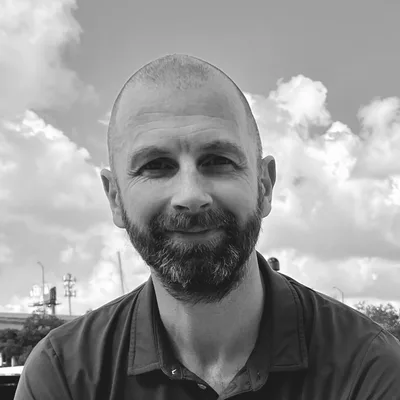
Stuart BellPRINCE2®
Five years in the Royal Naval Reserve from 2003, on the officer candidate route, having trained as a radio officer at a uniformed merchant navy college at sixteen. Then a decade in financial services IT, from Goldman Sachs to the Financial Services Authority, collecting PRINCE2® Practitioner and the ITIL Service Manager certificate along the way. Left in 2012 and never applied for a job again. Now runs Brutal Guides and ScoreFunnel.
Show highlights
- He joined the Royal Naval Reserve at 26 because of a passage in Rich Dad Poor Dad, and picked the Navy over the RAF because the unit at Tower Bridge was easier to get to than the airfield.
- Everyone in the Royal Navy enters as a rating and commissions afterward, on the principle that nobody asks you to do a job they haven't done themselves.
- He left school with three passing grades when the officer candidate route needed five. At 26 he went back and sat the missing ones, then threw in a couple of A-levels while he was there.
- Every practical leadership task starts with the same question: has anyone done this before? He calls that lessons-learned in miniature, at speed, with a clock running.
- An officer opened a cupboard he'd just cleaned, moved two cups aside and ran a finger along the back. The surface level isn't the thing, in a mess block or on a project.
- He arranged a day in Paris for someone he barely knew and sent a PDF with the itinerary, the tickets and a dotted line drawn on a station map. That's how a fifteen-year business partnership started.
- If your employer has a training budget and you don't spend it, you don't get a cash alternative. Take everything while somebody else is paying the bills.
Stuart Bell was going to join the RAF. He'd done electronics at school, there was an RAF support base down the road that maintained exactly the kind of systems he was interested in, and he'd got two or three rounds into the recruitment testing. Then his mother spotted a small classified ad in the local paper for an HNC in electronics and telecommunications at a uniformed merchant navy college in the Lake District, 200 miles away, and he went to the open day instead. He still has the paperwork, because his parents brought it over from the UK and it was sitting on his desk the week this was recorded: the prospectus, the invitation, the test results and the offer letter, dated April 1991. He was sixteen. He came out with a qualification in marine electronics at precisely the moment the job it trained you for stopped existing, and took an office job that had nothing to do with any of it.
The reserves came later, in his late twenties, and the reason was a passage in Rich Dad Poor Dad about what the Marines had done for Robert Kiyosaki. He chose the Royal Naval Reserve over the RAF equivalent because the unit was at Tower Bridge and the airfield was on the wrong side of London. Five years, never deployed, and he's careful to say so. What he took out of it was a set of habits rather than a career. There were the practical leadership tasks that always open with somebody asking whether anyone has done this before, and there was the officer who opened a cupboard he'd spent the morning cleaning, moved two cups aside and ran a finger along the back of it. The surface level is not the thing. Somewhere in the same years he collected PRINCE2® Practitioner and the ITIL Service Manager certificate, largely because his employer had a training budget and he'd worked out that unspent budget doesn't convert into anything.
The argument he lands on is why this is episode two rather than a bonus. He thinks project management is a way of seeing that most people don't have, and that you can test yourself for it without a syllabus. If your phone is on the 24-hour clock because ambiguity irritates you, if arranging a day out for somebody you barely know obviously involves printing the map and drawing the route on it, then you're already doing the work and the certification is paperwork catching up. He left corporate life in 2012 and never applied for a job again. Three companies on, he'll tell you the through-line isn't marketing or publishing. It's project over person, which is the thing service teaches whether or not anyone ever sends you anywhere.
Transcript
AI-assisted transcript, lightly edited. May contain errors.
Hey, everyone, welcome back to another episode of Veterans in Project Management. Stuart Bell here, joined as always by Dr. Michael Shick. Mike, how's it going, buddy?
Good, Stuart. Nice to see you. this is, this is our second episode and like the previous episode, we're, talking about our experiences, both Stuart and myself, being veterans.
I'm particularly excited to have this conversation with you, Stuart. You served in the, United Kingdom in the Royal Navy. You were a reservist, correct? Five years?
Yeah. Yeah. Yeah. Absolutely Long time ago now. Feels like
it at least. all I have to do is look at myself in the mirror and see the gray, and I'm like, "I'm not as young as I, I once was."
And some of the things that were, I think weren't that long ago, are actually a considerable amount of time ago. Ago. And so, you were the reserves in the Navy. interesting. how does that work out for somebody who's ignorant as, as far as the service in the, the, in the UK system? how did you get involved, or how did you enlist in the, Royal Navy?
Yeah, it's interesting. Because like you say, if you never had call, I think even in the UK, if you never had cause to really come across it, you might not necessarily know. And the military service in the UK, it's, patriotic in the same way that it is here, but there's much less pomp and gesture about it in the sense of like you don't have...
Okay, well, you do. I was just gonna list a couple things that you don't have, but maybe you do. Maybe it's just on a different scale, or maybe there's less TV coverage so it seems like there's less, less around it. But when I think about it, the general public would see the military in, there are Army Navy rugby games, but way less than the Army Navy football games over here.
The, is a lot of parade duty, particularly in big cities, typically around Remembrance Day. what do you guys call... I've been here 10 years, I should know. What's Remembrance Day called in November? Veterans Day?
y- Memorial Day and then- Memorial Day. Yes. Is Memorial Day November?
no, that was earlier this year. That was- Veterans Day is later on in the year. I don't remember the exact dates usually, but- Ve-
Veterans Day. They
usually pop up on the calendar. I'm like, "Oh, okay, yeah, Veterans."
It's that, yeah. Okay, so, this is gonna turn into the episode of Stuart and Mike doing some translation between English and American.
so Veterans Day, the equivalent Remembrance Sunday, it's always the 11th of November or the Sunday close to that. So there's a lot of like all of the towns and villages, 'cause the first and... I mean, I'm 50, so I think of the First and Second World War being in mem- I mean, in grandparents type memory, not in my memory obviously.
But those types of dates, there's often then towns and cities will do little,parades through the town to the Cenotaph and lay the wreaths of poppies. So that's where most people would come across them, if they don't have family members or they haven't served themselves. The reserves then are split across reserve units in each of the major cities.
So I forget the exact numbers. I think the Navy's got something like 27 reserve units around the country. I'll probably be, should Google it. I'll probably be well off on numbers. but then the Army and the Air Force also have their own reserve units around. And the reserve, the reserve force, although again, my, I was in from 2004 to 2000, or 2003 to 2008, about that timeframe, so getting back a little bit then.
Certainly at the time, the reserve unit was there to support and augment the full-time fleet at times of crisis or need. So the- And again, maybe this is slightly timely because defense spending in the UK as we're recording this, there's a big kind of, heated debate going on at the m- at the moment in the UK.
But certainly over the years since the Second World War, the armed force in the UK w- the forces were depleted when there was much less deployment, much more smaller individual, often NATO-supporting deployments. So the reserves were there to pick up. Obviously, in the two main Gulf or the Gulf and Afghanistan conflicts, there was a lot of reserve support.
But, the reservists, similar to they do here, have a certain commitment to get up to speed in the unit, specialize in a discipline, and then can get deployed in,in a requirement if that requirement comes up. And depending on what you do, that can be peacetime deployment or wartime deployment.
there's certain specialists, particularly because, again, talking from the Navy perspective, certain specialisms pull from, the civil contractor side of things quite a lot. Then there are quite a lot of reservists, even in peacetime, who are deployed but into media operations, some logistics type stuff, some senior command type stuff, government affairs.
That is permanently,manned in some respects by reservists, so.
So it ... Would it be fair to say that, like, say the active duty components would go on deployment or fill a requirement, and then the reservists typically backfill those positions, on the installation? Or do they deploy, like a-
No, s- it's deploying based on role.
So in, again, and just to be clear, I never deployed in the five years that I was in, because there's two years really of basic training in the Navy Reserve, so it's quite a long, tickling system just to go to the first branch. So, yeah, I don't wanna pretend I was deployed in any way. I was in for those periods, did all the training requirements for most of that time, but not, not deployed.
So the deployments are typically into the specialist roles. Interestingly, because the capital fleet, the ships, were also, diminished quite a lot, the, the fleet was a lot smaller than it used to be, what you would often get, and again, not sure if it's still the case now, but what you would often get is the rating level, the, the non-officer level of seaman within, the Navy replo- deployed units, it moved to what they call the SPO model, ships protection model.
So the, 2008, so where was that? That was, In the middle of or late in Afghanistan? I'm trying to think of when the main campaigns were going.
Well, I would say it was probably... Well, both Iraq and Afghanistan were both pretty, active in 2008, but it would be more senior to, Iraq as far as time-wise is concerned, 'cause Afghanistan went on, you know, considerably longer, so.
those ones ... I think it was both during plus ups during that time, if I remember.
Yeah.
You know, the, it, 2008, it doesn't seem like it, but we're talking, you know- Like
nearly 20 years
ago ... years ago now.
Yeah, exactly. So exactly, that compounded, I was compressing the timeframe, it gets, it gets a bit gray.
So a number of people who were deploying at the time and their operations were shifted into this SPO model, so ships protection scheme, ships protection operations. So the Navy would take up merchant ships to provide support logistics and moving stuff around, Some control type functions. So those ships would often keep, m- maintain their merchant fleets, but have small SPO teams go on that did the Navy liaison with the merchant fleet.
So the government effectively would, rent either, forcefully or not forcefully, but rent the ship that they need. The crew would, the merchant crew would stay on, but then the SPO teams would be in. So reserve teams were quite often forming these SPO teams that would go on there. But then also you had individual specializations and disciplines, often depending on the person's background.
So again, coming in from their civilian careers, often, people often specialize in certain areas, so that might be a requirement that was needed. Oftentimes people raise their hand because there'll be deployment, there'll be deployment requests go out. So obviously some people get told, but there are opportunities to volunteer, and this is an assignment that's coming up, and if it works with whatever else is going on, then that's an option too.
So anyway, long way of saying that most people's exposure to it in the UK is some reason why they wanna be involved in that, and sometimes a reason why they didn't go full time. So for me, I was 30-something, again, losing the math, late 20s, sorry, about that time, and I had never gone in. Actually, funnily enough, I went to a uniformed merchant navy college, so I trained as a radio officer.
so we were talking the other day about your, in the last podcast, about your beginnings and plugging in networks into switches, the old kind of analog cable way of doing it. Not that I'm trying to one-up you, but I worked on radars where we were pulling valves out. So, that was really going back. That might have been more of a signal of how kind of dated the college equipment was and not so much on what actually was cutting-edge industry technology.
But,
So-
But yeah, so
w- what was the specialty then, m- if you don't mind me asking? what, did you have... I, there has to be some sort of a equivalent to a military occupational specialty for you.
Yeah. So I, when I was going through that timeframe, it was absolutely the, the SPO teams were the default specialization.
So unless you came with a very immediately transferable skill, so I was- Project management or project support in, sorry, operations support in civilian career, so that wasn't a direct correlation. And I was also from the basic training went, CW officer candidate type route, so that was gonna be another number of years going down that route, which would've been specialization then.
But in that window, the main discipline was boat teams, so it was the GSSR rating, general service seaman rating. Everyone goes in the Navy, unlike other disciplines, everyone goes in as a rating first and then commission after that if you wanna go down that route. So everyone goes in as a rating and then travels from there.
So setup was a little bit different.
So, so to translate in at least the, the US terms everybody goes in en- enlisted with a ra- and with a rating and then, continues on through whether it be officer candidate school or officer path, Yeah ... or continues on the enlisted side, or rating side, through the ranks.
yeah, exactly. Is that fair? And that path can be qui- yeah, exactly. That path can be quite quick for people, but the underlying premise, which I think is different from the Army and the Air Force, but the underlying Navy premise was always no one, no matter how serior- how senior asks you to do a job that they haven't themselves done.
So it's this little egalitarian type Based from where it comes from-
Fair enough ... kind of. So, it, so you were working in the project space in the civilian sector when you started down the Naval Reserve pipeline. Is that accurate?
yeah. So I was a service transition manager on, on a, for a financial ser- well, actually for the FSA, the Financial Services Authority.
So service transition was an ITIL discipline that was set up to sit in between service management and projects to deal with the transition to try and cover that gap of, and I'm gonna say in language from the service side rather than the project side, 'cause I came in, I was service management originally.
But to cover that gap of dodgy project managers chucking a project over the fence and wrapping up, saying, "We've done and we've delivered," and services like- Lack of close
out. Lack of close out.
yeah, exactly. It's closed out and documented, but I mean, who, not necessarily everyone agrees to the words that are on the page.
So how, just taking a step back then, you know, because all too often you see, folks joining when they're, you know, on the younger side, maybe right after high school or right after college. Every now and again you'll see somebody who's went out to industry and then came in at a later time, but that, I would say anecdotally that's the exception, not the norm.
So you, post your high school or college, time, you went into industry. How long were you into, in industry and, you know, straddling that fence so to speak of, projects and service-based? Yeah. So how long were you doing that type of work before you went into the reserves?
so probably it would've been- Five years, so the first kind of project exposure, so the marine telecommu- marine electronics and telecommunications was at college.
It was just at that perfect time, like I say, pulling valves out of radars. It was just that perfect time, five years before that, the majority of classmates would have gone on to be ship's radio officers. And then five years afterwards, the college actually changed completely and was just basically doing cellphone, mobile comms work.
So it was just in that analog rollout. This is 1991 to '95, just in that analog rollout of early cell networks. So as I say, prior everyone would have been a radio officer. Post, everyone was working for Vodafone or Racal or Marconi.
Marconi, that's a name I remember from the past.
Right. yeah.
So those, ... So I left there, so I actually went to that school when I was 16. I left high school when I was 16, went to that school. again, we've talked to, we've recorded a couple of shows now, so talking to people about the discipline in service and how that transitions to project management. It, not the same in any way, shape and form, but not dissimilar.
So the uniformed college, we had hierarchy and rank in college. There was structure around it, certainly to begin with. moving into the work side of things, I immediately just went into regular civilian o- office work, basically. I kind of took the first job that wasn't particularly related to what I'd done at college, 'cause I didn't really know what I wanted to do, and I was still relatively young.
And then just kind of drifted down the IT route after being in what was really just a regular office job in financial services for three or four years. So the first project experience, I was kind of a user specialist that was on a Y2K project, and then subsequently a project, Again, around 2000, the UK moved from one financial model for savings called PEPs to another one called ISAs, so a bit like, IRAs, the IRA equivalent over here.
So I was a user specialist on a project there, and then moved into IT support when I moved down to London. IT support on the desk for a couple of years, then into management on that side, then into service transition from that. So that was probably all four or five years. But the interesting thing was, that I think is translatable here to people listening, is this idea of project over person.
So again, reservist for a few years, never deployed. Uniformed Merchant Navy College, but it wasn't actually in the Merchant Navy, it was just the college. Air cadets as a kid, I mean, if we're going really right the way back. But the idea of project over person, I think that's the thread that carries on through.
And as we've been talking with people, I think that's what makes veterans, or kind of pseudo veterans, a good project manager, because you can definitely disassociate the person from the project. The project needs to get done, the outcome needs to be there. The people need to be supported as much as possible 'cause they're soft and squishy, and they need to do the work, but it's not about the people, it's about the project.
So as I'm talking and thinking about going through it now, that is a thread that carries through, which I think served well.
Yeah. So, so you're, fr- from your background and experience, you're seeing as what value you're bringing to the organization, and that's the pinnacle. Certainly, you know, people are, are- Are the engines that drive the project going forward, but through your estimation, it's projects manager's ability to separate themself or divorce themself from their feelings and go towards the obje- objective delivery- Yeah
of a project. I- is-
Yeah ...
am I saying that
correctly? Yeah, definitely, and I'm sure if you did a show with my wife tomorrow, then she'd probably say, "Oh yeah, that's why I'm a bit-" "... low emotional intelligence sometimes," because it's the, the, the discipline first. So definitely, definitely people... I mean, people are the thing that do the execution, until the robots take over from us all at least, but people are the thing that need to be done, so there's absolutely, they are the most important thing, and where that's negatively seen is I can remember we, we were interviewing...
And as you think about it, I don't know why this worked out this way around. I was sat in on an interview for someone who was gonna be senior in one of the jobs. It was for one of the big banks. so I was a, I think I was like a team lead maybe on the desk at that point, and this person was gonna be the department manager, department head.
so I can't actually remember why I was there, but they were a Royal Navy veteran, and so they'd been in, they were chief petty officer on aircraft carriers, and I can remember the people talking about it afterwards and saying, "Ah, you know what? I'm not sure whether we want someone for a veteran basically," because they'd had an experience before that the previous person was a little bit cut the stuff-
just get the job done, and they were feeling that it wasn't quite touchy feely enough. so it can definitely go wrong, but that's the same in anything. I think what makes project managers successful is this- Project first, delivery first, and all of the supporting elements, people- Yeah ... budget, everything needs to support that outcome.
Th- that's, that's interesting. it, I know there's debate between, project management and project leadership. And of course on both sides of the, the fence, you know, the, there's strong proponents of the term project leadership. There's other strong proponents for the project management. To, to get a little bit academic, about it, and I'll keep it light because, you know, people love-
Going deep in the weeds, if I could-
Yes
hear. but it does bubble up the discussion of management versus leadership. Leadership, you know, broadly speaking, is supposed to be that transformative, type of experience that regardless of the leadership model that we're looking at, whether transformative or transactional, you know, authentic leadership, emotional intelligence, servant leadership, et cetera, et cetera.
you know, it's trying to get people to do things and be the best and be innovative, you know, on their own free will, rather than pushing the thumb down on them. Where the management is that rigid, "All right. We need to do X. We need to do Y. We need to do Z. These are the specific triggers."
And- I'm wondering if, you know, based on your background, y- working in industry and then become a naval reservist, and w- did you, certainly through your uniformed college days and Air Cadet days and all of that, do you think that's kind of formed a, your perspective from a, a management and widget delivery side balance with the transformational leadership side?
Or how do you see that kind of playing out between the two in your own experience?
I think humans are pattern-matching machines. Okay. Like, it's the reason that after three people got eaten by dinosaurs, the fourth person ran the other way. Like, if we weren't pattern matchers, the species wouldn't have survived.
Mm-hmm. And that goes down to everything, like the things that we order off the menu, the people that we hang out with. It's just our default subconscious pattern matching. So I think for everyone in their own career, we naturally gravitate to what we pattern match in our heads. So I can imagine a scenario, and it seems funny now at 51 years old talking about Air Cadets when you're kind of 13 years old, but if I hadn't have resonated with that world generally, I wouldn't have done the other stuff.
I wouldn't have... I definitely wouldn't have gone through uniformed, Merchant Navy college at the other side of the country when I was 16 years old and left home. I wouldn't have thought about coming back into the reserves at a later date. So I think people resonate with their own thing. And from a project management point of view, just the data, or any job, any, any senior position involved where you've got people reporting to you, and I guess to a lesser degree even when you don't have people reporting to you, but when you've got to deal with other people, everyone's individual experience is coming from a different perspective.
I think societally there's a swing as well, like maybe in the, I mean, definitely in the UK, '80s, the '70s were terrible, really economically depressed. The '80s were starting to get into some financial boom. The '90s were really some good times of getting through and just getting stuff done. And then into the 2000, 2010s, it was kind of swinging back towards, okay, things are a little bit difficult, and the people expectation goes along with it.
So I think there's an element of just what the zeitgeist is. Like, if society's in a place where we've gotta get this done, then management takes the lead, and it becomes a little bit more it doesn't matter how you feel, just crack on and do it. If everyone's feeling a little bit touchy-feely and sensitive and- I'm gonna get the show canceled in the second episode, but snowflakey, then it swings towards the other side.
And the other element it brings into it as well is if you're a project training company, project management training company that is delivering on the agenda the, the boxes that need to be checked, but then you also need to expand the offering so that the company can grow, you know what? If everyone's talking about management, then we're gonna push some management courses.
If everyone's talking about leadership, then hey, leadership's the new thing. And if I need to talk from stage as opposed to you talk from stage, and I'm talking about leadership now 'cause that's in the zeitgeist, then all of a sudden everyone's feed fills with leadership. That is coming from the perspective of someone who is definitely on the management side.
So again, take what I say as a very biased perspective. And the truth is it's both, but I really do believe the truth is it's both, but-
Society only moves on and projects only get delivered if it's project first. That's the pinnacle. If it's people first, that's inc- that can't be correct because the project deliverable has to be bigger, the function has to be bigger than the individual doing the role, which I think resonates back with the, with everyone listening here because that's absolutely, whether it was a reservist just being, doing exerci- d- doing training exercises or being deployed,the project, the, the ex- the execution, the action is the thing.
Who does it is not... Yeah, I nearly said not relevant, is not as important. Very relevant, but not as important.
So, it... Help me... I'm thinking about, as you're talking, the, the timeline. So you did the Uniform Merchant, Navy Academy. Did I butcher that or did I get it right?
no, that was, No, that was pretty much right.
Yeah. It was, the place is called Wray Castle. So the... It's a private organization, but they specifically, They originally were set up to push out radio officers, and then as the radio officer requirement diminished, so as I say, in that particular timeframe that I was there, it really switched from analog, where ships were required by license and law to have radio officers as a full-time position on board, into digital, where often the role was replaced and with a global contract for digital equipment, and then the bursar or the doctor or a senior officer was cross-trained into the radio officer's role, and then the radio- the ships, merchant ships could still get certificated by having redundant equipment on board and global support contracts.
So in the old days, it would be the radio officer with a soldering iron pulling out a valve. In the new days, it would be the bursar unplugging one bit of equipment, plugging the other one back in, and as soon as they next get to the next port, the Wray Castle representative flew in with another board and just swapped it out.
Okay. So, so you went from that, when upon graduation or completion of your training, into industry. You went into the support side. what motivated you to, go into the Naval Reserves in your 20s after having been in the li- been in, industry for so many years?
I think, so being service adjacent is a thread.
So at the time, back in '91 when I graduated high school, so we grad- or then graduated at 16 in the UK, most people stayed on locally for just additional college. So they would do A levels and then maybe go to university. So probably 70% of the people, 80% probably of the people who I was in school with just stayed locally, stayed on for another two years of A levels to take them to 18.
And then at 18 it's probably a, at the time it was probably a 60/40 split, 60% would go to university, 40% would just get jobs with A levels. So that was the typical thing. My plan was I was going into the Air Force. I was, so there was a RAF and a... So I did electronics in high school. I li- like electronics.
It was a passion. Like, when I was a one of my earliest memories as a kid, probably not earliest memories, but as like a 10-year-old, is, is walking in my bedroom and stepping on a soldering iron because earlier in the day I'd been deconstructing some LED boards to kind of reconstruct it into something else, and I'd left the soldering iron plugged in and stepped on it, and I had a big burn on the bottom of the foot.
Oh my goodness ...
so electronics, I was really into electronics. So down the road from us where we grew up, there was an RAF support base, RAF Sealand, which did a lot of the electronic maintenance on systems. So I was probably gonna go in as a weapons tech or something like that. So I went through two or three of the, Of the RAF onboarding type, the recruitment and the test, testing type things.
but then at the exact same time, my mom, I'm pretty sure, saw a little tiny classified ad in, in the newspaper, in the local newspaper that said, HNC in electronics and telecommunications in the Lake District, which is this nice place 200 miles away from home. open day next week, send for prospectus.
So back in the day you had to send like a self-addressed envelope or something for the prospectus, and it came through. Actually, I've got... This is crazy. So my parents are across from the UK, so I've actually got, they brought across with them, so this is all of the onboarding paperwork from April the 23rd, 1991.
I forgot this was even here. Literally my parents were just here the last couple of days. it's just on my desk. April the 23rd, 1991. Thank you for your returning the inquiry card for the prospectus. Please find it enclosed. We're holding open days in June. So this is all of the, the prospectus, the invite, the testing, the results, and the offer letter in 1991 for Wray Castle, which was the school.
and actually my... This is really getting into the weeds, but this was the, if I can see the camera. So that is me at 16 in my, officer cadet uniform.
Fantastic.
anyway, slightly random side piece there. So I was originally going into, gonna go into the Air Force, so I'd done all that testing. I can't remember what the results were.
I mean, who... I didn't even get as far as officer stage 'cause I pulled out. so I don't know where I would've ended up. But the Wray Castle invite came through. That was perfect. I went up there. When I left there in '95, again, I kind of didn't really have a particularly big plan. I moved back to the place that my parents lived.
I got a office job locally. I started dating someone. We were together for three years. That anchored me there. We broke up- I moved to London. I'd got some certifications, some Microsoft Office certifications in the meantime. So it's, yeah, it really was a kind of structured path of coincidences that led to that.
But it does tie into something that we, again, we've talked with, other calls that we've done recently that will be released in the, the next few weeks, of people saying if they could talk to themselves as a younger self, they'd tell them, "Be a little bit more proactive. The clock's gonna go anyway.
You've got all of these opportunities for someone else to pay for certificates. You've probably got the time 'cause you're in the job and you've got some spare time. So get those certificates sooner rather than later." And that was definitely my experience as well. It's tho- all of those certifications helped.
So then, fast-forward, you're now in industry what sounds like probably somewhere between six and 10 years.
Yeah.
when you ended up going into the reserves. did you, did you have a pathway you intended to go through the reserves? and seeing that you were, doing project management, did you experience any project management during your time of, in the reserves?
So there was definitely... So when I went in, I was working at Goldman's, so we were IT support for Goldman's. I was there five years overall, and left as the team leader of the application support desk. So went in on the application support desk, and then came out as the kind of team leader of that small group.
So at that time- Do you know what I think it was? And I don't know that I've ever even thought about this since it happened, but I'm pretty sure I decided... 'Cause this is 10 years after I was maybe gonna go into the Air Force, so I think by that point, and I was late 20s, so I mean, I wasn't signing up at that point.
So I never really thought about it. Do you know what it was? Which again, I've never particularly thought about. It was Rich Dad Poor Dad. R- there's a section in Rich Dad Poor Dad where he talks about his service in the Marines, and that set up the structure, and the- there was just something about it that he accredited to later success, in however you wanna define that.
Yeah, I don't think I've ever thought about that since it, since the time. But that was it. I was looking at the Air Force Reserves because I was closer to the Air Force. I was Air Cadets, I was gonna join the RAF at some point. So I was closer to the Air Cadet, to the Air Force, but the Air Force Reserve unit was way over the other side of London, and practically speaking, would've been a pain in the neck to get to.
the Navy unit is at Tower Bridge, right in the center of London, and, that was literally on the doorstep. So it was the Navy, I guess, was maybe a choice of convenience rather than, rather than dedication. But then of course, having been in the Navy for a couple of years, I then immediately looked to the Air Force and thought, "I'm glad I didn't join those, 'cause they just sit around drinking, drinking cocktails on the airfield all the time, where we're actually doing some work."
Well, it wouldn't be a military service if there wasn't a little bit of razzing going on. I
know. I'm also loving the opportunity to give a little bit 'cause I know that you were Air Force.
Yeah. Well, it's f- it's amazing that Rich Dad Poor Dad and Robert, Kiyosaki, it, it- Right ... you're certainly passively in, in your own reading.
You're like, "Hey, I need to get on the ball here-
Yeah ...
and, go over to, and sign up for the reserves." I
think, I think if there had been any more long-term, like the project... So when I was in, so that role at Goldman's, and then I changed to a different role while still a reservist, and that went more into the management side, but still on the support side.
And then it was just as I came out of the reserves, maybe, like, the last six months or so, I moved into the last corporate role I had, which was specifically service management and then service transition. So the structure of it was a little bit later in that journey. So it was almost more the case that the structure around the reservist training actually helped the day job rather than the day job helping the reservist side of things.
So the timing probably was a little bit skewed to the reservist piece happening a little bit sooner in the professional project management, service management, service transition side of things. So one of the things that always stands out to me, I always remembered from the reservist time and how that applied to the civilian side, was things around PLTs.
Do you have PLTs? Practical leadership tasks?
So it's the get from this side of the river to that side of the river type thing- Yeah ... with this piece of string and a elastic band.
Yes. Yes.
So the structure around that was, and again, this is why it was such an advantage going in later, so I'm jumping all over the place here a little bit, but typically speaking, the path from, going in and doing the real basic training, so in the full-time Navy, the enlisted,the general, the entry point that everyone goes into, and again, I'll get the numbers, the exact numbers wrong, but I think it's eight weeks at Raleigh, which is the basic training, and then you qualify basic training, bootcamp kind of thing, and then you go on to specialize into whichever role after that.
So that eight weeks of training full-time is kind of the first year in the reserves. You typically do six months or so in unit, and then you have a two-week period at Raleigh, which is basically the wrap-up of everything else. So at the end of that, you qualify at the same place. So the Raleigh, my Raleigh experience was with, I think, probably about 16 other people, but we were all over 20.
So as a full-time person, you would go in with, like, 100 16-year-olds away from home for the first time. Yes. Which is why they're so regimented on, like, literally the basics, 'cause you're really taking people
from... Or 16 and a half, sorry, to be, at the youngest. We were all in our mid-20s, all doing somewhat professional careers.
Mm-hmm.
And this opportunity to be in this environment away from real life, just purely concentrating on the task. Like, we'd all set our lives up so that we could be away for two weeks. We were old enough that no one had to kind of wipe your backside or tell you to pick your stuff up, up off the floor, so we weren't getting- into trouble for some of the basic stuff.
Everyone knew that if you had to be there at 6:50, you were there at 6:45. So it's actually a fantastic opportunity to look at the delivery of the project without all of the human nonsense that you might have with people who are turning up at 16, and you had to really tell them how to get out of bed. so that delivery around PLTs is the example.
It's the lessons learned example that we talked about with the podcast that we just recorded the other day. The PLT example, the first question is always: Has anyone done this before? Because there's only so many PLTs that you can do, and once you've been in for a little while, you've done a good handful of them, and if there isn't direct experience, there's certainly complimentary experience.
So that, "Has anyone done this before? Okay, what's that experience? Okay, you're the timekeeper. Your only job is timekeeping, because if that clock runs out, the whole thing is stuffed. So don't get distracted with anything else. Your primary job is timekeeping. Okay, you do this." Like, that specific task requirement in a very small control- constrained way, but in an environment that is I think it's the narrow scope, like a PLT of getting from this side to that side, or answering this question or doing this task.
It's very obvious once you've done that 10 times that you get to know the patterns, and then that pattern can expand to a bigger project, a bigger role, a bigger discipline, which correlates into, into civilian life as well. So yeah, those crossovers are very apparent.
So within the United Kingdom, the, the premier qualification for project management, is the PRINCE2, or Projects in Controlled Environments 2.
Did you ever think about going and pursuing either the foundational, qualification or the practitioner qualification? So
yeah, I'm actually PRINCE2 practitioner qualified. so this goes back to... Like I failed high school really . Like I went, So it isn't as cut and dry as it is in the US, like you don't get held back in the same way.
So the qualifications that you do there, I think they're still called the same. Again, 30 years ago now. so GCSEs. So you would have a graded qualification on each of them, and C is generally accepted as the passing level. And at high school I think you typically do like 11 subjects. , I can kind of say this now 'cause I'm old enough that no one cares 'cause it's that long ago.
But, so C is the passing grade. Typically to go onto whatever the next thing is you need at least five Cs. that's counted as the baseline. And then quite often you'll need additional ones, like of 11, typically 11. So five Cs is really the , minimum baseline. That letter that I showed you before there, April 1991, I graduated high school in June 1991, so I was starting this before I graduated.
We do the exams in May. I think the results come out in August. I went for the interview in June and got offered an unconditional place in July. So before the exam results come back I'm thinking, "Okay, this is good." I, my exam results then turn up and I get two Cs. No three Cs, sorry, three Cs, maths, English, and Maths, English language, English literature was another one.
Maths, English language, and electronics. I don't know, maybe not even English. Maybe it was, there's like a design and technology thing that you do, so maybe it was math, electronics, and design technology. Maybe it wasn't even English. No, it couldn't have been English 'cause I had to do later. Okay, so anyway, three.
Fortunately, I had this place already, so I went on. So when... To be officer candidate, you needed at least five Cs in English, in, five Cs at GCSE, but I've only got two. So at 26, 27, knowing that I wanted to go CW, officer candidate, as an adult, I'm doing now three more GCSEs, because I need to catch up.
I need these checks in the box. So I did that, and then I think I threw a couple of A-levels in there as well, 'cause it was relatively easy to do, and I thought, "Okay, if I'm gonna do it, I might as well do it and bank some of these things up." So did that later. So the certification for PRINCE2, again, a long roundabout story, but I mentioned before that I'd done the Microsoft MOS qualifications, Microsoft Office User Specialist.
It was the Office Special- the Office certification that was real kind of entry-level stuff. So I did that when I was still up north before I went to London. Having those qualifications was enough to get me in the door at this application support role, which when I think about it, this was, again, working for, working at Goldman's, not for Goldman's, so we were an outside contractor.
Mm-hmm.
But I had virtually zero academics to get into that, but coincidentally, the right professional qualifications that they were looking for And I don't mind talking to people, so if you actually get to the interview stage, you can kind of... It usually goes quite well. So that tiny qualification was the first step.
Then I did, some of the foundational ITIL ones, the service management ones, whilst in that role, and the PRINCE2 Foundation one, because it was, that was a good benchmark one. Then in the next role, I did the ITSM, the service management bridging course, 'cause they moved from the first version to the second version, and then eventually the service manager certificate, which from a PMI perspective, it's similar, yeah, it's similar to the PMP.
It's the, the highest level of service management, and it's quite complicated, and I'm not m- It takes a bit of work and commitment to do, so getting that. But then also, this is the thing I say to people now, if you're in a job where they pay for qualifications, you've usually got a training budget every year.
If you don't use it, they don't care, but you can't get it back. You don't get a cash alternative, so take as much as you can. So in those last couple of jobs, or last couple of years of the last job, moving from the PRINCE2 Foundation to the PRINCE2 Practitioner, doing a number of business analysis type qualifications, just broadening that spread of qualifications.
not really from the qualifications perspective, but just because it's interesting. It brings more arrows to the quiver. it's more, It widens the perspective that you've got going into a particular role. So I got to the peak of all of those academic or professional qualifications, and then left to start my own company, and never kind of applied for a job again.
So, so, so you hit the pinnacle of one, and then moved on, to start the next endeavor.
yeah.
But I would say,m- more in a, a question, but by hitting those pinnacle and understanding, you know, the nuances of project management, th- at least through a PRINCE2 lens, now, correct me if I'm wrong from your perspective, but PRINCE2 is very much project specific versus the service-based side.
yeah. So you're focusing in on you need to get the foundational, PRINCE2 foundational before you can get your practitioner, so- Yeah ... you have to go through a, a multi-step phases to earn that certification, which is the premier certification for project management within the United Kingdom and, in and around the United Kingdom, particularly on the Europe side.
But what you learn there and develop in your understanding, were you able to leverage some of tho- that understanding into, your business that you stood up? Yeah. And what... Well, first and foremost, what ki- what kind of business, and then were you able to leverage- ... your understanding in that business?
The universal... Well, the foundational principles are universally applicable. I think everyone would say, like, there's enough courses around, particularly foundational project management courses, that will use the example of planning for a vacation. Like, just those underlying principles of structure, universally applicable for everything.
The specifics in the old job, that service transition role, again, I came from the service management side. Service transition is a service management discipline, but it is the touchpoint with projects, so there's a specific correlation with projects particularly. So the requirement or the desire to do the PRINCE2 foundation and then practitioner, it's because day to day we were interacting with projects.
So there was a very strong correlation with understanding the formal project management that they were doing with the service transition piece that we were ultimately responsible. So it was very closely aligned. at the time, I'm actually... Again, this is 2000- I left in 2012, 2011, 2012, so a number of years ago now.
at the time, even then you could start to see the writing on the wall as Agile was coming in. Prior to that, we were very waterfally, and PRINCE2 was very waterfally as well. It was quite that robust structure around it. And most organizations were working in a much more... Particularly the bigger projects were working much more in a waterfally type nature.
In the last couple of years, so like maybe from 2010, '11, Scrum and Agile were starting to come in a little bit more, but it was still underneath the main waterfall approach. Moving out into... So completely randomly, I started a marketing company, and not completely randomly. the premise be- the premise behind it was really coming from kind of like an online marketing perspective.
Like, the technical structure of the online marketing stuff was my gateway, and I liked the technical structure of it, and really it was a series of small projects. And as you can tell, I enjoy talking with people and thinking through what their project, what their problems are, kind of like the business analyst side of a project.
That really early requirements gathering, that's quite a big crossover with marketing as well. It's really you're trying to understand that in order to deliver the product that they would ultimately want to buy. In a project, you're trying to understand the requirements so you can deliver the project that they ultimately want to pay for.
but- One of the biggest and most interesting things that all of the structure that we bring from a big corporate establishment, as I said, the last role was for the Financial Services Authority, so we were delivering big multi-million dollar projects across multiple stakeholders, kind of internal and external.
But there was a commonality of language, and again, we've talked about this with some of the guests on the show that people will hear in the upcoming weeks. Knowing what you do when you're in service and understanding that it is projects, but having the certification framework so that you can translate the language so that when you're talking to people in the civilian world, you can talk in a common language and give your examples in words that they understand.
Because if you use the service words, it's not gonna make any sense to them, but if you translate that into the words that they understand. So the challenge with starting the company was moving from a professional environment where everyone was talking to that same language, everyone had some kind of project management or service management awareness, into a world where typically dealing with small businesses, they've got no concept of it whatsoever.
So in the nicest possible imagining of what would have happened, it would have, "Hey, I've got all of these skills that I can share with you. The, and you can have a better outcome because of these skills that I'm bringing." The reality is much messier than that. It's pushing on the end of a piece of rope a little bit.
The person on the other end of the piece of rope just doesn't have any concept of what you're talking about, so as you're trying to instill too much formal project management into an environment that has none, it's an uphill battle. And if you're brought in specifically to do that, that's fine, 'cause that's the job.
But if you're brought in to deliver something else and you're trying to bring- You're trying to leave project management behind in the organization. That's very difficult. So where we are now, and have been for the last 10 years really, is what those company needs is the product that's being delivered.
All of the project management is behind the scenes. It's what we do. It's why our projects are efficient and effective and work. But we've got a couple of touch points with them, which we understand is project management on the inside, but they just, we ask them to do things on the outside. but understanding that line between we can only...
it's just good stakeholder management. The stakeholders in that environment have got no project management discipline or real interest. So making sure that the project is doing as much as it can to understand where that stakeholder is and make sure that the touch points are fit for purpose, that's the real difference.
But the underlying skills are essential. When we look at what we can do at scale, we wouldn't be able to do this if we were coming without any project management. Yeah. So the business is we create books and assessment tools for companies so that they can use those books as lead generation tools to start conversations with their clients.
So each individual book or assessment project is an offensive project. people on the outside, the customers just know that they've got knowledge. It's really the project structure that brings it all together into that deliverable that they can use.
So, out of curiosity, so you've taken m- your understanding of project management, created this efficient approach to marketing, but you're doing it as a publisher through 90-Minute Books, correct?
How'd you get involved with Dean Jackson? for, and those who don't know Dean, is he's, widely known as one of the best, if not the best marketer, you know, currently. he's pioneered,many different approaches, one of which being the, the nine-word email that continuously engages and brings up old leads.
But how did you guys get involved into this? And then what do you... I wanna transition, once you answer that, into your Brutal Guides and kind of the, the approach and, you know, it, that seems like very much project-oriented, at least on the forefront, and then rolls into an operation. Yeah. But, so, so two questions.
How'd you get involved with Dean? And how did you end up, rolling into the Brutal Guides, side of the house? Yeah.
So, so yeah, three companies, 90-Minute Books, Brutal Guides, and ScoreFunnel. All, all similar in what we're trying to do, take people's expertise, and then it's just packaged in three different ways to match those where the sta- where the customers are, basically.
The... Dean and I own 90-Minute Books. That's the first project, the oldest one. So we actually connected... There's kind of a project angle to this as well. So I knew someone, or know someone called Ed Dale. Ed is another marketing guy based out of Australia. I'd stumbled across Ed first, goodness knows where.
I was then ... It was actually when I was still working. So Ed had a, again, a, a marketing guy. He had a community, a, a paid community in his world. I was a member of that community, still working a job at the time, so this is part of the learning process. In that community, there was a discussion forum. I was the person there who was answering the majority of the questions, and it's not 'cause I knew the stuff.
It's just 'cause kind of as a project manager on the service, or on the service management side, you know that 80% of the questions, 80% of any issues anywhere, it's just the common stu- it's the baseline stuff, the common stuff. It's just people are Not all people. Some people sometimes have a tendency to be incurious and lazy, so they don't want to
They're not curious enough to go and find the answer, and they don't wanna put the effort in to look for the answer. So I was really there, Quorum on one screen, Google on another screen, 'cause I wanted to know the answers. Like, they were asking questions that, hey, I'm gonna ask this question at some point as well.
I wonder what the answer is. Oh, that's an answer. Oh, well, I should probably tell them, and here's the answer. So I got to Ed's attention because I was quite active in that community. Then Dean and whatever he was doing before we met, started a podcast called the I Love Marketing Podcast. Ed knew Dean. Ed said to the group, "Ah, Dean and Joe Polish have just started this new podcast.
You gotta listen to it. It's great, the I Love Marketing Podcast." So I started listening to that, and it resonated. Like, I really resonate with Dean's message as well. We think in a similar way in, in certain respects. so a little way in they said, "Oh, we're gonna do a live event in Phoenix." So I went to that live event.
It was 2012. I took a whole load of London, ... Oh, no, sorry, the first one was meetup groups. they were starting ... They suggested people start meetup groups around I Love Marketing. So I was actually on vacation in the Canary Islands when I was listening to this podcast. I thought, "Oh, man, by the time I get back to London someone else is gonna have done this."
Mm-hmm. Okay. Well, no mind. Anyway, get back to London the next week later, looked around, no one had done it, so I started the London I Love Marketing group. the event was next. Starting the meetup group meant I talked with Joe Polish's team in the background, 'cause they were facilitating the meetup groups a little bit, so I was talking with them a little bit.
I took some London 2012 Olympics merch across to them, and I had, like, a cap for Dean, 'cause Dean wear, always wears a cap, and some stuff for the other guys. Then the next year, Dean and his wife, who he was married to at the time, they'd just separated. Dean needed someone to do some, Oh no, it was another vacation thing.
God, sorry. The next year I was on vacation again. Dean had just done the first Breakthrough Blueprint in Orlando
I'm forgetting the timeline. No, I think we must have met first ... I think we met at the second I Love Marketing event. Ed had done a bit of a soft introduction. I'd already brought the stuff in last year, but I was quite active in the community, so kinda shook hands and said, "Oh, if you need any help, let me know."
Dean then wanted to do an event in London. I was in London. I facilitated that meetup event in London. We then spent the next day, I said to Dean, "Hey, if you've got some time, I'll show you around." So I actually arranged for us to go to Paris, because the Eurostar train goes from London to Paris. So I arranged this whole day for us, and then it went from there.
So Dean, I heard him retell the story on a podcast recently. Dean said, "Oh yeah, I kind of needed someone 'cause Sony and I had split up, and Sony was ... I'm front of house, Sony's all back of house. So the reason that I knew Stuart was the person is because, A, he jumped on and just arranged all of this event for me.
I just had to turn up. And B, on our super happy fun day the next day, he sent me a PDF with the itinerary, the times, a map of the London, station, St. Pancras Station, with a dotted line drawn on for where the cab drop-off is to this platform. The, all of the tickets. I didn't have to think about anything.
We just walked straight through." So that structure, that project management of that tiny little project has led now to a 15-year relationship. So it's, I mean, it's project management all the way down.
Yeah, I, I, I- Dean and I were chatting and, he had told me that story as well. and as I was thinking through it, I was like, "Man, that sounds like a,a, a fantastic project manager or a good executive officer
been in military, side of things. I'm like, "Ah, yeah." and that's, that in part is why I brought up, I think, project management to you in the first place.
Right.
Listening to that story, I was like, man, detail-oriented. You know, if I recall, Dean didn't even ask you to do that. He... You just, you took it upon yourself.
You're like, "Hey, we're gonna go do it. I m- might as well do it right." And-
Because like, it's like we've said to the other... as we're recording with people, for us, listening to... I mean, for our inhouse, if you're still listening to this, then you're resonating with what we're saying. And the reason that we do it is because it's obvious that's the way it's done.
Like, any other way of doing it is stupid. Why would you not do it this way around? Like, and that, that mentality, I think, again, we'd said it to a couple of people before, if you're in service still at the moment, you're doing a role that isn't formally project management, but you're doing stuff that you recognize is there's a structured way of doing it, and it makes sense that there's a structured way of doing it, and when other people don't do it the structured way, it's annoying because they're messing up an otherwise perfectly running system.
Like, if you're sat there in your job doing those types of things, I guess the more senior you get, the more you get drawn into official project management anyway. But if you have those feelings, it's telling me you're a project manager without telling me you're a project manager. And on the civilian side, once you retire or transition out, there's a whole world of people, the rest of the world does not run like that.
if those things resonate with you, if you think I'm trying to arrange with someone who I don't really know some slightly complicated journey where at any point someone could end up on the wrong platform or the wrong train, or the timings could get miscommunicated, if you think that's the obvious way of doing it, you need, the world needs you to go down the project management route because the rest of the world do not naturally think that way.
So if you do... It's funny, when I'm cross here, my phone is on, 24-hour clock. So when people in the US see it, they say, "Oh, military time." No, it's just the 24-hour clock. "Oh, why? It's complicated. Why would you have it on that?" So, well, that's unambiguous. 13:26, as we're recording now, is obviously 13:26, not making the mistake that we're recording at half past 1:00 in the morning.
But if your brain is naturally w- wired to that, to drawn towards that unambigu- un- ambi-
what's the word I'm looking for? Unambiguous. Thank you, God. Unambiguous reason why a 24 o'clock makes more sense than 12 o'clock, then again, look at project management even if you don't think you're currently doing it.
So, so that, I think that's a natural segue into, the brutal guides, isn't it?
Yeah ... at least, probably, maybe not linearly, but it, you know, if you're creating that- Yeah ... that structured framework and, you know, you're looking at the right way to do it that's, you can repeat over and over again, and you set up those guideposts on the right and left limits and you pick the topic,it...
Realizing that the people who are listening, to us don't, may not know, what is the Brutal Guides and, you know, e- even passively, do you think your, your frameworks played into it from a project management perspective?
Yeah, definitely, 'cause it's structure. So 90-Minute Books as a company, we've written coming on for 1,300 books for business owners who wanna use a book as a conversation starting tool.
So we've done several actually for, fractional C- project managers or, fractional CMOs, that type of people, project management companies. we've written the book that starts the conversation that ultimately leads clients back to them to get involved and do the work. The challenge with 90-Minute Books is you, we need a certain amount of your mental bandwidth to extract the idea from the book.
Like, if you've got an idea for the book, if you do things in a certain way, if you know really what you wanna talk about, nine books, ni- 90-Minute Books is a fantastic way to execute on that because we've got all of the structure and the frameworks to get it from your head onto the page as a promotional asset, a lead generating assets.
The book then also- Certainly
value generating asset as well for-
Yeah ...
people who are consuming it.
yeah, absolutely. Yeah, that's the whole point. I mean, we wanna start the conversation by giving value, and then obviously there's always more, there's always a next step. We want this particular asset, the book, to start the conversation in a way that compels people to take the next step 'cause they wanna learn more.
They want you to fix the problem for them. so that's great if you've got that mental bandwidth to come up with or to work with us to come up with what that idea is. A book funnel more generally, though, is valuable to virtually everyone. Having a book that you can give to people to start the conversation is such a low friction entry point.
So if you don't have or you don't wanna put the mental capacity into thinking of your own book, a Brutal Guides is a frameworked book that is the same format for every version of it, but just all of the different subjects. So it's 30 chapters. Those chapters are derived from research into your market.
So Rosemet, as an example, is a project management training company. We'll write the book, which is the brutally honest guide to project management post-deployments, like transitioning from a veteran to being in project management. The brutal guide's content, we could write a 90-minute book on it. We could kind of roll our own, but it works well as a brutal guide because, A, the no-nonsense structure of the way it's framed kind of resonates with veterans anyway, just tell me what I need to know.
It's an easy project to create because it's simpler, it's less bandwidth. So we've done the research to know the 30 chapters that are the most important for veterans and what they need to know in transitioning t- into project management. We then do the work of we want your perspective on what those answers are.
We don't wanna just give generic ones, because at the end of the day, we want a veteran to reach out to you individually, and if your approach is you definitely need to do X and don't need to do Y, then we want that to represent your approach. We don't wanna say, "Oh, you should do Y and maybe do X," if that's completely different.
But the structured framework is a great project example because we can define the guide rails all the way through. We know that the outcome is a conversation-starting book that is engaging the audience. So okay, what do we need to do as we work back? We need to know what questions the audience have got.
We need to know the structure to bring it all together. We know that we want your perspective in it, 'cause ultimately we want the person to speak to you. So it's just think of it as book as a service rather than a service to create a book
So, so it's an action-oriented guide based on your background and experience to help people transition from point A to point B on whatever it is.
yeah. It's the 30 questions that if you were sat on the corner outside your office and people were walking past, and there was a sign up saying, "Ask me anything about project... Veterans, ask me anything about project management," it's the 30 most common things that people are gonna ask. Because the job of the book is to have those conversations beyond you.
If y- if your marketing was only you were sat in the corner and you can only have the conversations with people passing, that's pretty limited. So the book kind of takes your perspective and transmits it into places that you can't physically be. So it's the 30 questions that they ask that you can answer that leads them to think, "Oh, you know what?
Well, I do... I did do this in a day job. I have got all of this experience. I am interested in doing some certification. I do think that I would be good in this career down the track. I do have these connections that might help me leverage what I've done in the past." Answering all of those, the obvious next step is, well, have you ever thought about certification?
Because certification takes you from putting a CV out into a pool of 10,000 people into meeting specific requirements and being the choice of one in 100. And now add on your specific experience from the military and tie that into the language that the recruiter's looking for, now you're down to one in 10.
So the next step is the certification, 'cause we need that, that, box to be checked or that evidence, that proof point to be there. Once we've got that certification, we can help you with your resume writing into this list of jobs that we've got access to. So it's just that one step at a time. The book is just a very effective top of the funnel way to start the conversation, and the structure of answering the 30 questions that we know through research are already being asked with your perspective just means that the asset is very much more straightforward and projectized to create as opposed to us coming t- to you and saying, "Hey, you've got a project management company.
There's some veterans over here. Do you wanna... You should write a book that talks to them." Not a bad idea, but that's a big, a bigger lift.
So would you say based on... Is this kind of a culmination of your project experience, your service-based experience, your marketing experience, which from, coming from you, it sounds like you, you almost stumbled into as you were leaving industry and, you know, going into business for yourself.
I- is this brutal guide something that, that, you know, project management brought you to? Because it almost sounds... again, it's operations 'cause you're replicating it, you're doing it over and over for... As you were building it out though, you know, you have an end that you were trying to develop, so you had to build a framework to get you there to, to ultimately create this product or service that you're giving to the, the consumer who will, being the, the person that you're working with, who then turns around and either sells it or gives it away for free or what- combination of thereof.
So the, you know, taking that understanding and being that, you know, your, my words, not yours, kind of the culmination of the latest project that you're developing and working on for, what are some... If you were talking to a young Stuart or, you know, a naval reservist or service member in the United Kingdom, what- Or in the US, Canada for that matter, around the world.
What would you recommend they do to get to where you are? Because you've had a vast career. You've got the reserve time, you've got your industry time, you've got, business owner time, and you've been all over the world, you know, with the various different projects that you've, been a part of.
So what would you say that says, "You know what? I don't know how to get there, but I wanna get where that guy is." Right. Where Steve is. I wanna be able, you know, a jack of all trades, and a master of many.
Right.
But h- how... What advice do you have? Because y- you've done a tremendous amount.
Yeah. I think the, the underlying all of it comes down to recognizing patterns.
The PLT example I was talking about, to successfully get through those, recognize the patterns of what works. The service management, it's structure and patterns. The PRINCE2, structure and patterns. So regardless of the individual framework, it's recognizing that there are frameworks out there. Then also recognizing that the majority of the world do not operate in frameworks.
A reservist anecdote quickly before we wrap. So basic training, two weeks at Raleigh, been in six months already. It's being there and being all of the beginning of, all of the beginning of the, the, the training that they would do for, candidates when they went in. So first day, inspection. Okay, we're all 20-something.
We don't have to clean up. We're not kids. Clean everything down. Officer comes in. I was looking after one of the two kitchens in the mess block. Cleaned everything. We cleaned on top of some pipes 'cause the pipes were running through. we know top of the pipes. We got the top of the pipes. Okay.
Okay, everything's looking spick and span. Inspection comes in, open the cupboard door, moves two cups to the side, runs his finger on the back of the cupboard. "Well, that's a bit crap, isn't it?" Carries on. That understanding, like once you've seen that, and everyone's got their own experience of it. Everyone who's a veteran or serving at the moment, everyone knows that, that trick, that the surface level thing isn't the thing.
It's the next level down, and that's the same with project management. The surface level, which 90% of the world operates on, isn't really the thing. The thing is the next level. That's what's gonna catch you out, or as a project manager, that's the thing you need to get ahead of to make sure that things don't fall through the cracks.
The 24-hour clock thing, if you're looking at a 24-hour clock on a phone and thinking, well, obviously why would you, why would it be any different? If you're planning a trip with someone who you don't really know, who's in from overseas, who's going to a railway station that they don't know, so obviously the thing that you do is print off the map and draw a dotted line.
Like, if all of that is obvious, project management is in your future because the re- the majority of the rest of the world don't think that way, and it's a huge opportunity if you do, to take it. So the thing that I would say to people is, if you're listening to this, project management is an opportunity.
You owe it to yourself to investigate it at least. The certifications while you've got time, while someone else is paying the bills, making your meals for you, while you've got some downtime in between the other stuff that you're doing, if you can do it now, it's, it sows the seeds, it establishes something that you can reap the rewards of later.
Because coming out, having to go through all of, jump through all of those hoops at a time when you're under some pressure because you probably need to get a job at some, in some timeframe, and then going to an employer saying, "I'm newly qualified," is very different from saying, "I've been certified for the last two years, and here's all of the evidence of the projects that we did, although we called it something different."
The work is exactly the same. You're doing the work, you're doing the qualification, you're putting the c- the resume out there, it's just the order is changed. So you can proactively get ahead of it and have a leverage advantage, or you can reactively try and deal with it the best you can afterwards.
Listening to this and the rest of the series is you're listening to other people doing it the proactive way. If you didn't know about project management bef- before, that's fine. Now you do, take the step to Not go to the gym one day, not watch TV, not go to the bar or the, I would say the NAAFI. What's the, the PX?
instead just look at what project management is and how that sits in the plan.
Well, with that, I, thank you so much. coming from a, a business leader and, you know, a finan- fantastic marketer and, host of Veterans in Project Management, certainly appreciate that perspective. And, thank you so much for sharing.
It was fascinating hearing the story. And as I was trying to think through the differences in trying to translate some of your educational experiences and the pathway to get to you, to where you are now, was certainly fascinating. So thank you so much, Stuart Bell, everyone. look forward to the series to come.
Anything else before we shut down?
No. Again, thanks, Mike, really appreciate it. And like with our episodes and everyone else's, I barely graduated high school, definitely not academic. It's the exact opposite from you, who's very academic. But still, we've got these underlying skills. We can grab hold of them and certify them and just do some good in the world.
So, yeah, appreciate it. I'm excited to share.
Thanks, Stuart. Have a great one. We'll see you on the next, episode