Electronic Warfare Officer to Project Engineer
Disclaimer: The views expressed by the hosts and guests on this show are their own. They don't represent any branch of service, employer, or organization they're affiliated with.
Listen
Chapters
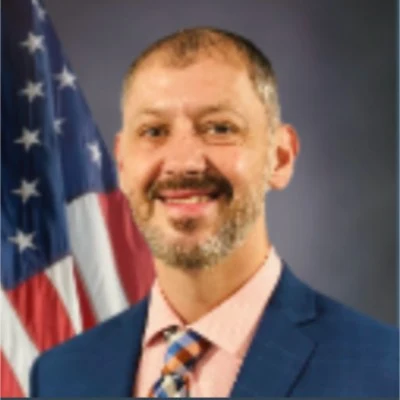
Dr. Dave LeesPMP®
Seventeen years in the Air Force, from ground radio technician at 18 to electronic warfare officer. Medically retired at 35, then a GS-14 registrar before jumping to defense contracting. Now fills an engineering role at the Air Force Life Cycle Management Center with a PMP®, a PMI-ACP®, a doctorate in leadership and three master's degrees.
Show highlights
- He built a deployable communications course at Keesler because the people who wrote the old capstone had been retired for twenty years and had never set up comms in a tent.
- He won Air Force OPSEC Program Manager of the Year largely by asking every squadron to put its continuity books on SharePoint, so he never had to walk in wearing an inspector's hat.
- He took a teaching job to stop deploying, then taught the wing commander, and is completely candid that teaching the wing commander also meant not deploying.
- He and Michael Shick flew the RC-135 in the same year group and never deployed together once, passing each other on the way in and out.
- The week he found out he'd made major and won a school slot was the week his blood sugar came back over 800 and a reservist told him the Air Force didn't want him anymore.
- He sat the PMP® cold on the strength of a doctorate, missed by two or three questions, then studied what he thought he'd missed and scored worse.
- He's talked about twenty people into getting a PMP®. Around ten went through with it, and he can account for all of them.
- One was an Air Force bandsman of almost thirty years with a theology degree who was certain nobody would ever hire him.
- He fills an engineering role without an engineering degree, because a chief engineer wanted somebody who knew project management, knew electronic warfare, and could talk to air crew.
Dave Lees graduated high school and went straight into the Air Force as a ground radio technician. He was eighteen. Within a couple of years he'd deployed repeatedly and taken a teaching job at Keesler partly so that he'd stop, and once he got there he rebuilt the capstone exercise, because the people who'd written the old one had been retired for twenty years and had never set up communications in a tent. He bought a couple of carts and some ATVs, then put students on a patch of ground outside the chow hall and had them establish comms with each other over lunch. Nobody called it a project. He picked up a commission, moved across to electronic warfare on the RC-135, and served in the same year group as Michael Shick without ever once deploying alongside him. Later he ran the base OPSEC program and won Air Force Program Manager of the Year for it, largely by asking every squadron to put its continuity books on SharePoint so he could read them from his desk instead of turning up wearing an inspector's hat.
The medical board arrived out of nowhere and it arrived fast. The same week he learned he'd made major and won a school slot, he came in from the backyard unable to see straight, and his blood sugar came back over 800. A reservist up the road put it plainly: the Air Force doesn't want you anymore. He was thirty-five, with a doctorate in leadership already finished and no plan that called for using it this early. What followed was a move to Alabama and a civil service job, and then a run at the PMP® that he's unusually willing to describe. He sat it cold, on the strength of the letters he already had, and missed by two or three questions. He then studied what he thought he'd missed and scored worse. It took a weekend boot camp on his employer's time, and a third attempt.
The argument he builds out of all that is narrower and more useful than most transition advice. He isn't selling the certification as a qualification, he's selling it as a translation. He watched people leave the military and write "I'm a leader, hire me because I'm a leader" on LinkedIn, and points out that he holds a doctorate in leadership and doesn't believe anybody would hire him for that either. What got him hired was being able to say, in words a contract firm already recognized, that he'd run the projects he had in fact run. He now fills an engineering role at the Air Force Life Cycle Management Center without an engineering degree, because a chief engineer wanted somebody who knew project management, knew electronic warfare, and could talk to air crew. He reckons he's told about twenty people to go and get a PMP® and that around ten of them did, and the one he keeps coming back to is a bandsman of almost thirty years with a theology degree who was certain he was unemployable.
Transcript
AI-assisted transcript, lightly edited. May contain errors.
Hey, everyone. Welcome back to another episode of Veterans in Project Management. Stuart Bell here, joined, as always, Dr.
Michael Shick. Mike, how's it going, buddy?
Hey, Stuart. It's good to see you again. I'm thrilled to, introduce our newest guest, Dr. Dave Lees. Now, Dave spent 17 years in the Air Force before he transitioned out into the civilian sector. and Dave, you spent time, after you transitioned out, both as a civil servant and contractor.
But before that, you know, you spent- had quite the interesting career. So why don't you go ahead and tell us a little bit about what you did in the Air Force?
Right. Thank- thanks, Mike. H- happy to be here, happy to be able to talk. So I'll say I, graduated high school, came right into the Air Force.
Was a ground radio technician when I was 18 years old. I did that for a couple years, a couple of deployments. I will say, looking back from before I knew what I was doing as far as, like, project management, one of the things that I did was, that's when I started teaching. Like, I went to Keesler, Air Force Base in Mississippi to go and teach.
And I had deployed a lot, and I actually went to go teach because I didn't wanna deploy a lot because I had a wife and kids at that point. So-
w- when you were teaching, were you te- teaching in tech school? like,
I was. I was. So I was teaching the, and I got there, and they're like, "Okay, you're just gonna teach, like, transmitters, receivers."
And then I started talking about, like, being deployed. And what we did is we switched from what they were doing at the end, the capstone project was just, "All right. Fix this radio, do this." And they were talking about, "Well, let's do something for people who have deployed." And what I noticed was the people that were trying to do this had been retired for 10, 20 years, and they didn't really know what it was like to be deployed right now.
So it gave me the opportunity to do what's called the deployable communications, block of instruction, where we basically, like, bought a couple of carts and, like, some ATVs, and we went out and we set up, like, deployed communications. And we would have, like, students in one tent set up transmitters and receivers and do the same thing in another tent.
And then they'd go to lunch, like, 'cause we, we set up, we had this prop- piece of land, like, right outside of the, the chow hall. And then they established communications with each other. So, so it was pretty cool.
Was this, this right around post 9/11, you know, shortly after 2001? what timeframe are we looking at?
That's exa- that's a good point. Yes, that was exactly... So I was at, I was in theater deployable communications right when all of that kicked off. And while I was deployed and, like, missed, most of the- my wife's pregnancy of our first child, I had a commander that was like, "Hey, you might wanna go teach so you can kinda get some time to, to be with your family."
So then I came back and I got to do that, and it was really cool just seeing how we were able to put that all together. And really looking at some of the things I learned, like going through, studying for the PMP exam and all that, it's like, oh, I was doing things, you know. If I would've had that kind of framework, it might have made it a lot easier back then.
You know what I mean?
Yeah. 100%. That's so funny. Yeah, so funny. Like, at least one other person said exactly the same. It's I knew what I was doing, it kind of made sense, but a little bit of language and structure might have helped at the time.
Right. Right. And then it, I was enjoying what I was doing then, but I was also, going to school, like online.
That was kind of when like online school first started. So then I was,I got picked up for officer training school, and then it was time to go and do, like switch over to being an electronic war- warfare officer. So it... Basically, when I did that, the first thing that I wanted to do is I wanted to get back and teach.
And like long story short, about 20, almost 20 years later, there's been a lot of where it's kind of teaching and project management together, where I've kind of been able to do that. And I think like Mike has been able to do kind of the same thing, to where that kind of makes you fairly marketable to where you can use your military skills, you can teach, and you can use what you learned, you know, from your, getting your PMP and all that.
So I, that's where I got to get to know Mike. We were in the same year group, but,when we flew together on the RC-135. I say together, but I'm pretty sure we were in literally opposite squadrons, like opposite deployment schedules. We always talked, but like we were never, like, like we never deployed together or anything like that.
We would... I would see him as, as he was getting ready to leave, and I was coming in for like replacement. But that, that was about it.
Yeah. Ships, ships passing in the night.
Yeah. Right. Right. Then I would say that, like while we did that, some, some things that I did were, again, it was teaching, is when I started teaching, like I taught the, like the wing commander, or the vice wing commander, and then the wing commander.
And I basically set up like our senior staff officer training. So that was something else where, again, putting together like project management and teaching. And ag- again, it was many years later when I realized, oh, that, that's what we were doing. But it made sense like now, like why I'm so passionate about like a little bit of doing, both of those things.
So, so I did that. I got to teach the senior officers. And again, that was another good thing, 'cause if I was teaching the wing commander, I didn't have to deploy. So there was nothing wrong with that. And then the, the, then I learned that really quickly. So my, my next job was after like teaching, like, or like the formal training unit, I was the OPSEC program manager for the base.
And it- You say program manager, but a lot of this was more project management than pr- than it was called, I was called, like, the program manager. And basically the claim to fame when I did that was, and it really sounds very trivial for me like to do something where I was, like, the Air Force OPSEC Program Manager of the Year, and basically all I did was took, instead of going to, like, different squadrons and looking at their continuity books and making sure they were, like, within, like, the regulations and all that, I used...
That's when SharePoint became big. So I was like, "Why don't you just put all your stuff on SharePoint, and I can sit at my desk and I can look at this, like, while you're... Instead of coming, 'cause nobody wants me to come in with my, like, inspector hat on and, like, do this. So let's just make this easy, and you put it here, and I can make sure it's good, and then I know when w- when somebody at a higher level is coming down to do an inspection that, that we're good to go there."
Nice. So-
So everybody won.
So did, was that about the time that you started really looking into some project management certification, formalizing methodologies? what was it that, that triggered that, that look, if you will?
So that was probably about three years later. Because it, while I was doing that, that's when I started, like, my doctorate at Creighton.
And it was like, "Okay, I'm gonna go, like, the teaching route, because I like being able to do this." But then- About the same time as that too, like I was scheduled to deploy. Long story short, found out I had juvenile diabetes. So it went from like career's going amazing, had an assignment to go to Maxwell to be able to teach for my last like three years, and then retire into a cushy teaching job, and then, like I got medically retired, so like I had to figure out what to do.
And the teaching part was good. we decided to move to Alabama, and I went straight to the civil service side. So I start...
Yeah. So, so, just to be clear, you, y- you were looking at getting an assignment, to go teach, you know, then this, this horrible thing popped up. and then you got out, you were going to go teach, but then you ended up going there anyway as a civil servant.
Right. Correct? It... Was that, around that timeframe, is that when you started looking into, more formalizing your project management,
That's when- Back to your- Yeah, so... And it was kind of the same thing, whether like talking about like when I was enlisted and then I started doing things that were project management that I didn't call project management.
And then all of a sudden I got to where I was supposed to set up this new, it was called the Civilian Associates Degree Program, for like s- civil service people that have been in for a while to be able to like get into Adobe Connect and online, like get them an associate's degree. And there were a lot of like well-intentioned people that they understood like teaching leadership and teaching, but they didn't understand academics.
And for me to be able to speak that, like it really took... I was like, "Well, we have to do this. We have to figure out like the learning management system. We have to figure out the student information system." And then that's when I worked with some people who were talking about getting a PMP, but I'll tell you, a lot of people talk about getting a PMP, and it's...
I mean, the test, I'll be honest, I just went in cold to take the test because I thought, "Well, I'll just do this." And you know how when, so when you take the te- at least the version that I did. I th- I know it's changed since then, but when I did it the first time, the, the guy put it through, he's like, "Oh man, I think you failed by like two or three questions."
So then it was like, oh, okay, I'll just like schedule myself to do it next time, like the next available one. And I kinda studied like what I thought that I missed, and I actually did worse. So then it was like, it was actually terrible reasoning by me. So then it was like, okay, dude, now I have to like really study, 'cause if I fail the third time, then I got a year or whatever.
So-
Did you,I, you know, I'm not trying to poke you on this, Dave, but did you already have your doctorate at this point when you were going through this?
I did. Yeah, and I was like, like the guy, like he was like, "Well, what book are you using to study?" And I was like, "Oh, I like I, I didn't like get like, like the PMBOK or the study guides or anything."
He's like, "Dude, you need to like..." He's like, "I can't believe that like you were so close to passing with this." So, like I told my leadership at work, and they actually sent me to one of the, like the weekend boot camps, because what I told them is, I said, "Well, really what we need to do is this, this waterfall thing," that I didn't even know what that meant when I did my first like test.
Like, no kidding. But again, it like, couple of questions from passing, so I was like, "But we need to learn this, and you need to like let me take the time off of work, do this boot camp class, and then we'll learn this, and then we can do this project." So long story short, like I blew it out of the water, like with like thinking I don't wanna have to wait another year, 'cause I just told everybody at work that I'm gonna pass this thing.
And so we did that, and then we made it through that project, and then I ended up, like I got a promotion, and that was... You know, we did this s- we did the, learning management system and then the civilian associates degree part, and then like the back end, and you know, the student information system, the part that like, that puts everything together, like for...
Then I was about to become like the registrar for the Air Force. So I had to learn that, but I was like, well- it really, honestly, it was just a way for me to get, like, the ACP, like the Agile cert. So I was like, "Well, instead of Waterfall, I'd like to lead this and do, like, Agile." And I, like, I wanna go with, like, these, these IT people, I wanna do this.
So long story short, they send me to do, like, the ACP, the Agile, like, cert, like a couple months later. And I got that, and I used that to do, like, the next project, which was, like, that's when it was like, "Okay, like, this is what I enjoy doing." I don't really like being in, I guess like s- in sustainment mode, if you will, at work.
Like, I like finding something that's broken and tr- or something that needs to be upgraded, and then finding a way to fix it. So with the, the PMP and the ACP, it really helped me do that. So I was pretty happy doing that, like, work-related, but then it kinda got to the time where it's like, okay, now, like, I'm the registrar.
I'm, like, as high as I can get, like, on the, the civil service side. What do I wanna do now? Like, I'm kinda bored with this, so Right. Yeah.
So, so y- you kinda find your niche, if you will, within not only from taking projects from initiating to planning and executing, and then rolling that in... Y- you certainly have the closeout aspect, but that's more rolling into sustainment.
And then to kinda- Yeah ... keep your wits about you, move into, like, continuous impro- continuous process improvement type of work. i- is that kind of the direction that you were taking, writ large, at least from a, from an output and career perspective?
exactly. And then on, like, on the side as an adjunct instructor, like I'm teaching, like, the CPI classes and all that.
And it's really easy to teach this stuff because it's like, "Oh, let me give you this case study of, like, what I got to do at work." So, like, I like the teaching part, but I don't like, like, "Okay, I need to teach this theory from this book." Like, I wanna teach you h- how I applied this because for me, if I'm going to school or if I'm getting a certification, I'll be honest, it's so that I can get some kind of a promotion or some kind of advancement at work.
And I'll say whether it's, like, my... The schooling has been one thing, but adding, like, the PMP and then the ACP on top of it, and then being retired military, I think that's what kinda sets it apart. A lot of people ask, "Hey, how d- how do I do this when I get out?" And it's like, well, it on- it might have even been easier for me because, you know, I was still, like, getting my doctorate.
Like, things were going well with my career, but then all of a sudden I had to... Like, I got medically retired, so I had to figure it out real quick. I think it was almost easier for me to get where I'm at now because I had to start while I was so much younger, and then I figured out, it's like, well, the more letters I can add around my name, you know, it really, it- it helps with getting the credibility to be able to lead these kind of projects and get people to buy into it, you know what I mean?
Yeah. Well, do you think-
It's that comfort.
Go ahead, Stuart.
Oh, sorry. I was just gonna say, it's that comfort for people, isn't it? Like, you get your foot in the door based on CVs and documents and initials and speaking the same language, and then once you get face to face with someone, being able to back that up with experiences and again, keeping that consistency of language and talking through the same frameworks, all of those are making the person on the other side of the table just more comfortable with, are they made the right choice and are this...
You don't have two heads, and you can articulate a sentence together, and you don't have a weird accent. And, ... yeah, move on to, move on to the next step.
W- well, I wonder, on that, Stuart, and Dave, please, you know, jump in here in just a second, but, you know, you have that, this aspect, right, where, some people look at whether it be degrees and, or certifications as tools to help you get into the door, but then they don't understand the fundamentals.
And, you know, there's certainly value to earning, certifications f- from that perspective, but then once you're in and have to implement, that's where the rubber meets the road, i- I would say. And you get yourself in the door, you may be able to talk a good game, but if you're not able to deliver,then that's a, that's an issue.
y- you know, it may not be the first project, it may be the second or third project, but that's gonna come to bear. And so between that and, certainly adding these credentials, I... What would you th- say to, to somebody that looks at one of these certifications and you yourself, you know, the constant theme is these certifications are not easy.
you can't necessarily go in there cold regardless of your educational background. what is it that, That really sets it apart. Is it the resilience, you think? Or the grit of somebody to have to be able to study and understand it and being able to apply it? Or is it, the fact that everybody speaks the same language and they all kinda have that,unity of thought and effort?
not in groupthink, but everybody speaking the same page or speaking from the same playbook. What do you attribute it to?
Yeah, that's a good question. And I go back to when I talked about when I just went into the test, like cold- Yeah ... thinking it's like, "Hey, I've got a lot of degrees, a lot of experience.
You know, I should be pretty good at being able to do this." But what's different is, like whether you're in college or whatever, sometimes, you know, you re- you start reading the question and it's like, "I'm pretty sure I know the answer to this question." But that entire, like whether it was the PMP or the ACP exam, 100% application.
It's like I have to read this question twice because it's just not asking it like a true or false thing. Like every single question, you have to... You don't... You study this stuff so that you can get to the mastery level and apply this stuff. You're not studying it to memorize things. Like I had my mnemonics where I would memorize things, and I would memorize formulas.
But then I still had to know, like how to use them. And I've never had a test like that before to where, like I'm writing down like my formula or my mnemonic, but that's not... I'm not getting the answer just from doing that. I'm helping myself get the answer by doing that. And you look at that, you look at like what we have to do for our continuing education credits.
It's like, like to me, like I tell people, it's like, "Hey, I'm gonna tell you, I didn't respect these, these certifications to the level that I needed to when I first just thought, 'Yeah, I can pass this test.'" it's so much more than- Yeah ... just passing a test. And again, it's something to where I'm like, Like I'm gonna... Like I've had to do my research and all that kind of stuff, and it's like, "No, I'm never gonna let this thing lapse." Because I'm not going to... Not that I couldn't like pass it, but just the, like you have to be on your game for those tests. And that's why even when... It used to be, like the version of the PMP exam that I did had a lot of Agile in it, and they were testing some of the Agile questions.
So I picked that part up real quick. It's like, I need to take the Agile test as soon as possible because I studied this, and I need to be able to knock this one out too. Well- and it was completely different than just like, I'm just gonna go get another degree. You know, write a couple papers and, you know, p- pass a couple tests.
And it... To me, it was more difficult than any like educational type thing that I tried to do. And but still to say that I've gotten more out of it, and it's exactly what you, you both said- It got me in the door, but it also, the credibility comes with like the PMP, the ACP by your name, but it also comes from like you know how to make these, like run these projects.
And that's really what matters, especially for me now as a contractor because they're, like my company wants me to help them fix problems and make money. And that certification has definitely helped me be able to do that. And I do put that into a lot of the, the curriculum that I teach, 'cause it's easy.
If I'm teaching a project management class, why wouldn't I just teach stuff from the PMBOK, you
know? Yeah. Well, so with your contract firm, a- and, before we get into that, so you were down, in Alabama and you were the registrar, and then decided to make the jump from a civil servant position into, contracting.
How'd that come about? And was it born of your project experience, or was it, was it just your desire to move to Ohio, or, you know, how'd that come about?
Yeah, so I'll say kind of all the above and a little more. Like, when I talked about coming in the military when I was 18, like, my wife and I met when we were 16, got married at 18.
I came into the military and we said we are never coming back to Ohio. And literally the first- Famous last
words ...
chance we got. Yeah. we came back, and it's like, what? But it, like, we're from Northeast Ohio. Dayton, Ohio is, it's like two different states. Yeah. it's a little bit different.
But, in, in a weird way, like, I had, I was so focused because I got medically retired when the career was going pretty well. I was so focused on just moving up and getting to where I could provide more for my family, and then it kind of got to a, like, what do I like doing? What am I enjoying doing right now?
Like, what can we do as a whole? And then for my kids, I was like, "So are you guys gonna go to Auburn? You gonna go to Alabama for school?" They're like, we're going to school in Ohio." So my, like, my theory was to come and live near Wright-Patt so I could stay civil service. Like, I was a 14 at the time in Alabama, and there were no 15s there.
So it was ki- you're talking, GS 14. GS, right, yeah. So then it was like, well, it's kind of weird that, like, I don't have anything to promote into, and it's just I need something to be working towards. That's just how, you know, I, that's how I'm programmed, and I always want to look for, you know, the, to optimi- if I gotta work, I wanna optimize it.
So I came here and it was like, well, you know, I applied for a couple of 15 jobs, but a lot of people didn't really, didn't know me, so it wasn't gonna be easy to get hired as that. And so when I did the, talking back to the senior staff officer training when we were at off it- the wing commander who was, like, he was a four-star by this time, he was...
He came from the AWACS to the RC-135, so I taught him from the one to the other. Well, I- one of the jobs that I found here while I was still in Alabama, I was still... You know, and this was mid-COVID, so the perfect time to, like, move, find a new job, and all that kind of stuff. But it actually worked out really well.
I found a job with a contract firm, for, as a TSRA, training systems requirements analyst for the AWACS, where they were have- upgrading a system, and I was going to be able to find out, like, what kind of training they needed and write their training documentation. So that was perfect.
my wife was happy 'cause both of our families were, like, three hours away, a perfect buffer. You know, hope they don't listen to this, but if they do, you know, I said it. You know, just to my- I was gonna say, you know this
is recorded, right?
Yeah. Sorry. Yeah, no shame. So, so then I started with that, but then...
And what was cool is it was... That was basically an 18-month contract. So I literally moved from Alabama to Ohio and gave up a guaranteed civil service job for an 18-month contract job. Little bit of risk. So I did that,and it worked out, and it, like, it worked out in a lot of ways, and then I got into a job where it was like I got to...
Right about when that was up, it was like, "Wait a minute. You have electronic warfare experience, so we... We're looking for somebody to work in..." It's called, LAIRCM. It's what I worked. It's large aircraft infrared countermeasure, and it's- I work there now, and basically I'm filling an engineering position.
I don't have an engineering degree. I have an aeronautical science degree. I don't have an engineering degree, but I have an electronic warfare experience like we have. So the chief engineer was like, "You ever seen the movie Office Space?" And he goes like, "I need someone that knows project management and electronic warfare and can talk to air crew.
And I think that's what I see in your resume." So it's been about four years doing that and it's pretty cool. I literally take like engineer speak and bring it down to my language and then work it to, with the air crew for that kind of stuff. So- it's kind of funny how it all worked out that like I've had all these cool jobs and a lot of people, like whether it's like, you know, if they find me on like social, like whether it's LinkedIn or whatever else, it's like, "How'd you do that?"
It's like, well, like on one hand, you know, there's a lot of education, but on the other hand, you know, y- I saw that there were a lot... when I came out of the military, there were a lot of people that were on LinkedIn saying, "I'm a leader. Hire me because I'm a leader."
And it's like, wait a minute. Like, I don't th- like, like I have a doctorate in leadership, and I don't think somebody's gonna hire me because I'm a leader.
You know, I think somebody's gonna hire me because of my technical expertise, and I need to find a way to bring this all together. And to me, that's where the PMP came into play, is that was the way for me to say, "Oh, this is what I've been doing. This is my claim to fame. Like, this is what I want to be able to do."
Like, I'm n- I'm not... my title isn't project manager or program manager now. it's engineer. But really, I'm using everything that I learned. If... and it's kind of tough to, like, teach people that when people are like, "Hey, I got a year before I get out," it's like, well, you should get a doctorate and a PMP, and, you know, do all that other stuff.
In one year. Yeah.
That's actually a interesting perspective, 'cause it does sound like you're at the end of the spectrum that is really just happy with the qualifications, happy to continue learning, happy to keep- keeping busy and doing more stuff. Other end of the spectrum is someone who just wants to turn up and get paid, but that person who's in the middle, who's maybe not naturally acclimatized or, predisposed to going down the certification route, how easy is it for them to bridge across?
Is it... Do you think for most people it's just having their eyes opened to that potential and realizing what the outcome is, and then they just kind of kicking themselves up in the ass and say, "Oh, yeah, I should do that," or is it more of a do people have to get over this hurdle of self-confidence or going back to school or what's the, the secret sauce that gets them thinking, "Ah, this is what I need to think about," where all the bricks line up?
So I could tell you, like I was thinking about this, and I tried not to, like, script anything for, like, talking to you guys and all that. Just talk about, like, what I'm passionate about and all that, and it's, like, how many people have I talked to that, like, I gave advice to like, "Hey, you should get a PMP," that, that got a PMP?
And it was 10. Like, well- So, like, 10 people ...
10 people that you were just talking about, or actually 10 people out of, say- ... 200 that actually executed on it?
I would say 10 out of, I would say about 20 that I've said, "Hey, like, if you want your, like, biggest bang for your buck, like, get a PMP." And a lot of those people did that, and none of them are working, they're...
I mean, some of them are, like, contract, like, project managers, but, like, they're all, basically what they're all doing is, like, the one guy, he's... So literally we left for basic training the same day in 1999, and he was in the Air Force Band for almost 30 years, and he's like, "Dude, nobody's gonna hire me.
I'm in, I was in the freaking band and I have a theology degree." It's like, "Dude, get a PMP." And he was, like, as, when he was a chief, and, like, he was, we went to church together, and I told him, I was like, "Dude, you need, you should retire. Like, like, trust me, you can get a job." And he's like, "Dude, I, there's no way.
I just want a job." Now, like, like his salary is, like, if he would've known that while he was in, and it was like, well, yeah, dude, like, I told you, like, get a PMP. Like, okay, yeah, you were in the Air Force Band, you were a drummer in the Air Force Band, but that, like, you led people, you led processes, and now you took the certification and added it to it.
And I'll tell you, when I, like, that first job that I, that first contract job that I got, I didn't even think about it. I should've thought about this. When I, they, the job description said that they wanted, like, a PMP, like, to be the training systems requirements analyst. No kidding, like, they asked me for proof of, like, my PMP.
So, like, I, they, no kidding, like, they knew what they needed, and I, like, I appreciate they, there, and I didn't know there was a way where, like, they could go somewhere and put in my information and get it verified and all that. but they did. Yeah. not that they didn't trust me or anything like that, but-
but they actually
said- Well, trust but verify. Trust but verify.
Yeah. Yeah, so that's where I'd say the biggest thing now is telling people, "Dude, like-" I get it. You're a leader. You were a leader in the military, but, like, that's not gonna pay the bills the way that you might wanna pay the bills. If you take that and you add a PMP on top of that, that's going to pay the bills the way that you wanna pay the bills.
Well, and I... Part of me wonders, much like you, I'm prior-enlisted guy before I became an officer, and, between... I ended up getting an ROTC scholarship and got out for two years before I went back in. And on paper, I was making significantly more money, but my paycheck, I got out as an E4 senior airman, and I nearly doubled, but with insurance and everything else, I was making a few hundred dollars more a month than I was on a- active duty.
And, you know, it's one of those things that if you're able to position yourself and you... Depending on what rank and what you do and things of that nature, and I was in IT, so I moved in from networking into communications, engineer role, as a defense contractor as well. And it, it was surprising, and really the, the translation of your military pay with all the other benefits to your civilian pay Did, did you see that- Right
as well? Particularly because you went from active duty to, a government civilian role.
Right. And that was... What I learned really quick is, like, that's... You're gonna be comfortable doing that. But when I got to, like, the GS-14 side, it's like I'm having to supervise a lot of people, and I'm overseeing a lot of projects.
And when I went to, like... when I talked to the first recruiter, like, here in Ohio, it was like, "Oh, I'd like to keep my pay where I'm at." And the lady's like, "Oh, no. Oh, no, you're... We're gonna look to darn near double your pay because you're going from civil service to contractor." And I was like, "Sounds, sounds good to me."
Sold.
So that was helpful. And I... That's kinda where I've been to where when I was enlisted, like, I came in, and I came in for six years because I wanted to get the rank early.
And then I made senior airman below the zone, not because I wanted to, like, win awards and get recognized. I wanted to make more money quicker.
And then it made E-5 my first time, and I was like, "Wow, that's not that big of a raise." So then it was like, "Oh, if I become an officer, then it doubles my pay when I become a lieutenant, and then when I'm a captain it doubles again, and then I can fly and I can get flying pay." And it was kinda the same way, like, on the civil service side where I could have been very happy where I was and keep the job, but it was just- I wanted to stay busy and I wanted to solve problems at work.
Like when things, like I, I run out of things to do. I'll tell you, like now, like I'm in my last semester for like my fourth master's degree. Like I was like, you know, I never had an MBA, I wanna get an MBA. So I'm back at Creighton for an MBA in financial psychology because I wanna be able to help and like learn things about money and all that.
And then I'm, I mean, I'm using like veteran's benefits to do it and all that. I have no intention of getting into like the finance side or anything like that. But I say that- You don't wanna day trade? Yeah. Yeah, get in early on SpaceX and all that kind of stuff or whatever. but I really like doing this, and I'll say my, so my youngest son, like he just won a big scholarship from my company.
Okay. Like, and he's trying to figure out what's next. And he actually changed, like he, he was gonna be a speech therapist. He was undergrad within rehabilitative sciences, and then he won this scholarship for my company and he was like, "Well- What, like, what do you do every day, you know, kinda thing.
I was like, "Here, why don't you come to work with me for a couple hours and you can see what we do," and all that. And then, like, the company was like, "Well, what if you went and you got an MBA and you got a PMP like your dad?" Literally, this was, like, two months ago where, like, the CEO of the company is in town, and she's like, "Why don't you become a project manager?"
'Cause he, like, he's really good with business and all that kinda stuff. So literally, like, that's my, like, my youngest son is going to be a, get his MBA and do, like, the PMP so that he can kinda do, like, the kinda stuff that I do. Because he's kinda got a similar personality to where he doesn't wanna sit still.
Like, he ... Like, like I get it, some people ... Like, I don't want everything to be crazy at work, but I also wanna be challenged and I want the workday to go by pretty quickly. And doing things with what we learned as project managers has shown to be the easiest way for me to be able to do that, if that makes sense.
It, it does. And Stuart, if you don't mind, I got one more quick question. Going back to the approximately 20 people that you mentored about earning the, the PMP, first question is was there any ever consideration for the certified associate in project management or a scrum master or product owner or any of those other certifications?
And then the next question is of those 10 people or 20 people that you mentored, the 10, did you, do you see really any discrepancy in career outcomes from those who earned it versus the ones who did not earn it?
Oh, yeah, and I'll answer that part. Yeah, huge for the ones who earned it. Because where, like, where I work, like, on, like, we have, like, a ton of civilians here at Wright-Patterson, and they're
These contract companies are always looking for people, but they want somebody that somebody can vouch for that they can get the job done. And- I've seen so many, like, guys local here that whether I go to church with, whether they live in my neighborhood or whatever, that they get their PMP. And, like, I do tell p- like, "Hey, you get your PMP, I'll talk to, like, the VP of my company and, you know, we can see what w- what we can do."
And it seems to be, like, the easiest way to get in as a contractor. Because in an area like this you're gonna have a ton of retired military. And even you're gonna have a ton of retired military with, you know, graduate degrees, you know, terminal degrees. But I f- I can see why at this point, and I wish, like, when we were in TAP and things like that, that they would talk to us about this kind of stuff, 'cause I would've gotten my PMP much sooner.
But I will tell you, when I got mine it was the PMP and then the, the associated P- PMP, like, those were th- it was just those and then, like, the, the agile part was coming out. But now there's a lot more where I work working with risk. So I've talked with people, I was like, "Oh, you might wanna go, like, like, the risk route too."
Because if, like, if I were to get another cert and have to take another one of those tests, I would g- I would go the risk route, just because I've had, like, my boss is like, "Hey, do you know anybody that has this, this kind of background?"
I-
And-
And you're talking, are you talking strictly, like, PMI's, r- risk management professional or-
you talking about some other certification?
The PMI one.
Okay. So the RMP.
Right. and that's where, like, so when I first got out, I did, like, I, through Syracuse University, like, they'll pay for a cert, they'll do, like, the veteran stuff. Well, I was like, well, at first I wanted to do the PMP, but it's like, no, this is gonna be too much.
So then, so I did, like, I got the Six Sigma Green Belt. Then it's like, well, I'm not really working in, like, a manufacturing plant. So, like- Yeah ... I put the Six Sigma Green Belt, like, on my resume, but literally no one has ever asked me about like, my Six Sigma cert or anything like that. So that's where I do try to tell people, like, "Hey, if you're gonna do this, like," and especially, like, a retired, like, whether it's, like, senior enlisted or, like, you know, field grade officer type thing, it's like, I would say go straight to the PMP.
And that's just, like, from what I've seen here. And it, that could be wrong, but it, like, I think it has really worked well for the people that I've worked with that have asked me. And then, like, it, I think it's something that you can do. I mean, it's, some people take a year to study.
Some people do it like me and just kinda wanna go in and see what the test looks like. I don't recommend that 'cause that third time taking the test was very difficult. You know, just going in. I mean, I did fine the third time and all that,
but- Nothing like a bit of pressure to keep you focused, is
there?
Right. And it's like, I don't wanna wait a year. Like, I'm gonna look like an idiot at work , if I tell them I just failed this the third time. By the way, that's
Dr. Lees, Yeah.
Like, this is the guy that's getting his fourth master's degree right now. It's taken three tries.
But it was, I think, yeah, the worst thing was the guy putting it through, he's like, "Oh man, you were, like, one or two questions away." Then it's like, well, why would I study, you know? I, like, I remembered a couple things. I was like, I'll look these things up and then I'll just take it again. It's like, oh, I did worse.
Like, what am I gonna do now? So hopefully that answered the question, but I would say, like, the PMP or the Agile, but then I think the risk is also, like, that's huge. You know, especially for somebody who's, like, a, supposed to be, like, an expert, like a contractor that's advising, like, a commander or some kind of a senior military leader.
Like, they want to kn- they want somebody who can talk risk. And that's where if I were to get another cert, and there's a chance that I probably do, it, that's exactly the one that, that I'd go for after, after being done with school for now.
Well, didn't you just say you're about to be done with your fourth master's?
So you've got
some space to fill. Right, right. All this free time. Right. Right.
Interesting. So within your organization or some of the other organizations that you are working with, are there really any other certifications like ITIL that, which isn't really project management per se, any other certifications that you see kind of meeting the threshold of CAPM or particularly in this case the, the PMP?
I
would say no. Like, I worked in... I di- I dabbled in cyber for a little bit and I looked at some of the, the IT certs, but that's a lot different, and that was something where-
It's like that, that would make sense if I had a background of doing that kind of stuff. But I have a background of doing like project program management, some agile. So that's where it made more sense to go this route and for anyone who asks to tell them, "Well, I, I would go anything under the, the PMI umbrella."
Okay
I think that's more, as you're mentioning, the translatable skills. My background's on that ITIL side, service management, and at the time, so again, I didn't have quite so many gray hairs when I did that, but at the time it was definitely practitioner transitioning very focused to the discipline of the practice.
So it made perfect sense for people coming through that service and project transition route, but much more around even comparing it to the PRINCE stuff, much more around specifically that discipline as opposed to the broader PRINCE skills on project management across any, I mean almost any industry.
So it is interesting that very specific, and I think that's what's interesting for people who are doing what is effectively project management, but just not called that. It's just such a translatable skill as opposed to any of the other cyber or ITIL or, or even some of the business analyst type things.
Maybe there's a little bit more specificity to the discipline rather than broad applicable. So I think as people are looking for what to do next, it's just that open goal for, "Hey, this is a perfect marrying of what you've been doing already." The language is gonna be different, but you're off to the races much quicker than trying to start from the bottom end, kind of, have to relearn a lot of stuff.
This is just repositioning a lot of stuff. Again, not to say that it's easy, but it's not as hard as going in the completely side door.
It, yeah, it almost seems like whether people like going through, like TAP, the transition program that we have, it seems like the focus is you gotta get a good resume, and it's like not...
A lot of these people's resumes are gonna look the same. It, like if somebody comes up to me and says, "Hey, it looks like you've been able to do some stuff since you retired, like, what would you recommend?" The first thing is like, if you're getting ready to retire, like you should take active duty time to start studying for your PMP.
Like, that's literally one of the first things that I recommend. I'm like, don't... Like the doctorate is one thing, but literally if you can take some time, let's say you've got a deployment before you g- retire or whatever, like take that time to study for and get the PMP, like even while you're on terminal leave or something like that so that you can have that fresh.
And there's not much more that I would recommend than somebody like getting their PMP. Not that I'm like some kind of spokesperson or anything like that. No spokesperson. It makes... Yeah. Y-
you know, the more conversations that we have about this, a- and this is one of the questions that we ask is- Should you wait until you're about ready to get out, or is there value of earning the certification?
are you gonna be able to bring value of, as a, CAPM or a, a PMP or an agile practitioner or y- risk management professional, what have you? Are you gonna be able to bring value and see tangible results while still on active duty so you're not, you know, plussing up rate as you gotta get a resume ready?
But rather, you know, years and years, in some instance of being able to demonstrate your capabilities, hone your craft and your skill, and then transition out. Because at the end of the day, whether you do 40 years or you do four years, I mean, the military career comes to an end at some point. and then, you know, the, the likelihood that you find yourself in another profession is probably greater than not.
So, you know, going back to what you were saying is certainly while you, before you go on terminal or right about terminal, but do you see value before that? Say think, you know, Senior Airman, Lees or Sergeant Lees or Captain Lees. Well, it, be- well before you, you transition to your next phase.
I would say so.
Like, for me, at my s- at my 16-year mark, that's when I started my doctorate, and if I could go back, like I would still do the doctorate, but I would've probably taken my time, like I'm deployed, I'm done with my PME. I would've taken the time to study for and get my PMP so that I think that would've opened it up for a lot more things when I got out.
Because it, it almost seemed like I was looking for a job that would, somebody that would hire me. Instead of now, it's like I actually get offered a decent amount of opportunities because of the experience, and it's like, no, that just doesn't sound like something I wanna do right now. S- and I think that the PMP is the majority of the reason why.
And it, I'll say going back to the, the tests and actually getting to like where you actually have to apply all of the knowledge, that is really what has kinda helped me and get me to think in a different way. To think in the, the PMP-type way, even if I'm doing something else. Yeah. And then even when, like sometimes I'll be thinking about, you know, this project versus this project, it's like, oh, we're actually switching from Waterfall to Agile here.
That's pretty cool. But it, you, and you can think back and it's like, "Oh yeah, I did this." So, and I think it also helps me interview for jobs better if that m- and, like, talk the talk, if that makes sense, because I can articulate what we did when we were doing things. Yeah. Instead of, again, going back to the, "I was in the military, so I'm a leader.
You should hire me 'cause I'm a leader," kind of thing. You know?
No, that's fantastic. So, you know, certainly you're driven by, you know, supporting your family and you need those constant challenges and things of that nature. Do you find being, working in project management, whether you have the title or not, you finding purpose? in, in what you do.
You know, you certainly had purpose while in the military, well, I would, assume. a- and would you say you've been able to find purpose through project management?
I have, and it, I found purpose through... So I work in the Air Force Life Cycle Management Center, and when you think about that, it's, okay, we have a ton of civilians.
Like, literally the, the unit that I'm in, there's one, there's, it's a material leader, not commander. And then there's, like, 100 plus civil service and contractors, and there's one military. So in the Life Cycle Management Center, we're literally, you've got logisticians, PMs, and engineers looking at the different airplanes and being able to sustain them, like, long-term.
Like, when we worked, when we were on the RC-135, like, the Big Safari office, like, that program office is right next door to where I work, and that's where, like, all of that gets done. So for me, I actually like that because I get to look at, like, what's going on right now, what we're putting on the airplane, but then I also get to look at, hey, this, the war looks a little bit different these days, so now we're gonna outfit the airplane with this, so we're looking at this in the long term.
And even though I'm in an engineering role right now, what has helped me is being able to speak the, like, to the PMs, and to be able to understand their lingo, whether they're civil service or they're a contractor. And it's been helpful in being able to be kind of a plug-and-play with putting me on different projects where I stay busy, I feel, like, fulfilled from work, and it, I don't get, like, frustrated from, you know, hitting roadblocks or anything like that because again, instead of focusing on problems, we're always looking for solutions.
So it's, it's pretty neat how it kind of worked itself out. Like- Like, I got medically retired when I was 35 years old. So like, I had a long time, like, to work. I joked with my wife, 'cause we were there in Nebraska and we had been there 10 years, and I was like, "You know, I could just stop working." And it's like, "You're not gonna stop working when you're 35."
At 35,
yeah. "
Yeah, we're gonna enjoy some of the finer things in life, and you're gonna keep working." "We're gonna do what we wanna do." The, and it's worked out pretty well. Yeah. And I think it would look a lot different if I wouldn't have been like, "You know, like, I've got this certification, I've got this degree, but I think the, the PMP is what I'm missing."
And then like, "Oh, maybe this, this next project they want me to do, maybe I can convince them to foot the bill for my Agile certification too." And then it all worked out.
So, so when you were... You know, certainly you were a product of the unexpected, with your MEB, you know, because- i- it came up pretty quickly, did it not?
And so you almost had to scramble and so is it fair to say, and you alluded to this earlier, but it was kind of one of those, ready, fire, aim type of situation. You're like, "All right, how can I be marketable now that my retirement accelerated, you know, several years?" I was focusing on this career tra- trajectory, and then all of a sudden now this came up.
It, it- Yeah, so I'll tell you, like, the week that changed everything, long story short, it started off with me getting a letter saying that I made major and I got a school slot. So that was pretty cool. And then I was getting ready to deploy. Like, I was working in XP. I had to do, like, a 30-day, like, hey, everybody on wing staff has to go do their deployment, whatever.
So, and I hadn't deployed in, like, two and a half years. So that's where, like, the loss of hair, like, that, like, I haven't lost much since then, and it turned out it was because I, you know, my blood sugar was, like, through the roof for all that. So I literally one day, again, that same week where I found out, "Hey, you made major, you got a school slot, we got this, assignment for you," I also found out that, okay, put my bag, took in my bag, so I was getting ready to deploy the next day.
go home, and then I'm, like, like, talking to my wife and I'm like, "Hey, I was out in the backyard with the kids." I, like, I can't, like, I can't see. Like, it's all blurry and all that. And then she takes me, and I'm like, no, I'll figure it out when I get to Al Udeid. You know, we'll figure this all out."
And then it turned out that, she, like, I put the kids to bed, "Hey, dad's gonna be gone when you wake up." And then she's like, "Hey, we're gonna go get you checked out." And then, like, like, my blood sugar was, like, 800 and something and- Jesus ... and it was, like, hey, like, the, it was an Army reservist, like, right up the road, it, like, the, in the Papillion, like, hospital there, and he's like, "Son, the Air Force doesn't want you anymore."
And I'm like, "Oh, man, they just told me I was going to school and all that kind of stuff," so literally, like, a couple of days later. So then it was like- Well, what do we do next? So it was so crazy thinking about, like, what was, what we were gonna do next. And that's where I was like, well, you know, I just finished my doctorate.
Like, we were set up pretty well, it was just we weren't ready to do it then, and that's why we were like... It's like Yamath treated it like a project. It's like, well, we're gonna move to a very low cost of living place where they do teaching, and I just got a degree for teaching and all that. And we got there, and we moved up the civil service chain.
And, like honestly, like we say, okay, so I found out I had juvenile diabetes like a year and a half later. Like, we're in Alabama, we found out my wife has cancer. Like, both of us are fine now, but we're in our 30s and, like, we're healthy. Like, I'm doing Ironman triathlons and all that. So that's where We're like, "Look, we're gonna do what makes us happy."
Like, I'm gonna work, but I'm not gonna, I'm not gonna be in a job that I don't wanna do. So that had a lot to do with the, okay, I, you know, gonna get my PMP, open up some doors. Had no idea it would open them up like this, and it was like, all right, like, I don't think I'm happy in Alabama. I think Alabama was good to show me and my family, like, what we wanted to learn or what we needed to learn about what we really wanted when we grew up.
And then now, like, we're- we're here, and it helps being able to say, "Hey, I was a GS-14. We did this," and all that... With a lot of people, I'll tell you, like, it's like, "Oh, dude," like, you know, "things are so good for you, you know? It's great." And it's like, "So let me tell you about, like, my medical diagnosis, my wife's medical diagnosis, this certification I told you to take that you're like, 'No, I can't pass that.
You're smart.'" It's like, "Dude, I took the maximum amount of times to pass. Trust me, you can pass this thing." "Take it a little more seriously than I did." So it's, it- it's crazy just looking back at all of it. And I do like t- like, when people are like, "Hey, do, can you talk about, like, your transition from military?"
And it's like, honestly, like, my wife tells me right now, like, she thinks I would be a miserable, like, 06 right now if I were still in. Because I was so driven, and I was so, like, "I can make the career and the family work," and it just, like, it wasn't going to all work, like, that way. Like, something was gonna have to give.
And honestly, so I will tell you the reason that I said I wanted to go to Alabama was I had two options. Like, it was, "You're gonna go to the Pentagon, or you need to find an assignment." And it's like, dude, I've been in, like, 16, 17 years. I got kids that are in middle school. Like, I don't know how to tell you, but, like, I don't really plan on staying in, you know?
And I said I was gonna get out, but my wife's like, "No, you were too happy. You were too comfortable to get out." So it really, like, I, like, I wouldn't change a thing. Yeah. Right now. You know, maybe I would've studied a little bit more for the first time for the PMP test. Well, it set up
for- But that actually...
Yeah ... for everybody to learn from that mistake.
yeah. It's, like, it's a good, like, when people are like, "No, I can't pass this test," it's like, "Dude, trust me. You get three tries." "Take all three tries if you have to."
And then you get an extra year to study if it didn't
work
out.
Right, right. you can go into work and tell people that you were the idiot that thought that you were, you could just go in and pass it without studying.
I guess that's a question. So people think that it's too difficult, they can't do it, it's too much hard work. Boots on the ground, is that actually the case do you think for most people, or do you think that most people could do it with a little bit of time and effort, it's just the fear around it? It's not actually fundamentally that they're, that what they've done isn't translatable or it's very, challenging.
It's just literally get past that, start to study, you'll realize that it's actually once the wheel starts moving, it builds that momentum. what do you think it is that stops them? Just confidence or everyone else saying it's hard?
I think it's a combination of that and then just, like, not wanting to get started.
And I'll tell you, like some people, like, I will tell you, I think most people are like smarter than me. But I will tell you, not a lot of people are as driven as I am. And I, the example is I've recently gone from, like, my kid and I did an Ironman like last fall, like before his wedding. It was the coolest thing, like training with him and all that.
And then I've switched from like triathlon to where like I love golf now. And what's weird is I don't think I really like golf. I like that I'm not really good at it. I like need to control my emotions with it and like I can go out, I can walk, it's good for me, my kids like it, and it's like this challenge for me.
And it's kinda tough for me to see that like, I think some people don't like to be challenged in that way, and some people are scared to fail. I joke with my wife, like, like when Mike and I went through our, like our, was it our flying training and all that where we had to, for some reason we had to like fly a Cessna before we like became electronic warfare officers.
And I was joking, I was like, "Well, I landed the Cessna on my third try." You know, 'cause I went around twice and, you know, I got it on my third try. And I think it just takes like a lot of people don't... A lot of people like don't want... are afraid to fail. And it... Like if you're afraid to fail, you know, that's, it's gonna be pretty difficult because yeah, you might be really smart and you might be able to like pick up on things and memorize things really quickly, but you have to actually like dissect like the PMBOK or like whatever other like study aid that you have.
'Cause you have to actually want to learn this stuff. And to me, like once I, I went in and I was like way too confident, but then it was like, this is like such a good challenge. Again, I talked about like I got to where I was a GS-14, there were no GS-15s. Like, I was like, "This is crazy, but like I can't do this.
Like I, I need the next thing," and all this. So that's where
Yeah.
You know? I've learned a lot about myself with all that and then the transition from being in the military to not anymore. Yeah.
Well, but I think you bring up a, a, a key point, Dave, is- It's also about humility, all right? Yeah. you can accompl- you can be the smartest person in the room, but if you're f- afraid of failure or afraid to admit what you don't know, well, then how are you really supposed to grow?
Because you're setting barriers, on, on your right and left side. I- if you are willing to have the conversations, admit that you don't know something, and have a dialogue and l- continuously learn, you're gonna con- be able to continuously grow. And, you know, look, I- it doesn't really matter the role that you have.
You know, you could be one of the more junior ones in the room or you could be the senior one in the room. at the end of the day, people know, one, nobody's perfect. There are th-
Yeah ...
you have subject matter experts as a logistician, maybe a mathematician, and a theologist, and a philosopher, and all of these, and they may be great at that particular topic, but then they don't know project management, or they don't know the difference between management and leadership, or how to...
the, the emotional intelligence, needed to be able to do stakeholder management. Having the f- the, the humility to recognize where your strengths and your weaknesses are and, be willing to own up to those, and then correct where you're able to correct and continue to strive r- really is that, that testament.
That fits in, I would argue, into, to much greater success.
It- Yeah, when I... So the program I did at Creighton, like one of the application pieces, we did the Gallup StrengthsFinder.
And I, like, 10, 15 years ago, I'd have been like, "This is, I mean, this is ridiculous. Like, why do I have to do this, you know, these soft skills type thing and all that?"
So then I do it, and then I'm talking with my wife about it, and she's like, "Oh, how'd this go?" I'm like, "I don't know. I didn't even look at it, you know?" And I'm like, "Okay." So my top three was, like, futuristic, learner, planner, educator. And then for my wife, like, it was literally, like, she took the thing, and it was like the inverse of mine.
And it was like, you know what? Like this is why we've had such a great 28 years together, is because, like, like, we know our strengths. Like, when we do things, like, even, like, like, money wise, like the day-to-day budget, I have no idea. But, like, the long-term planning, she has no idea. And we make it all work.
And that's where, like, getting to know yourself, like the, the whole thing between, like, going from when I was doing triathlons, okay, I'm a hardworking dude. I can just, like, get it to where I make myself sick to just do this, like, 15-hour event and get it done. But then it's like, all right, I've done that.
Now, I want to work on being able to con- control my emotions and learn how to golf with my kids so that, like, my adult children learn the same things. And it's kind of weird, but when I explained it like that to my wife, she's like, "Oh yeah, I get it." But it's, yeah, it's completely different.
You know, we, my wife and I were talking last night, so we go on bike rides- And like I don't talk to her when I'm on the bike ride. I'm looking at all my metrics. I'm looking at my speed, my power, my cadence. I'm training for my next thing or whatever, and she's like, "You tell me you wanna go on a bike ride.
You don't even talk to me." And I'm like
Yeah, we're- Dave ... on a bike ride. Yeah.
Yeah. I'm like my ... Like, when my oldest son and I would do, like, 100-mile rides for our, like, Ironman, like, we didn't talk. Like, I did not... This is... So a- again, it's all, like, you know, figuring out, "Okay, I'm good at this. Like, I'm not good at this, but this person's good at this.
let's work together," and having a little bit of humility. And it... To me, like, if I'm good at something, yeah, I'll work to make that better, but I really wanna look at the things that I'm not that good at, and I wanna make it better. And that's where kinda the golf kinda fits in-
'cause there's a lotta, there's a lotta skills that I can learn from doing that.
oh, come on now, Dave. I, I know it's because you wanna sit there and watch golf on television.
Yeah, right, right. So that's why my wife and I actually went, like, a couple weeks ago when, like, the Memorial Tournament was in Columbus.
Like, we go and watch, like, professional golf and stuff like that now. Oh, wow. And it's just, it's completely different. Like, ag- again, like, we're empty nesters. You know, this is... it's kinda weird. And again, like, being medically retired in my 30s of kind of... And having kids when we were barely 20 years old, that's kinda...
and only having two kids, that's-
Yeah.
You know? It's a big difference.
Well,
I- we're old souls.
Well, I know we're talking project management, but I think, you know, I certainly would be upset with myself if I didn't ask this question. Have you mastered the golf clap?
But,no, I'm probably one of the loudest dudes on the
I just, like I gotta figure that part out, you know?
Came into it from the Happy Gilmore angle rather than the,
Yeah, right ... master sergeant.
Right. Well, no, that, that's fantastic. So if you were, you know, certainly you've provided some fantastic advice and mentorship, especially to some of the individuals who were, you know, retiring, the, those, senior leaders, if you will.
what would you say to the NCO or somebody who did four years, whether it was, junior enlisted or a warrant officer, or maybe even a,a, a, a company grade officer. What would you say to them who are looking at getting out? now granted, I understand that, you know, their, the levels of responsibilities and certifications are probably gonna be different between those audiences.
But, you know, what would you say to them to help them if they're discerning getting out or in getting some form of certification?
Yeah. I'd say, like, first, like, from the financial side, like, their retirement looks a lot different than, like, our retirement looked. So they might wanna think, "Hey, is it really worth it to stay in or- is it more lucrative for me to get out?
And that's where looking back... So I went to OTS, Officer Training School, right at my, like, five-year mark because my s- it's six years I was getting out, and it's like, listen, I got a master's degree. Like, I've been in five years. Like, there's no way. I'm just not gonna stay in and get paid what I'm getting paid right now.
So at that point, I actually went and got my FCC Radio Telephone Operator's license with some other guys that were getting ready to get out, like, before I got picked up for OTS, because I was looking to get myself to where I could work for, like, Motorola or something like that. So that's where I would tell people, "Hey, let's...
I get it. you can get a degree," and that there's never anything wrong with that, but if you're in that, like, CGO, like, like, mid-tier NCO level, you're actually doing the work. So you should get a PMP so that you can not just be the person who did the work, but be the person who can also manage people doing what you're experienced at doing.
Because it could be s- like, I work with a lot of people who, who did decide to get out, like, early, and I've noticed that they seem to rise up pretty quickly because they're going from worker b- like, learning to worker B to, okay, now I'm gonna start doing this and my pay is based on, you know, what somebody thinks of my skill level, and it's ac- it actually works out better for them.
So I would say that they're in as good of a position to get a, like, a PMP as, like, we were. if that makes sense.
Yeah. Yeah. Well, fantastic. Stuart, I know we're coming up on our time. Do you have anything, for Dr. Dave Lees?
I think just like we've been saying, the opportunity that people have got to take the skills they've already got, but just reposition it.
It's what I keep coming back to all the time. Like, you're already doing the work. There's- When we look at it from the recruitment side of organizations, so in, with one of my other hats on, work quite a lot with recruiters. So they're robotically churning through so much data now to get to the people that they wanna talk to.
So Dave stands out because of his experience. the robot sifting of getting two da- if he's the cream of the crop that everyone's looking for. So without that 10, 15 years of experience, to try and document what you've done already so that you make it through that filter, 'cause the experience you've got is so much more valuable than someone just coming in off the street.
It's, it's a smaller gap to close, but it's a tricky gap to close. You gotta thread the needle a little bit. There's a little bit of work to document it, but hopefully through these shows we're telling you that you can document it, give you some tips on how to document it so you just move it forward.
So Dave, just thanks for the breadth of experience, 'cause I think it really helps. One person's gonna resonate with something that Mike says, one person resonate with me, one person resonate with you, so it's good to get that breadth
Yeah. Thanks to you guys for doing this, 'cause it- like, I'm only one person that gets to talk to a few people, but for you guys, like putting this out there, you have such an a- I mean, with what Mike teaches and all that, like you guys have such an audience that you can help.
And I really enjoyed talking about, like I said earlier, I enjoy talking about this kind of stuff because when you're getting out of the military, nobody's gonna... no, the transition assistance program and all that kind of stuff, I mean, it's gonna help you get a job, but it's, it's, to me there's a lot more than that.
Yeah.
Yeah.
And as you say, I mean, the, the fact that you were driven and pushed it further and took more steps, and some people you've suggested do that and, ah, they haven't got around to it, and it's just that motivation to go. When you think about all of the numbers of people transitioning out, if 80% of people are just going through the baseline program, are trying to fall into that funnel of being caught by everyone else, it doesn't take much to stand out above.
And now you're into the 20% that you can really start accelerating away and extrapolate that out five, 10, 15 years and, yeah, monumental difference.
Well, and-
Right. Right ...
and the thing is that regardless if you do, you know, 20 years or you do four years, once you finish up, in a way, in a certain respect, the world's your oyster.
You can take the skill set that you learned, that the, hard work, understanding of the structure, and then start working on some other, educational, credentials and things of that nature, and then you can just accelerate. If you're not afraid to keep going, and even if it turns into something where you're that square peg and you're beating it through the round hole, so be it.
Eventually it's gonna go through.
Right.
and so, you know, if you don't stop there, well, first understand that you can do this on, while you're still in service and hone your skills on that, and set yourself up to if you decide to get out. But if you decide to stay in, you're still a subject matter expert and you're able to double down on that for longer and longer.
So anyway. Well, Dr. Dave, any,sh- you know, last thoughts before we shut down?
No, I think you probably get your money's worth with me talking today and all that. 'Cause I, I appreciate it. I'm pretty passionate about it and all that, and I enjoy what I'm doing and all that. So I real- I'm just, thankful for what you guys do, and thankful you thought to, to ask me to come in and talk for a little bit.
No, I absolutely love it. Well, Dave, thank you so much. It was a, a pleasure seeing you, Stuart, as always. until the next show that we jump on, love working with you. and, with that, we'll sign off for this, this particular episode. Thanks, everyone.