Helicopter Mechanic to Air Force Action Officer
Disclaimer: The views expressed by the hosts and guests on this show are their own. They don't represent any branch of service, employer, or organization they're affiliated with.
Listen
Chapters
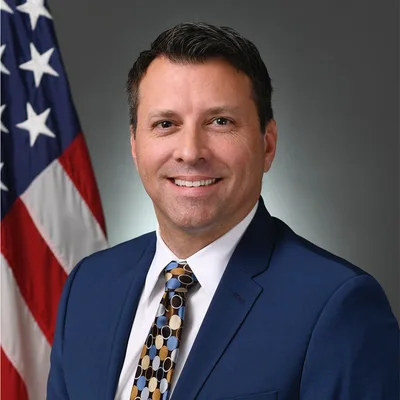
Brian DemerPMP®
Five years in the Marine Corps as a CH-53 helicopter mechanic and QA inspector, out in 2002 with a Sikorsky maintenance award and nothing a civilian employer could read. Sales at Enterprise Rent-A-Car turned into twelve years in banking, then consulting at Booz Allen Hamilton on the Air Force's Invisible Wounds Initiative. Passed the PMP® about four years ago, above target in every domain. Now a civilian action officer at the Department of the Air Force, mentoring senior members on their way out.
Show highlights
- He drove to the Sikorsky plant in West Palm Beach in a suit with his resume in hand, and the security guard told him to turn around because they were downsizing.
- The HR call he made that afternoon asked whether he had a civilian A&P license, and he had to ask what that was.
- He led a bank acquisition and a sales platform rollout across twelve years in banking, and had no idea that any of it had a name.
- He got into Booz Allen Hamilton by interrupting a senior associate's surfing trip, after Deloitte and KPMG both auto-declined him.
- The interview panel kept naming his own work back at him as business process re-engineering, change management and the Kotter model, and he'd heard of none of it.
- His first consulting project was the Air Force's Invisible Wounds Initiative, supporting airmen living with PTSD, traumatic brain injury and major depressive disorder.
- A slide in a Booz Allen induction class listing fifty certifications is what set him off, and it ended with a PMP®.
- He passed the PMP® above target in every domain, then showed the certificate to the supervisor who'd predicted he would score below.
- He runs every project off a spreadsheet he won't show anybody, because it's a Gantt chart and nobody around him would recognize it as one.
- He hands retiring colonels and chiefs a list of certifications, on the grounds that their twenty years of experience already clears the requirements.
Brian Demer joined the Marine Corps in 1997 and spent five years as a CH-53 helicopter mechanic, which he'll tell you is the biggest helicopter in the US arsenal and is built to leak. He won a Sikorsky maintenance award, qualified as a QA inspector, and left in 2002 convinced that the company which built his aircraft would want the man who'd kept it flying. So he moved to West Palm Beach, put on a suit, and drove to the plant with his resume in hand. The security guard at the gate told him they were in the middle of a downsizing and to turn around and get out of here. He did a U-turn and drove home. When he got through to a real person in HR later that day, the question came back: do you have your civilian A&P license? He had to ask what that was. Five years of hands-on experience, a shelf of awards, and nothing a civilian employer could read.
What he did next was pivot into the one thing he knew he was good at, which was talking to people. Enterprise Rent-A-Car led to twelve years in financial services, and somewhere in the middle of that he noticed he kept volunteering to run things. He led a bank acquisition. He rolled out a sales platform to people who didn't want it on an iPad. He wrote what he called a talk strategy, because nobody had told him it was a communications plan. A mentor pointed him at consulting, Deloitte and KPMG auto-declined him, and he only got into Booz Allen Hamilton because a friend put him on the phone with a senior associate who opened by pointing out that he was interrupting a surfing trip. Brian's answer was to ask him what kind of projects he'd want to hear about. The associate started naming them back at him as business process re-engineering and the Kotter model, and Brian, by his own account, said that if it helped him get the job then yes, he'd done all of that. The panel interview went the same way. Three lead associates looked at a banker's resume and couldn't find the words for it, and he couldn't hand them any.
The certification habit started in his first induction class, when somebody put up a slide with fifty certifications on it and he thought: never again. A change management practitioner course came first, then an advanced one at Georgetown, then the PMP® he'd been hearing about from peers who described it as the worst exam of their lives. He went three for three, above target in every domain, and showed the certificate to the supervisor who'd predicted he'd come in below. He's had it four years now, and the whole of his argument for it sits in what the credential did rather than what it says. He's a civilian action officer at the Department of the Air Force these days, working on publications policy he cheerfully describes as the worst thing in his life, and holding it together with a spreadsheet he won't show anyone because it's a Gantt chart and nobody around him would know one. Every few weeks he's at another retirement, having the same conversation with a colonel or a chief who doesn't know what comes next, handing over a list of certifications and telling them the twenty years they already have will clear the requirements. It's the conversation nobody had with him in 2002.
Transcript
AI-assisted transcript, lightly edited. May contain errors.
Hey, everyone, welcome back to another episode of the Veterans in Project Management podcast. Stuart Bell here, joined as always by Dr. Michael Shick. Mike, how's it going, buddy?
Great, Stuart. Nice to see you. Well-
You too ...
I'm particularly excited about this,guest. Now, granted, I'm excited about all guests, but I've known Brian now for about six years.
Mr. Brian Demer, he, spent five years in the Marine Corps as a helicopter mechanic, and then got the designation as, a flying maintenance, b- bubba, if you will. So with that, Brian eventually found himself into project management, and you may have that question of, well, how did I... how'd you run f- find yourself from a helicopter maintenance/flight engineer into project management?
That has to be a story and a half
yeah. it certainly is. I'm sure there'll be a lot more questions as I kind of go through, my intro. But, you know, I just wanted to say, you know, thank you guys both for having me. you know, when Rabbi... Sorry, I don't know him as... I know him as Michael Shick, Dr.
Michael Shick too, but I call him Rabbi. He'll always be Rabbi. but, I've known Rabbi for,quite a bit, quite a bit of time now. And, he was telling me about this, podcast. And of course, in my normal fashion as he knows, I was all, you know, I'll do the, well, maybe." but very quickly, it turned into excitement because, I just thought about the opportunity of, one, my journey and how I got to where I am today.
and if that can help just one service member, that would be awesome. it's funny because, in my new role now, I do a lot of mentoring, specifically on helping, folks in the government, get prepared to go, to trans- transition the other way. And so I might have done it opposite or, maybe I've done it in a, a bunch of different ways.
But at the end of the day, I just wanted to say that I'm very thrilled to be here. and I guess my project management journey really started on the flight line. as Rabbi said, I'm a Marine from '97 to 2002. I served as a CH-53 helicopter mechanic, and if anyone knows, or if you don't know, it's the biggest helicopter in the US arsenal, and it always has a stream of smoke coming out of it, which is, that's a good thing.
it's made to leak. at least that's what I was told when I was a, a young mechanic. Hey,
Brian- Yeah ... I'm s- sorry to jump in there. So a 53's bigger than a Chinook?
Yes. Yeah. Okay. So it holds up to 55 passengers, with the center crew seats. a lot of people don't think so because the Chinook has the double rotors on top.
but yeah, our rotor blades, are like 172 feet long. There's seven of them. it's a big boy.
Yeah. Nice. Yeah.
and so yeah, so I think like, like maybe like many veterans that are out there, I transitioned out of the Marine Corps with these, big dreams. And I think my dream at the time was, I wanted to use my military wrench-turning skills and go right to the Sikorsky plant.
So Sikorsky i- is the manufacturer of the helicopter that I worked on, the CH-53. And so I had this huge dream and, moved out, to West Palm Beach, where there was a factory there. And, I'll tell you, I, I was immediately hit with a double dose of reality. One, the first reality was I got up to the gate to, you know, wearing my suit, ready to go with my resume in hand, and I was at the gate and the guy said, the security guard said, "I'm sorry, but we're in the middle of a downsizing.
Turn around and get out of here." And I was like- "Oh." I was like, I didn't even know what to do. So I just did a U-turn and, started heading home. And, I was in my, in, on the way home I was just thinking, "Wow, did that really just happen?" Like did I have everything in that bucket,
So Brian- And...
Yeah ...
did, did, were you, like, just showing up, like cold calling almost with, if you will- yeah ... resume in hand? I'm just gonna go to the HR- I did ... office and give them my resume.
I had this, idea in my head that because I won a Sikorsky aircraft maintenance award, and I was a, a QA and one of the best mechanics on the West Coast, I was like, "Oh, they know me."
or you know, I, I- So
in your mind- Yeah ... the security guard, what he should have said is, "Ah, Mr. Demer, we've been expecting you. Please this way." Right.
Right, right. I was just like, "Hey, this is, I'll be your boss one day maybe. I don't know." But, yeah, so that did not work, clearly. And so, the first thing I did when I got back home is- I,I got online, I made some phone calls and tried to connect with an actual person in HR, and when I did, of course, they immediately said, "Yes, that's correct.
We are in the middle of a downsizing. we're not looking at, applicants, but if we were, w- what would you be interested in?" I was like, "Oh, I, you know, I fix... I've been fixing, helicopters for the last five years." And they're like, "Oh, wow, great." And they're like, "So do you have your, civilian A&P license?"
I'm like, "Huh? What's that?" I'm like, what's that," right? and that was the other brutal,the brutal impact that I got hit with really quickly was, oh man, I don't have the right or any civilians cer- certifications despite having five years of military hands-on experience. it was certainly a catalyst for me, that basically made me just do, I don't wanna say like a, a 180, but I had to come up with something and I had to come up with something quick.
and so, you know, I'd say as that hangar door was temporarily closing, I pivot and I pivot into something that I knew I could do really well, and that is talk to people. and so I naturally went into sales and I started working for Enterprise Rent-A-Car. went through their management program, and then eventually got, transitioned into the financial services where I spent about 12 years in the banking industry.
and it was during that time, it was during that time in banking that I noticed something. And so while I was executing my normal day-to-day sales jobs, activities, I had this organic knack for stepping up and running projects. and at that time I didn't know what that meant or what that was gonna do for me, but I just know, I just knew that I loved the structure, right?
I loved, the problem s- solving. I loved the delivery of the final product or solution. and so, you know, at that time I had a, A good mentor, that was like, "Hey, you know, you might be really good in consulting." And not that I didn't wanna stay in banking, but once you got to a certain point in banking, I wanted to be a,a senior executive there, and the only way that was gonna happen is if someone retired or died, right?
And so, you know, I decided to start looking at, some consulting firms, and that eventually led me to Booz Allen Hamilton, where I was brought in as an associate. I will tell you this, the same question that you guys, were talking about, like, hey, how'd you get here? try being a banker and then going over to consulting.
it took me a couple tries to get into the door. I remember I had a conversation. I had a friend that got me at least a phone call. And I remember distinctively, I c- I called this, senior associate. he was in Hawaii at the time, and he was like, "Listen, you know, you're interrupting my surfing. Like, tell me why, what in the heck should I even listen to someone who's been in the financial services about consulting?"
And I told him, I was like, "Well, I don't wanna get in the way of your, surfing, but I think maybe you could ask me, what kind of projects I did when I was working for the bank." And so he precided, he proceeded to do so. And I was telling him all the, I was telling him all these different actions I was doing, right?
And, I remember him saying things like, "Oh, that's BPR," or "That's,change management," or, "Man, it sounds like you're using the, nodder m- Kotter model." And I'm like, "Listen, I have no idea what you're saying right now. But if it helps me get this job, then yes, I did that," right? And so he's like, "Listen."
He's like, "I can't guarantee anything, but I'll tell you what. I'm gonna put you in front of a panel and, whatever you make from it, you make from it." I was like, "Hey, that's the best thing that you can do. I really appreciate it." And sure enough, I went into this panel. There was three different, lead associates in that panel interview, and they all had the same question.
they said, "I don't even know what to do. I'm looking at your resume and I don't even know what to say," right? and so I had to kind of, you know, you know, provide some feedback to them as well of, all the different projects. And they just said the same thing. They had the same kind of nomenclature of these, these consulting buzzwords that I, at the time, had no idea, what it was.
and so y- you know, that, that got me there. I guess, so I got offered the job. And it's funny, the first job, the first project I was put on was, this huge project for the Air Force at the time. it was called the Invisible Wounds Initiative, and that was basically looking at how can we better support, airmen.
It was airmen at the time. It was before Space Force stood up. But how can we support airmen, veterans that suffer from PTSD, TBI, and major depressive disorder? And so for me, you know, that's something that, really hit home for me. It's... I was like, "This is the perfect project." It was a very long project, so at least I was gainfully employed for quite a bit.
but I remember, I remember,I never really f- I really never forgot that lesson that I h- I learned 20 years ago at Sikorsky though, right? and I always told myself,I v- I made a vow to myself, I will never, ever, lack, something on my resume or lack some type of certification that makes me a, a better practitioner or,be able to offer something to, a company or a client or, a, a team.
you know, I just, I made that kind of, burnt... It was always in the back of my head.
And so once I got into consulting, a little bit different than, the financial industry. You know, there's certifications for people who want to sell like insurance products or, or securities or investments and stuff like that, and that wasn't my, my, my cup of tea.
you know, I did more of just or- organic sales and so forth.
Got it.
But when I got into consulting, one of the first things they did in like in our 101 class is they show you the slide and it shows you 50 different certifications out there. And I was like, "You know what? Never again." So I went on the offensive, right?
I started to do a deep dive into the people side of execution, right? And so the first certification I got at Booz Allen was, a LaMarsh, certification. It's in change management, practitioner. I got that certification, put that into work, looking at how all the... in this case, LaMarsh has its own, own philosophy and foundation on how it gets after,change, change management.
And so I did that. that just kind of, validated kind of where I wanted to be and the things that I wanted to do. later I got my advanced, change management practitioner, CMAP. I got that f- I got that certification from Georgetown University. and you know something, at that time, I started noticing that the, I'd start hearing things from my peers about the PMP, right? They're like, "Oh, dude." This is the certification that you want. And, so I started looking into it a little bit. I may or may not had a nudge from, a certain somebody named Rabbi, but I certainly did look into it. And one of the things I found interesting, it was right at the time...
I mean, as... I don't know s- I mean, you guys know this, but just in case for, the folks out there,the Project Management Institute, they're constantly evolving, right? They're constantly looking at, industry, doing lessons learned and figuring out, what is the best thing they can do for their practitioners, right?
That are PMPs. And so during that time, I noticed that, PMI was, updating some of the elements of their PMP exam, and some of those elements were around change management. it didn't hit hardcore on all of them, but it certainly started introducing some of the foundational elements of that.
and so that really piqued my attention. it allowed me to start doing the studying. but I'll tell you the thing that echoed in my mind all the time was my peers saying, "This is the worst exam you've ever taken in your entire life." Like, good luck. Something to look forward to.
And like, yeah, I was just like, I don't, you know? And I was like, But I tell you,the thing in the back of my head was, never again will I not have a certification. Never again will I not be prepared. and so I took the challenge head on, right? Yeah. And,what's awesome is I didn't just pass.
You know, I scored three X AT, right? And so across the board,above target in every category. I even beat my, my, my supervisor who... Yes, I did have to rub it- That's always a good feeling ... in his face. I, I did. I did. You know, because he was the one that was like, "Ah, you're not... You know, you'll probably get like, below or like needs-" You
And I was like, "Nope." I showed him specifically my certificate. I was like, "Look. Look, buddy." but, and so, you know, that was a huge accomplishment. So what, I've been, PMP now for about four years. and when I talked about earlier about kind of full circle and how I got here, at Booz Allen, I was really focused on, mission.
and not saying that, Booz Allen and other firms and other consulting firms out there, are not focused on mission. They are certainly focused on mission. But there's also this, this element of what's the next capability that you can sell, right? It is a business. you have to be ready to introduce those things.
I always pride, I was al- always pride myself on the fact that my expertise and the way that I deliver, my view w- was that those opportunities and capabilities would happen organically, right? and so I was faced with a tough, a somewhat tough decision of leaving consulting, but, or going to go to the Department of the Air Force, as a civilian employee.
And I know, you know, for all my Marines out there, they're like, "How dare you go, even think it, to go in the Air Force." But,I'll tell you, I was so connected with the mission of the Invisible Wounds, Initiative that, the contract was starting to come to an end. And so this was...
it was like a, a perfect,a, a perfect scenario where there was an opportunity, a position that was open within the Department of the Air Force. And, I built some great relationships with, at the time, the, on the client side. and I was able to jump into the Department of the Air Force as a civilian employee and continue the good work I was doing,and start to use, my expertise in change management, project management.
and so yeah, I know, I know I said a ton of stuff there, but I did want to say how, incredibly proud I am to be on this podcast today. and hope that, you know, as we kind of go through some questions and a- and any other things that we can cover, that it helps, some veterans out there, to really kind of translate, you know, our grit into world-class project delivery.
So again, thank you guys for having me. No worries. And, yeah, feel free to fire away. I know full of- There's probably like a million things to choose from there.
I feel like he was closing us down there, Stuart.
No. I feel like, "That's
it. We're done." It
was the easiest podcast ever.
That's the sign of a good project manager, though. Know what the deliverable at the end, just get straight to it, pull out all of the constraints, and deliver the material and move on.
Great. So-
So that's
Go ahead,
Stuart Sorry, Mike. I was just gonna say that, you were wrapping up there saying that open the, it opens the eyes of some people who are still in about the civilian potential later.
I think one of the touch points in the current role that you've got is this idea that there is such a big civilian crossover into service-based projects that it isn't necessarily as much of a hard line as people might think it is when they leave service. the civilian support now for military projects across the board, it really doesn't have to be the end.
So if you are leaving thinking that service component is a big part of your life, and it is gonna change for sure, but it's definitely not the case that it's just closing the door completely. How, the people who you work with and the people who you know, to someone who's still in might not get visibility, that civilian piece, 'cause they're in the weeds of it.
How much of an opportunity is that really for people? That seems like it's quite a big potential for career movement into that space.
Yeah, it's a great question, Stuart. I think, one of the things I've noticed, at least in my organization, so I work for the secretariat, the Senate Secretariat of the Air Force.
all things, Manpower and Reserve Affairs. a lot of that also includes all the pro- all the people programs. and so, at that level, there is a lot of,very senior military members. I'd say, 05 and above, right? and we also have chiefs. So we have, E9s there, right? And, they've gotten in- into those positions because of their expertise and what they've done over a course of 15, 20 years.
Over 20 years in, in many cases. And so, I say all that because, you know, I feel like, every month or so I'm going to, like, someone's retirement. And I feel like I'm having the same conversation with,with those folks as, as I do with all of them, right? And that is, "Hey, what is, what's your plan?"
They're like, "I don't know. I only know this. I don't know what to do."
and so what I attempt to do is tell them, I- is to really tell them, I don't wanna say like the, the, the easy things, because I think, Going out there and just like shotgunning resumes and stuff, you're gonna get a, a f- you're gonna get the same amount of shotgun auto replies back to you, right?
Right. And so what I tell them to always remember is remember your Rolodex, right? Remember all the wonderful things you've done for the last 20 years and all the engagements you've had for 20 years and really, you know, The exercise as they're continuing to transition out is like, "Hey, go into your LinkedIn, get that updated.
connect with folks that maybe you haven't connected with or they've kind of fallen off your radar," right? This is a great opportunity to talk about those things. And then what I also do is I provide them a list. I give them, a notion list of, all the certifications, highly regarded certifications either from,PMP,all the different elements of, or all the different certifications from PMI.
I talk about, green belt, black belt, Lean Six Sigma, change management. I talk about all those things because, in many cases the experience they have gathered over the last 20 years will certainly fit, the minimum requirements if not even- ... go well past that. And so these are, you know, of course some of them are very expensive tests.
but these are things that, that I felt, that I feel that, someone who's in those senior l- senior leader levels would be able to sit down and probably test very well. probably for the PMP would be probably difficult as it is for most, because it's not just, it's not just, a grueling test, it's also understanding that there are gonna be choices there that are almost identical, and you have to pick out that one word that is going to be the correct answer.
but if you think about it from, And what I tell them is if you think about it from, from a PMI perspective, the, the words kind of just jump off at the, off- ... off the page, right? But sometimes you have to be exposed to like what those words are and how they jump off, right?
and so I bring all that up because I think there's this... I've seen folks go off on retirement and they're like, "I'm not doing anything. I don't know what to do, and I'm not getting replies back." I'm like You have a Rolodex where you can go and just talk to anybody and get that connection, and that can get you into the door, just like me, right?
I applied to Deloitte, KPMG, it was all auto decline. Why? Probably because the robot wasn't looking at my stuff, because it said banking or financial industry services, right? And so it wasn't until I made a connection, personal connection, and I got my foot in the door, and then it was over, right?
Like there's, you know, o-o-once you get, you know, once you get in front of somebody, the likelihood of it turning favorable goes, goes through the roof than just like waiting for, "Hey, I pressed easy apply on LinkedIn. How come I didn't get the job? It's perfect for me," right? and so yeah, I know that's probably...
it's certainly l-long-winded, but those are things that, I'm constantly telling, the folks that I know. I'm like, "Hey, here's this thing." even if it's a year and a half out, if it's someone who's a colonel, I'm like, "Hey, you staying in for like the long run? Are you like gonna be a general one day or..."
And they're like, "No, I'm gonna get out in about a year and a half. I'm gonna hit the button here soon." "Okay. Well Why not go after these certifications now?
Right? I mean, you're a colonel. It's not like you... I'm sure, you're able to multitask very well. And so, and all that is to, be even more competitive, right?
There's not gonna be that many f- folks that are coming out of school, fresh out of college, with master's or even graduate degrees that's going to have that experience of someone like a colonel or a, a, or a chief. they're just not gonna have that. And so you add that with a PMP certification, it ju- it makes it very, it makes it very difficult for anyone to compete against, a person with that type of experience and that certification, which is what people are looking for.
Yeah. Th- thanks for that, Brian. And so i- help us, clarify. So you got out in 2002, right? And then enterprise, moved into banking and so you moved into consulting, what, about 15 years after you got out approximately? A- and you were doing projects all the way up to this point, but it became more formalized when you got in the consulting realm.
Is that an accurate statement? Or at least more formalized in your understanding of it?
It, I guess my understanding of it, right? Like, when I talked about, on my interview, I talked about, leading in, a major bank acquisition, right? and not just being a member of it, but being a, a leader of it and providing, making sure that we hit certain sprints and milestones as we continue to, you know, turn the switch on to say, "Hey, you're not this bank anymore.
You're gonna be this bank." and so, like things like that, or even, new, IT platforms for sales. you know, there were, elements of going out and,getting- stakeholder feedback and support and dealing with, all the resisters who didn't wanna do things on an iPad. They're like, "Oh my God, this takes the humanity out of it."
It's like, "No, it's a tool," right? And so, like, I just had, a natural ability to, like, really make things,make sense for e- the end user, ... the actual sales associate, w- whatever it was. It could be something simple as us changing our commission structure, right? For whatever reason, they're like, "Hey Brian, you wanna lead that project?"
I'm like, "Yeah. You know, if it means I could, maybe add a little couple percentage points to commission, yeah, why not, right?" but like, at, during that whole time, I had no idea what that stuff was. I was just... And I don't wanna say, you know, it was the blind leading the blind. Like, I truly knew you know, what would make this successful and what would be the reverse, right?
I'm like- ... no one wants to be surprised with this stuff, and so I know I gotta have, you know, a, you know, a talk stra- I called it a talk strategy, but like, you know, no, a, a strategic communication plan. Oh, well, I know how you do that. I just call it talk strategy, you know? Or, And so, a- again, I didn't know any of the nomenclature, but I certainly knew all the activities.
and that,and I don't know if that was just, e- experience, but I just, you know, I just thought about, I put myself in, you know, in this case, all the different stakeholders' shoes, and I figured out, all right, if I was them, what would I want to hear and see and feel? If I was the C-suite, and when I go and brief, brief the vice president of the bank, what is he going to want to hear?
Well, he's gonna want to hear how this is impacting the return on investment, right? He's spending millions and millions, and he wants to know, "I'm gonna get that back, and then some," right? and that just, that was kinda natural and so it was very easy for me to, talk about that when I joined, when I went to consulting.
And so I was able to build a great team over there and really show, a different way on, engaging clients and engaging stakeholders in a way where I, You know, one of the things you hear a lot about in the military is, kitchen English, right? I don't have to... I will tell you guys this.
My first week at Booz Allen, Am I... I guess I'm allowed to say names, right? I don't know. I don't even know if that's even... I'm allowed to. Yeah, you can say it. Just like bleep it out or something. Yeah, that's fine. but I'll tell you my first week there, and this isn't, this is not, anything, negative, but typically when someone uses like a, a big vocabulary word, I'm able to figure out what it is because I can piece again, a piece together like a sentence.
My first day, there were so many vocabulary words in one sentence. I had no idea what the heck they were saying. I'm like, man, I can't even BS my way through this. So I'm like writing these words down, I'm looking them up. I'm like, "Oh." I'm like, "Why the, why do they say, why did it just say this?" I don't under- It's
so funny.
As we were recording these with people- Yeah ... people shared experiences. As we start releasing them more and more, it's gonna be funny to get the feedback. But people's shared experience of, "I realized I was doing this thing that we now call project management. I just didn't have the language for it. We called it something different, but it was obvious what we should be doing, so I was just doing it."
So that's that common thread with us as practitioners. Like, it's makes logical, obvious sense. It's kind of like, why aren't these idiots doing it this way? This is the way we should do it, even if we don't have the language. Right. So that's one thing. But the other thing that you just mentioned is you're not the first person to have said, "I turned up to a meeting and I was kind of writing down the words so that I could work out what was going on afterwards."
So again, we must all have this kind of natural tendency to keep nodding and thinking there's a way out of this, but a way out of it is me kind of writing it down and working out what's going on- Right ... in a minute. So it's funny you have the same experience.
Well, it- Yeah ... it, and with that, Brian, so now that you're looking back, you know, hindsight's always 20/20, and in, when you were in the Marine Corps, as a mechanic in, in some of the projects that you had to have led as a, as an NCO when you got out and all of that, y- do you see the overlap from what you did with or currently do with the Department of the Air Force versus, Booz Allen Hamilton versus your time with the bank and then Enterprise?
can you draw that line, if you will, of from a project perspective all the way back to your time in the Marine Corps?
I guess I could, but it'd be, like, fragmented. There'd be, like, twists and turns. It's certainly not a straight trajectory. and what I mean by that is, there may be elements of project management when I'm doing a phase inspection on aircraft that's gonna take two weeks to complete per the pub, right?
And so the, from that standpoint, that's a very, to me, it's a very easy, typical process, right? Where it's like, "Okay, I know this is coming up, and so I'm gonna make sure all the consumables are ordered, ready to go. I know that this thing, this aircraft has been struggling with, performance in the number two engine.
so when we do get to phase inspection, I'm going to enter, I'm gonna or- order an inspection done at depot level just to make sure," right? So I'm gonna have all those things set up, ready to go, to hopefully either, one, make sure I stay on schedule, and then two, maybe even, find ways to do things in parallel to make the process go faster, right?
And so I feel like any m- any mechanic or any service member that has, like, those elements, or those responsibilities, to Stuart's point, it just makes sense. Like, why would I order an O-ring two weeks into a project that takes two weeks, right? Like, that doesn't make sense. like I, if anything, I'd get hit in the face if I did that, right?
this is back in the day, right? I have- I won't get hit in the face now, but- The good old
days. Yeah.
but it's those types of things where I think there is some connection, but I think it's more, It's more obvious. I think what happens is, in many cases, you know, throughout, right, Marine Corps, Enterprise, banking, Booz Allen, now the Air Force,there's this, I don't wanna say fear, but there's this, "Hey, this...
Wow, this seems very complex. And so I don't know if we can do it." And it's like, no, w-we can do it, we just follow a process, right? we pick a process, we figure out, you know, we figure out all the O-rings that we need to order or have ready. Yeah. it doesn't matter if it's, you know, a huge organizational change or if it's, you know, shit, ordering a new desk.
it, the... You're gonna follow a certain process and the way that you follow that process is going to impact the end result, right? If you wait until the chair is completely broken before you order, it's like, well, you could be sitting crisscross applesauce while you're doing your work. and so, like, it's,it c- it...
there, there's those... So, I don't know if I hit your, hit the question perfectly, Rabbi, but I do... I think there's some things that when people look at, they're like, "Oh, you know, it's obvious." But then the more type of, elements or the more things that you add into a process, that, that may be simple, I think folks will just be like, for whatever reason, "I forgot my common sense," like, "I, I don't know what to do."
and so I think there are, you know... That, that's what kinda keeps me grounded. folks ask me in my current job, they're like, "How are you able to do all this?" And it's like I have a spreadsheet, right? I have a spreadsheet that tracks everything. And, they're like, "Well, can I see it?" I was like, "No, I'm not gonna show you," because you're gonna look at it and be like, "What the hell is that?"
Because it is my Gantt chart, right? Like, people who have PMP, they understand, right? But you say Gantt chart in the military, and it is more of a PowerPoint slide with a cool bar graph and stuff like this, and, you know, don't miss your suspense. But you have no idea what's behind that bar graph, right?
And so me, I know what's behind that, and so I'm able to, m- you know, no one w- no one would ever know. They just know that, wow, he's always on time. He's always, This project is always hitting all the actions and milestones that he is briefing. Well, that's because I'm watching every step of it, right?
I know if I need to push or there's some things that I need to, do in parallel or things that are contingent on each other. You know, I pay special attention to those. Why? Because project management taught me that those items,can create risk, and so you gotta have a mitigation plan for that, right?
and so that, I think that's the thing that, you know, I don't know what the statistic or what the ratio is of how many folks in the military actually have a PMP. I, I would say all the services, including Air Force, has some form of, like, Air Force Project Management 101.
And so I remember when I first started at the Air Force, someone's like, "Hey, you wanna take this class?"
I was like, "I'll teach it." Right? Like, I'll teach it. Like, the PowerPoint that you have, I'm like this, you know, I can wow some people because this is so, elementary, and it's not because, it's military. It's just because there, you know, there, there's folks that d- that don't have their certification to be able to understand you know, how to teach or how to explain, so- some of the fundamentals.
And some of those fundamentals will get lost, right? Right. Yeah. you think about- I think that's it ... I'll try again. Yeah.
Oh, sorry, I was just gonna say, I think that's it. The frameworks and the depth, the skills that people have had. So f- people are thinking about separation down the track, and they're not quite sure what to do, and they take for granted their day-to-day.
If you're the type of person that understands that the O-ring with a two-week lead time needs to be l- ordered two weeks before, there's plenty of time... There's plenty of people who don't even comprehend that's a thing. Like, until it's broken, they don't even think about it. But if you're the type of person who does order ahead, who even comprehends the word dependency, who understands that, oh, we've got a cycle coming up that maybe this can fit into, so I'm gonna make a note of it now ahead of time so I don't think of it later.
All of those are indicators that project management might be in your future. And the depth at which PMI goes into some of the structure, so the 101 frameworks that all of the services and all companies have, that 101 is the kind of entry point for those people who understand that O-rings have a lead time.
But the depth and breadth of the professional frameworks around PMI or change management or Agile or some of the other ones, it really does allow you to go deeper and go more complex. But I think n- if you're the type of person who resonates with O-rings have a lead time, it's an early indicator that this might be the right thing for you.
Because there's a lot of people out there where it's not, and they need people like us to be in the role where it is, so that things don't all fall apart.
Yeah, no. Yeah. Well, well, well said. And t- I totally agree. And I mean, there's mechanisms to put in place in some of the elements where they have, like, their own tracking and tasking tools, and so that tasking tool tells you, "Hey, I'll give you this much time to do this one task."
It might not go into the, to your point, sir, it doesn't... It might not go into the details of what is it gonna take to get to that, to get to that date, but it'll tell you that you need to get to that date, right? Right. Yeah. And so, yeah. And so, And if
that
makes
sense, if that's logical- Right.
Yeah ... if you're not saying, "Why the hell do I need to do this?" Because it's technology and the, we lose the humanity, then okay, you might be this type of person.
Well, yeah. And but the... More often than not, it's more like, "Oh my God, I can't do this. I got all these things going on. this is a crazy suspense.
It's hot, it's fire."
that you need to build the other side. Which
that does happen. I will say that does happen. But,
But hopefully the exception, not the rule.
yeah.
In a good week at least.
Yeah, I think, yeah. there, there's certainly, there's certainly a fair share of like, "Oh my gosh, you have two hours to do this," right?
and so at, for like those types of things, I am not busting out a project plan. It's- ... all right, what do I have and can I repurpose and turn it into a, a 90% or better project in order to get a- or product to get after this, right? but in many cases, folks will get... They see the two hour and they're like, "I don't even know where to begin."
Yeah. So l- when we look at this, and certainly you have 20-plus years of now project or project-related experience. Now, if you were talking to Sergeant Demer, w- what would you give him as far as advice? S- say he, he's that, helicopter mechanic or the flight engineer, and, you know, h- his time's up in the Marine Corps, he's ready to get out or whatever branch, and he or she wants to move into project management.
What's the va- what... Is there even value from somebody in that role finding themselves in project management? And if so, why?
Yeah, so There's certainly value, there's certainly value in, project management and the reason why I think so is because, no matter what you do,maybe... I could probably throw some elements of some foundational items, if I worked at like a fast food place, right?
But if I'm thinking about, professional industries and so forth, there will always be a need for someone to do a project management, in some form, sh- in some sh- shape, form, or fashion, right? it's one of the things even currently here at the Department of Air Force, right? I'm considered an action officer.
Well, I believe that, action officers should have a PMP. It would take them to the next level, right? It's not just, there's... It's not just herding cats and getting, you know, something done on a timeline. It's also understanding,the why, understanding the mission, understanding, how this one thing moves a bigger cog, right?
that's not just Air Force. That's in any professional service industry that's out there, there's always going to be a need. And it can be... The cool thing about project management is there is Right. Millions of jobs. maybe, I don't know if it's millions. Hundreds of thousands of jobs that have standalone project management.
You can go on LinkedIn right now and see looking for project management. Ooh, it'd be nice if it had PMP too, right? It's a standalone, right?
Yeah.
But then you have other jobs like sales manager, operations manager,you know, C-suite jobs, that if those candidates have elements of project management or where, you know...
I think one of the things that in the last five interviews I've had, one of the questions is, "Tell me a time that you had to run a project and things didn't turn, things didn't go as, as, as scheduled or as you wanted. What did you do, and what was the outcome," right? It's always some form of tell me a time of when you did this, right?
And I'll tell you, the folks that can talk about this as a process of like, "Oh, the first thing I did was this. I identified all the risks and I made some assumptions, and my assumptions were based on this, and this. And then I started to execute and I got my stakeholders involved," right?
And then I just went through the line. And people on the interview panel are like holy crap, like what a- Like, okay, there, there's a distinct difference between someone Talking about it in more of a general fashion. and so again, I think there is, I think there is certainly goodness, for someone to pursue, a PMP.
it is hard work. It is, you know, you have to stay on top of it. You have to stay on your PDUs. And oh, break, by the way, you may work for an organization that doesn't understand some of those elements, and that's what's great about, having a PMP, is that it's not, hey, I'm gonna be robotic and try to force this box onto somebody.
I can say, "What are their barriers and what they don't know?"
And then all I do is I make my actions fill those buckets for them. And then they're like, "Wow, how did this happen?" This... I was like, "Well, because I snuck in project management on you," right? Right.
Yeah. I tailored to what you needed.
I ta- I tailored what you needed. you know, you can tell me that you're going... Like, Air Force is per- case in point. We'll just tell them what to do. Or in the services, we'll just tell them what to do. Okay, cool. You tell them what to do. can I help you, develop what you tell them to do, and can I develop a schedule that allows you to tell them what to do at certain periods of times and certain messages as we pro- proceed, right?
Right. do you mind if I build some pro- a product to help facilitate conversations and use for training, right? And so those are... Go do what you gotta do.
Yeah.
But I'm going to, you know, not sneak in there, but I know a better way to get people to say, "Yes sir, yes ma'am," right? And feel good about it instead of saying, "Oh my God, I'm...
There's something else being forced down my throat."
Well-
Right? ...
it, oh, 100%. and I would say, just to go back to one of your quick, your points about the jobs available. Now I, it's been a couple of months since I went and looked at this, and this is a fantastic approach, that I'd recommend for anybody, is if you're looking for whether you want a certified associate in project management or a PMP, a project management professional certification, you jump on these various different, career sites and you do a search specifically for those, certifications.
And you'll see a list, and sometimes the numbers associated with that list, the number of job openings. I remember I, I had, was doing a r- a little bit of a research project. I was writing a white paper, and at the time there was s- nearly 24,000 jobs looking for somebody- With a PMP. Now whether that was, that could have been just simply identified in the requirements or preferred, what have you.
and then I did it a, a f- a couple years later, and it was nearly 21,000. And so, you know, there, there's ways to go about and kinda tailoring how you look at those project management certifications with those true values. the Project Management Institute in, last year in 2025, had, did a study, and they typically will do this study every few years.
I don't know the, you know, the cadence per se, I just know it's every few y- fr- few years that, a new study will come out that does a projection of the number of positions that are going to be needed. And they did a, a projection between 2025 to 2035, and it was estimated globally that 30 million project management jobs were going to be needed, to,either be backfilled or going to be created.
in just public math, you're looking at three million jobs a year in, specifically in project management. Now,I can't imagine every single one of them are gonna call out a certification, but you're gonna have to justify, I would say somehow, that you know the processes and actually be able to create business value to deliver to your customer and clie- client.
For somebody in the military, you know, you may meet your commander's ... Th- that may be different than, you know, your time with either Booz Allen or the bank. Looking at the monetary side of those goals, you could have a policy side. That it, y- you know, I would say it's probably tailored to the industry you're in.
D- have you seen the, a similar, type of function with where you're at? Just what those outcome and what they consider as business value?
within the Air Force or just-
well, from the- In- ... various different industries. banking to consulting to, government work.
Yeah, so, I kind of wish, I wish I knew the nomenclature that I learned at Booz Allen when I was working at the bank, because then I could have advocated for, opportunities within that were certainly looking for project managers, right?
I just didn't know what that, what the heck it was called, right? and I didn't know how to speak about it. And the only reason why I was able to get into Booz Allen is because I leveraged, a contact to get me in the door. But like, truth be told, if I was a hiring manager and I would've been the same way, like, why is there someone from banking in here talking to me about being a consultant, right?
now, if I would've, if I would've, if I would've known the terminology, the nomenclature, and I would've, shaped my resume to include those projects and talk about those things from an industry-recognized vocabulary- then who knows? I may have made it past the robots, on my own.
But I wouldn't, I would have never... I wouldn't know. But I would tell you that, anyone who's looking to get into this, that would be one recommendation that I would say you can start today, right? You can look at any project or any task that you're being asked to do. If you're a maintainer, you best believe that as a helicopter mechanic, I would throw on my resume about all the phase different approaches or the major, removal and replacements of major aircraft parts.
Why? Because there is a certain way that you have to do it. you know, people can, pe- people can joke all, all they want about, "Hey, you know, military manuals are written for a fifth grade level." Well, yeah, well, yeah, it's c- it's common sense, but, if you're not properly preparing for the task, then, you know, that task is gonna take longer, which means that you will work longer.
your maintenance department might put you on 12 on, 12 off, right? but wh- so, so what I'm saying is that, And this will be very diff- I'm not gonna sugarcoat it, right? as a young Marine, the last thing that I'm gonna be doing is getting a freaking spreadsheet or a piece of paper and writing down like pro- you know, my process and what I did.
And so it is going to be hard, right? Right? But I will also say in the same breath that while I was in the Marine Corps, I pursued my bachelor's degree, and I got my bachelor degree, right? So I made time on the weekends to go to school. And so if you, if you are really serious about this or if you don't wanna be caught off guard or re- reality check when you le- when you get out of the service, or not at least have a, a viable backup plan, start doing that work now, right?
There's nothing that gets in the way of just saying, "Hey, this is what I did." And oh, by the way, the way that the military Has, updated their process on how they do, like, performance reviews and so forth, especially in the civilian sector. boy, your review will look really nice if you're able to have a narrative that talks about all these different elements and how you manage each one of these elements using either, the common sense approach of what project management is or, better yet, if you, start looking into some of those, foundational courses or course, you know, courses that help you prepare, you know, to be in PMP and start looking into, the PMI website.
you know, a lot of the information on that website is free. a lot of the, great discussions they have on LinkedIn are free, videos free. I know that, you guys, you know, have a program, that helps,folks, start understanding the foundational parts, but also help with like understanding,a new way...
Not the new way, but the way that PMI asks questions on testing and all that stuff, right? All that stuff kind of goes into it and,that would be o- one thing. I was focused in the Marine Corps of like, all right, I'm gonna get my bachelor degree. I'm a shit hot mechanic, and so I didn't...
It didn't even occur to me that I would need some type of certification or validation of the work that I did, right? yeah, I can fix a helicopter, my eyes closed. But if you ask me to fix a, Cessna 172, I could probably do it, but I learned the elements of a turbine, right? I didn't learn the elements of reciprocating engine, right?
And so that is the point, right? I think a lot of, in, in many cases These certifications and these things, at least from my perspective, I think they fill like a, a void or even like a blind spot, right? And so- ... I wasn't a air framer. You know, I could do some sheet metal work and stuff like that, and I never wanted to touch hydraulic fluid, because we had a department that did that, right? But for an A&P license, you gotta know all of it, right? You have to be able to do all of it. and once you show that you can do all of it, then you get your piece of paper, your little license, and guess what? It's a difference between someone getting s- the door slam in their face or not getting the door slam in their face.
Yeah. Yeah. I think that, you mentioned it before, the commonality of language, it's almost like there's a certain element of you might know the stuff, but describing the stuff in a way that's common language across everyone else who's in that space just streamlines the process. So talking about describing project plans in a similar way or risk reports or change management steps in the language that's consistent, the certification to a certain degree just gets you in the club that we're talking the same language, that we're not having to do the translation that slows everything down.
So even though you might have all of the experience to do the role and you've actually been doing a similar job for a long time, just having that certification that gets you past the robots on the hiring screen, that gets you into conversations with the hiring board, that means when you're having the meetings with the other people in the team, there's that consistency and commonality.
It's those things that employers are looking for as much as you can do the job in the first place. It just speeds it up. And I think you're right, it might not be the first thing that you think about when you're in, but as you're getting closer to leaving, understanding what that reframe of language is, it would just smooth the gears of everything further down.
Well, it, I wonder, Stuart, and thinking back to some of our other, guests, it... You had brought up Brian in the new, the newer performance reviews. Is there even value for, for people to earn those certifications while they're still in, in service? And i- is there value for, you know, i- is it gonna help with promotions, or is it gonna be the intangible aspect?
Because now they're n- they understand how to be more effective, and they understand what the project,stakeholders are interested, what the project sponsors are interested in, and how to navigate that space, which will ultimately translate into positive outcomes or effective risk management. It, it
What do you think? I- is there value added? There certainly, it's appear- sounds like there is, as they're transitioning
Yeah, I think, not just transitioning, but to your point, Rabbi, I think, I'm not gonna say... Well, they're not gonna say, "Hey Brian, you have a PMP so I'm gonna give you a, a step increase."
That shit ain't happening, right? but however,
I think about, I think about brand, right? And- If someone has a brand of, you know, moaning and complaining about a task or a project or whatever the case may be. and who knows, the, maybe they complete it on time, but boy, it is just cats meowing, you know, in your ear the entire time. Like, it's a, it's not a smooth process, right?
Compared, com- compare, compare it to someone who, who has... And it's not like an end all be all, the PMP, but I know for a fact that,people who have a certification and they pass the test, doesn't have to be, above target like me, you know. But- ... I do know that anyone who's gone through that, that they understand, to the core of what the foundations are, right?
And so even if, Even, Y- I, the, the best way I can explain it, and this is gonna come off bad probably, but whatever. even if you are an okay project manager, but you have a PMP and you understand the foundations and you employ those, and you employ those elements, right? There's nothing worse than, like, a PMP and not doing anything.
Like, dude, I know you know. How come you're not doing it, right? But, like, even if you're just run-of-the-mill That run-of-the-mill is going to have a better brand than the other person that moaned and complained and like bitched about the timelines and all this stuff- ... and all the work and all that good...
all that stuff, right? There's gonna be a d- a, I think there's gonna be, a distinct difference between those two,members from a performance standpoint. Yeah. It doesn't have to be civilian. It can be also, you know, think about, a tech sergeant on the way that they get after, their stuff, and compare them to another tech sergeant.
Not saying that one has a PMP, one doesn't, but boy, if one started to learn about some of those elements and was like, "You know what? I actually do s-", like to Stuart's point earlier, "Some s- some of this stuff is common sense. I do it already." That person, that, that tech sergeant is probably going to score a lot higher than the tech sergeant who doesn't know, right?
Who is very reactive to tasks and not proactive. and I would say for anyone who's out there listening, if you find yourself in that proactive space where you're like, "Man, these guys, you know, even the jarhead, he's making some sense here." if you find yourself in that, then transitioning into going after a PMP, it's a gr- it's a great idea.
Yeah ...
I don't, you know, the, there, there hasn't been a, a senior leader or a, a, a general officer or a, political appointee that has come down and said, "Hey, I want Brian because he has a PMP," right? There, I've never had someone say that. I've had people say, "Hey, I want Brian to run this project. I want him to run this project too.
I want him to run this project, too."
Yeah.
And I don't think it's because of, like, my receding hairline. I think it's like- ... "Hey, I think he gets it. I think he-" Your
boyish good looks.
he understands how to take something from an idea, and turn it into a deliverable on time, right? and those are things that it doesn't matter where you're at, it doesn't matter if you are, a civilian in the military or if you are Currently a uniform member, this is something that you can do.
And I'm pretty darn sure... So I hit my three-year, my three-year mark with a PMP while I was in the Air Force or while I'm still in the Air Force, right? and,they paid for me to go out to, Las Vegas to the global summit, to make sure I kept up with my, all my PDUs. and so I know that there is an opportunity, for those types of things, right?
Where the services, you know- Provided that you can explain to your supervisor what this certification means and what it will do, and what it'll allow you to be able to contribute to the overall team, I think most supervisors will say even in, like, a, a budget-restrained environment, you know, there's an op- there's an opportunity, right?
people get sent all over the place to do, like, other trainings and TDYs and so forth. But, I was very... It was very easy for me to have a conversation with my boss and say, "Hey, I need to get these PDUs. I gotta stay current with my PMP."
Yeah.
And there wasn't a question, there wasn't anything.
They're like, this is what you need to stay current?" I'm like, "Yes, ma'am." "Okay, cool. Signed, done." Right? "See you later. Have fun in Vegas." Right? a- and I think that is the distinct difference, and I think it kinda gets to,your question, Rabbi, is that, yeah, I do think there's a difference.
And I think anyone who embraces, those foundational elements and even pursues their PMP and achieves their PMP, and as long as they stay with it... Y- you know, every industry has its thing, right? When I say that, like the m- the military. You don't walk into a meeting and talk about change management.
You just don't. it's like,Yeah. It... you don't do that, right? but what I do- That's
not how you win friends and influence people?
no. not at all. But what you do is in your activities and in the way that you get after a project and get after a deliverable, you incorporate those elements yourself, right?
I don't need to do a big banner and say, "Hey, you just got change managed." N- no. I don't need to do that. I just need
w-
what, how it shows up is Wow, this project went really smooth. Oh, wow, it seems like everything that we talked about, we were heard. and it was amazing how Brian knew, all those concerns, and he was able to mitigate all those.
I don't understand how he did it. Well, no shit, I had a mitigation plan on my computer that tells me that, right? Like, they don't need to know all that. They just need to know that from start to finish, it's smooth, and when there is a problem, they know that, they can still be they, whoever employs you.
They know that they can be hands-off because they know that truly they can give you something cradle to grave.
Yeah.
And that's the difference. That's the difference between someone who gets, a great performance review and maybe a mediocre performance review. So- In my opinion ...
so, you know, from your perspective, Brian, are there, like...
When you're in the military, we certainly have, a purpose, right? We, we have a, our end objective, and this is something that I ask, pretty much every guest that we have on, and it's finding that sense of purpose. Would you say project mal- management helps you reinforce the purpose that you have?
It, what... How do you find that sense of purpose from what you were doing on active duty to what you're doing now, a- and maybe even at the bank and as a contractor, but ultimately where you currently are as an action officer and somebody who holds a PMP certification? I- how do you connect the dots on that?
Great question. A- at least from a purpose perspective.
Yeah, so-
I think you guys know now that I love examples and, or I just love story time, so I'll just do story time.
so m- I'm currently working on a project, about, publications. Of looking at the different publications, and determining at what level they should be at, and approval authorities, and oversight, and who should get coordinated, and all that stuff. It is the worst freaking thing of my life. Right?
Like, it is... Like, I, Like, first of all,I'm a jarhead. You expect me to read, like, 500 pages of a policy or,an Air Force instruction? no. I was like, it could be written at fifth grade level, but still, I'm struggling, right? and so I don't wanna do that. What I am connected to is the mission. And so if I'm able to get after this publication task and I get on the other side of it and I do what I am being tasked to do, the ultimate goal is to make it where folks understand, members understand what happens at the secretariat level, what happens at the air staff, space staff that allows them to be able to write instructions or manuals that ultimately help airmen and guardians across a ton of different programs That's the secret sauce, right?
That's the mission, right? I can say, "Oh man, I don't li- I don't like doing it," but the what keeps my purpose is I focus on the end target. It doesn't matter what it is. Yeah, invisible wounds, that was easy, right? That, like, hit my heart, and it's, like, freaking pouring out everywhere, right?
Like, that's hardcore. There's personal connection to, like, the resilience portfolio for me in helping airmen and guardians,fight through, like, s- suicidal i- ideation, sexual assault, domestic violence, all those things. I think those are, like, I don't wanna say they're easy buttons because they are very tough.
it, it impacts... That work is very,it takes a toll on you, right? And so even though you're doing, you know, God's great work on trying to help people, it still takes a toll. So you still have to think about the end target. So it doesn't matter if it's something that you are personally connected to or, you know, something, related to the bank of like I'm not a tech guy.
But if I can make my sales team be more effective and help them with, the biggest issue they had was doing follow-ups. If I can make it where I can help them do those things, I know what the outcome's gonna be. It's ultimately y- yeah, profits and blah, blah, blah, blah. But more importantly, I care about the end user experience because if I make that customer feel engaged and happy, they're gonna stay with us and bring all their banking services over to us because of that service, right?
That's gonna take care of everything else. And so that's what I, that's what I would say is that no matter what the task is,it could be, you know, it could be doing pub work, doing pubs. and Rabbi's laughing because he knows like th- this guy, you know, you know, I wanna talk, I wanna be there, I wanna do like actions.
I wanna do rapid improvement events. I wanna do all these different things. But at the end of the day, I understand what the goal is and what the mission is, and if I can get close to that... and I know firsthand, I've been on the other side where I'm reading,an Air Force instruction and I'm like, what the hell is this?"
Like, what am I supposed to do with this?" Right? and so I know that there's a problem. And so the fact that I get to be a part of that, regardless that, it might not be,rainbows and unicorns, but I'm always connected to the mission. I'm always connected to what is the, what is not just the, the outcome of that task, but what is the second and third order effects of that.
and that's what keeps me going. That's what keeps me m- motivated to continue on. and also I have fun with it, right? Like I'll have fun with, trying to incorporate a bunch of, project management elements into this, to make it as easy as possible. And that's one of the cool things.
We talked about this early on, about how PMI is always evolving, right? And so now you're starting to see this evolution of how to use,AI into some of these elements to help kind of bridge, bridge those gaps and make some of these tasks, that may be r- routine, but make them go e- even faster.
Yeah. Well, certainly appreciate it, Brian. I know we've taken up a lot of your time. Stuart, did you w- have any other questions that,that you wanted to ask Brian?
I think we've covered the full gambit. I think the real value of all of these episodes that we're doing is just giving real-world examples to people who are in a transitional stage, maybe uncertainty.
I mean, certainly coming out in 2026 as we record this, it's a bit of a weird work world that people think that they're coming into after the stability for 5 to 25 years. But just helping people understand that all of their experience that they've got is directly valuable to employers now. And as much as you can do to close that gap to make it easy for them to say yes to, so that you're entering that with a common vocabulary and frameworks that, as Brian said, even if you don't label them as PMI or whichever other framework, they're still there to utilize.
So yeah, Brian, again, like Mike said, just really appreciate the time and the, the insights that you've got. I think a lot of people are gonna get a lot from this.
Oh, 100%, Brian, and not only, you know, your stories, but the way you deliver them, I always enjoy. If, one last question before we, we call it a day.
If you were talking to Corporal Demer or Sergeant Demer, what is one piece of advice you'd give him if he wanted to get into project management?
I'd say, Start now Right. I would say, go for it right now That's the... Yeah. It, that, that's the best thing. I think back of Sergeant Demer and getting out and getting slapped in the face, not literally, but figuratively. and so I would never want Corporal Demer,or any junior NCO or enlisted, or off- I don't, I wouldn't want anyone to ever have to learn that lesson.
it has, it... Now granted, it has made me who I am today. but boy, it, I think it, I think I know for a fact that it could have been so much easier if I, you know, thought about, what I would need, when I got out, and, having multiple multiple experiences or certifications to make sure I had a viable backup plan that I can just snap my finger- and get after it, right? It sh- yeah, I, it's great, Corporal Demer, you go get your bachelor degree, hip-hip hooray, but after you did that, you should have also worked on your A&P and then,you know, Corporal Demer didn't know anything about project management back in the day, but if he did, then it would been, it would've been, "Hey, just much as you did to fill out your CDI and QA, training logs to be able to get that credit so you can sign off that aircraft safe for flight with your initials," the exact same process you would be doing for going after your project management is just taking a look at what you norm- what you normally do on a day-to-day, recording it or just noting it, so you can recall it, and then just, just go for it.
Jump two, two, two feet in. there are so many resources out there to help you get your, PMP. you will not regret it.
Fantastic.
You might cuss me when you're taking the test- ... but after you pass it, after you pass it, you're gonna be like, "Yeah, I..." it's, I have my bachelor's, I have my MBA. I, it was, to me, it was more of an accomplishment of getting my PMP.
Yeah. Yeah. Certainly appreciate that. Brian, thank you so much for your time. you spent a great deal, of it with us a- and it's very much appreciated. And, w- with that, we'll close this. This will conclude another episode of Veterans in Project Management. We'll see you in the next one.