Clerk Typist to Pentagon Policy
Disclaimer: The views expressed by the hosts and guests on this show are their own. They don't represent any branch of service, employer, or organization they're affiliated with.
Listen
Chapters
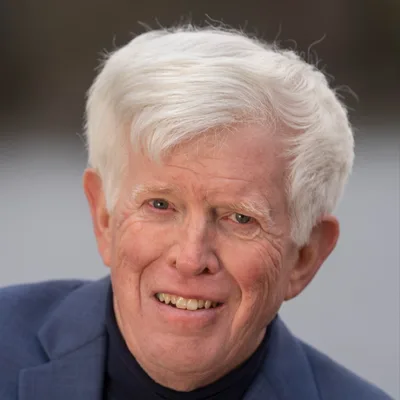
Dr. James Walsh
Enlisted in the Air Force in 1966 as a clerk typist and commissioned through Officer Training School in 1975. As a first lieutenant he commanded a headquarters squadron of more than 500 people in Athens, Greece. Retired as a captain in 1988 after more than 20 years of active duty, then taught at graduate and undergraduate level for 13 years. Returned as a DoD civilian in 2001 and spent more than 20 years on Air Force Reserve policy at the Pentagon before retiring in 2025. Holds an MS and an MBA in management and a Doctor of Management. Author of You're a Leader–Now What?, built on his dissertation on the leadership skills of Air Force captains.
Show highlights
- He enlisted in the Air Force in 1966 as a clerk typist, and spent nearly eight years enlisted before Officer Training School in 1975.
- Officer training tried to make him a weapons controller, until the school told him he'd make a remarkable administrative officer.
- As a first lieutenant in Athens, he commanded a headquarters squadron of more than 500 people for four years.
- Teaching ROTC in the Bronx, he gave cadets an in-basket exercise that opened with a 3 a.m. call from the Red Cross.
- He met his wife, Mary, on a blind date in Athens in March 1971, and they married that October.
- Back as a civilian in 2001, he commuted about 100 miles each way to Hanscom for two years so he could keep teaching at night.
- The colonel who hired him at the Pentagon looked at his three master's degrees and told him it wasn't rocket science.
- His favorite question in Pentagon strategy meetings was how the plan would actually work at base level.
- Mike, thinking back to his PRINCE2® training, asked about management by exception, and Jim answered with the reprographics expert he trusted to run the shop in Greece.
- His dissertation on the leadership skills of Air Force captains became the book You're a Leader–Now What?
Jim Walsh walked into the Air Force in 1966 as a high school graduate who, by his own account, had done the minimum to get through. They made him a clerk typist, because that's what was available, and the Air Force offered to pay his tuition as long as he kept a C. He took every course the University of Maryland would give him, got an early out to finish his degree, came back in as a staff sergeant, and went to Officer Training School in 1975 after close to eight years enlisted. Officer training decided he should be a weapons controller and sent him to Florida to learn it. He'd told them he had the wrong kind of mind for reading a scope and talking a pilot home, and the school eventually agreed, telling Lieutenant Walsh he'd make a remarkable administrative officer. That's what he became. After Kunsan in Korea, he went to Athens, Greece, as a first lieutenant and a headquarters squadron section commander, which on a base with no other commanders meant more than 500 people and every disciplinary case among them, for four years.
He's been teaching for almost as long as he's been serving. An ROTC assignment put him in front of engineering cadets in the Bronx and Brooklyn who couldn't see why they were learning leadership, so he handed them the in-basket of a squadron commander whose day starts with the Red Cross on the phone at 3 a.m. He retired as a captain in 1988, stayed in Greece teaching for the University of Maryland and the University of La Verne, and came home to care for his mother. In January 2001 he reconnected with the Air Force as a DoD civilian at Hanscom, and for two years he drove about 100 miles each way so he could keep teaching his evening classes in Connecticut. He never missed one. He followed the promotions to Enid, Oklahoma, in 2003 and then to the Pentagon in 2004, where he'd never worked above base level and the colonel who hired him pointed at his three master's degrees and said it wasn't rocket science. He was promoted again and spent more than twenty years there on Air Force Reserve policy, until he retired from DoD in February 2025. His favorite question in any strategy meeting was how the plan would actually work at the base that had to carry it out.
He never held a project management credential. He learned the work by trial and error, with good people around him and a general who trusted him to walk into meetings in her place, and he'll tell you the reality was nothing like the theory he'd studied. His doctoral research looked at the leadership skills Air Force captains needed most, and the answer was almost entirely interpersonal: communication, trust, conflict and emotional intelligence. That research is now a book, You're a Leader–Now What?, and every chapter ends by asking the reader to remember a time they've already done the thing it describes. His advice to anyone leaving the service is the same. You've done project management before and your record proves it. What you need now is the confidence to use it in a culture that works differently.
Transcript
AI-assisted transcript, lightly edited. May contain errors.
Everyone, welcome back to another episode of Veterans in Project Management. It's Stuart Bell here, joined as always by Mike Shick. Mike, how's it going, buddy?
Stuart, how are you doing? You doing well?
Yeah, I'm excited to get into this one. you know the guest. I don't, but we just did a little intro, so I'm...
This is... I'm really excited. There's a lot that people are gonna get value from here, so I'm excited to share.
Well, 100%, and, you know, I- before we get into it, I just wanna set a little bit of a primer. I've known Dr. Jim Walsh for, several years now. We worked together at one of my last assignments in the military.
he has 60 years of experience between enlisted officer, government civilian, and then consulting. So four different careers over 60 years, and he's still at it, and has a lot of wisdom and knowledge that he can share from his time in the service, and then also within the civilian and, consulting side of the house.
So with that, I'd like to introduce you to Jim Walsh. Jim, how are you doing?
I'm doing great, thanks. I'm looking forward to this. I don't know if I can follow that and live up to your, your, build-up intro there, but I'll try.
Fantastic. Well, I know you can, so, no worries on that front. So Jim, you started in 1966, if I'm not mistaken.
D- what'd you do when you enlisted, and which branch, by the way?
Okay. I enlisted in the United States Air Force in 1966, and, they assigned me what was available at the time, which was administrative specialist. So I was a clerk typist when I first, walked in the door. So I was willing to do anything they assigned me to, and that's what I started out as.
Oh, fantas- So how long did you do enlisted before... did you go to OTS?
Yes, I did. I went to, OTS,in 1975. So I did, about seven and a half, close to eight years, enlisted before I went to
OTS. Were... D- that was still in during the time that they had buck sergeants, wasn't it, in the Air Force?
it was. Yeah, and I was a buck sergeant. That was one of the ranks I had. I went through enlisted ranks, and then I actually made it up to staff sergeant, to E5, and then that's what I was, when I went to officer training. And, then I came out as a second lieutenant, and, I did the next 12 years on various assignments that I can get into detail if you want me to-
Please
and re- retired as a captain, which is kinda what they told me when I went to officer training. Said, "You know you'll retire as a captain." I says, "Yeah, but I'd rather take a look at it from the officer side," because there was not that much room- At the time for upward mobility, and so th- they kind of told me at the beginning, said, "If you wanna go to colonel or brigadier general, you probably won't."
you know, and I said, "Hey, that's okay. You know, I'll just, you know, point me in the direction where you want me the next job and I'll do it." So, go ahead.
Y- were you on, so did you go personnel, on the officer's side? Personnel admin just like, on the enlisted side? Or did you find yourself in another type of role, on the officer side of the house?
Well, it's funny you should ask that question. but, I, well, the answer is,initially, officer training, tried to make me a weapons controller and I pleaded with them that I have a- about eight years as a, administrative guy and I can be, executive officer, administrative officer, commander.
you know, whatever they want me to be on the administrative side because I've got all this experience and I think I'd make a good contribution to the Air Force. Well, that went upon deaf ears and they sent me to Florida to be a weapons controller. And,this, being a weapons controller requires a, a skill, an abstract skill that I don't have.
And I kind of tried to tell them that. And so you need to be able to look at a scope, and you need to be able to communicate effectively to a pilot where they're going and all that. And I, yes, I could figure that out, but by the time I figured that out, the plane would probably crash. you know?
And so the, finally, the school guys there at weapons control school came back to me and says, "You know, Lieutenant Walsh, we really think you would make a remarkable administrative officer." And I said, "Well, thank you very much. That's kind of what I tried to tell you guys at the beginning before you put me through all this."
so I actually was, an administrative officer. I was, an executive support officer to, personnel, the director of personnel. then I was,the admin officer f- for the, civil engineer in Kunsan Air Base career. Korea. And then they gave me a follow-on assignment to Athens, Greece as a headquarters squadron section commander as a first lieutenant and in charge of more than 500 people.
Oh, really? Oh, wow.
Yeah. And the reason I-
It's surprising-
Yeah, go ahead. I'm sorry.
It's surprising the, we don't always recognize the skills that we've got 'cause they're kind of innate. It's second nature. It's just we think we're good at certain things. But when you're then put in a cir- circum- circumstance where it all becomes kind of conscious thinking and you've really got to make that effort to just achieve the same level, it's very obvious which isn't your unique ability, even if you don't necessarily label what is firsthand.
It's, changes the having to think about each footstep from being subconscious to conscious, and just a completely different experience
Oh yeah, that w- that was a completely different experience. the weapons controller was a completely different experience for me. I, o- and I understood, it was the needs of the Air Force, okay?
And at the time I went to officer training, they didn't need a lot of administrative officers. They did need weapons controllers. I understood that. but I, you know, I tried to make the argument that, I have limited abilities in that area, and I proved that once they tried to- ... to send me to weapons control, school.
So, I ended up, in their wisdom, they decided to keep me as an administrative officer, and I'm glad they did, because I had very good experiences. ones that I probably wouldn't have in the corporate world. because a- as a, a relatively junior officer, I was in charge of five, more than 500 people.
I was busy. because they didn't have commanders. They didn't, you know, I,and, Mike would understand this,you know, more, that,there weren't other commanders on the base. The security police didn't have a commander, the supplies, folks didn't have a commander, the maintenance folks didn't have a commander.
So they all came under the headquarter squadron section commander, you know, a- and that was me. Later they did get their own commanders, much to my relief. but,I had 500 people for a long time, and I had that job for four years. you know, and so I grew in the job. you know, s- sort of like Harry Truman, you know, when he, as- assumed the presidency, he really, if you read his autobiography,FDR really kept him out of the loop, you know?
He was happy to do whatever he had to do as the vice president, but he was not an active vice president, didn't know everything that was going on. So when FDR passed, Harry Truman found out about the, atom bomb. He found out a- about a lot of other things that,were going on, that he had to, be brought up to speed.
And he grew in the office and became, in my view, one of the, one of the best presidents we've had. you know, and so similarly, I grew, in the office, also. you know, so once you're commissioned, the Air Force calls you a leader. you know, and, you know, you have a, a brown bar on, so you're a leader.
And,one of my assignments was teaching Air Force ROTC after I became, after the commander job, I said I, I wanted to, go somewhere and teach in the Air Force, you know, and,and, impart my wisdom on folks that wanna become officers. so I ended up, and they s- and I wanna be close to home.
And,I envisioned myself on a, a, a campus, you know, rolling hills and nice p- kind of peaceful environment. Well, and they said, "Where do you wanna go?" I said, "Well, I, I'm from Connecticut and, I'd like to, I'd like to go close to where my parents are in Connecticut." And they said, "Well, we've got the job for you.
We're gonna t- send you to the Bronx, New York." So, so-
Right on the doorstep.
yeah, they fixed me up. It was close to home. Really? That was the, yeah. But it was Manhattan College in Riverdale,Bronx, New York. And so I, I, there I was,an instructor. I did teach at Riverdale, but they also gave me the road show where I went to the New York Institute of Technology in Long Island, and I went to Brooklyn.
w- it was the, it was the, Polytechnic Institute of New York, where, they had, it's an engineering school. And, it's at that school where I got the question one day, 'cause I was teaching leadership and management, which is what I can do, and,some of the engineers are saying like, you know, "Why are we learning all this leadership and management stuff?
W- we wanna be, engineers and pilots and all that and get on with it. So, you know, we're just kinda filling the square here by, but we really don't wanna be here." I said, "Well-" I understand your way of thinking, but, again, to my point previous, once you put the brown bar on, the Air Force considers you a leader.
So you could find yourself in a position similar to where I found myself, in the previous assignment. You know, only you're a headquarters squadron section commander, you got 500 people. And, you'll- you might say, "Well, wait a minute. I didn't sign up for this. I signed up to be a pilot and, or an engineer."
And the Air Force would say, "Yeah, we... You can be a pilot and engineer, but right now we want you to be the headquarter squadron commander. And remember what I said before, the needs of the Air Force come first." and so that got their attention. and so I used to give them an exercise.
Of course, here is an atypical day in the life of a headquarter squadron commander beginning at 3:00 in the morning when you're notified by the Red Cross that you have a emergency leave situation, and you have to have somebody sent back home from, from Greece, where I was, to,Wisconsin, immediately.
you know, and all that. And then you already have your schedule planned for the day, but you may be taking up a considerable amount of time getting that person home, you know. and, so I gave them the in-basket exercise and what would you do, first of all, when you walk in the door?
What would you do as the new commander? One, one cadet raised his hand and said, "Well, I'm gonna make people know that they know I'm the commander. I'm the guy in charge and what I say goes." And I said, "Well, that's a view. that's a view." and, any other views? And ano- another cadet raised his hand and says, "Look, you know, I've, I'm, I've only been commissioned for, 90 days or so.
and I've got a lot of senior NCOs there that have got wealth of experience that I can learn from, and I'm gonna give them that message and let them know that, yes, I am the commander and, but I respect you guys to teach me what you know and give me recommendations on ways forward." And so I just went up to the class, "Which view do you like the best?"
You know, and, you know, the first one was kind of thrown out the door, because- Yeah, you- Shocked. Yeah. because yeah, I'm,I'm the boss, but I still have a lot to learn. you know, and so what I did was I took, what I had learned to that point, and it's, that's really what I wanted to do.
I wanted to impart that, to cadets that were gonna get c- commissioned. and that, yes, the Air Force will help them realize their personal goals, whether it's pilot or, engineer, but there's other stuff along the way. I didn't share with them my, weapons control officer that I, experienced.
I don't think. Because I didn't wanna discourage them.
Yeah. Pro- probably not the right story to set the stage a- as they're embarking on their careers.
Right. Right.
It's good to learn from other people on sometimes, but sometimes it's good to discover things yourself.
So- Go ahead ... so you come back from Greece, and now you're in New York, and you're an ROTC instructor, relatively close to home. it, was that a four-year assignment as well?
Oh, that was a three-year. it was a three-year assignment, and they asked me to do, I could go anywhere I want to after that assignment.
'cause I, you know, did the three years there, and we had a couple of summers doing,camp, summer camp for ROTC, cadets and all of that. Said, "Well, where do you wanna go from here?" I said, "I wanna go back to Athens." I had married, a local, girl there in, 1972. I got there in nine- 1971.
no, actually, I married her in 1970- '71. Yeah.
Is she gonna be listening to this, Jim?
Yeah. Yeah, she'll listen to this. In 1971. well, it's been 55 years, you know, and I've got a lot going on, so, but I- Fair enough ... I, but, yeah, we're gonna have our 55th anniversary, October 22nd of this year. But,
A lot of conversations
yeah, and during- A lot ... my retirement at the Pentagon, I had to thank the Air Force and everybody else involved in the Air Force because had it not been for the Air Force, I wouldn't have met Mary, in Athens. because in, in 1969, I went to Hof Air Station Germany as a buck sergeant. and, I was on a bowling team there.
I went bowling one weekend, and they closed my base. I came back and they said, "Walsh, you have an assignment." I said, "Okay, am I going to, Vietnam or Thailand? which of those areas?" 'Cause back in 1970, '71, that's where people were being sent. So they closed my base, and they said, you know, "You still owe us, like, 13 months overseas, so we're not gonna send you home.
Got too much invested in." I said, "Okay, yeah, understood. So where am I going? And, Vietnam or Thailand?" You know, answer my question. I'm asking him, I'm pushing him, you know? And they said, "Oh, you're going to Athens, Greece." I said, "Okay." And I saluted smartly, and I went to Athens. And just by chance, I went in January of 1971, and, I met Mary in March of 1971.
It was a, a blind date 'cause I was going to school there. That's, like, like I said before, I extended my days, you know? what, what courses are they offering? I'll take them. Going to University of Maryland, and, met a Greek guy there who said... And I befriended him, and he says, "Hey, you know, I'm, I got a date with my girlfriend today and, she's got a friend and, we're looking for a, a second."
And I said, "Sure, you know, I'm game for that." And that's how I met Mary. Nice. you know. Yeah, I met her in March of, of '71, and then we were married in October of '71. and, the reason it took so long,i- it's, that's kind of a joke that I gave at my retirement. But- But, back then, they were very strict about, you know, if you go, you're, you're a young guy and you go overseas and you meet a, a lady over there that's, you know, they had a lot of hoops for her to jump through- Ah
which were bureaucratic and, they're just trying to protect the, the troop, you know?
Yeah.
So we jumped through all the hoops. I kept telling them, "Let's get on with it." and then we got married in, October of '71. You know? Beautiful. So, so October of 2026 coming up is our 55th, wedding anniversary.
So anyway, back at the retirement from the Pentagon. Sorry to keep jumping around. I just mention that because they wanted me to give a speech, and I had it written on a napkin, you know? the general- As best speeches are sometimes. Yeah. The gen- the general, that, General Gunter, who I've, dedicated the book I've just written, I'll talk about later on, to, Had about a 33-page, script.
and so she s- she began by saying that, "Look, you know, sorry about the long script, but, he's been around since 1966- ... and I got a lot to say." So when I got up there, I said, "Don't worry, I don't have a 33 p- page script," and I showed them the napkin. "I got bullet points on this napkin I wanna cover in about 10 minutes."
you know, but the- Did she
go through all 33 pages, Jim?
She did.
Did she really?
She went through- That means it's a tall one ... every single one. She gave me a copy of the script afterwards. I didn't tell her an- that stuff. I gave her a few bullet points, you know, 'cause, she said, "You know, I, I want everybody to know, particularly his family, that I'm...
I suspect never told anybody." I mean, once, once he leaves, and she was right, once I leave work, I don't talk about work at home.
Yeah.
So, so I had my, Mary was there, and I had, my, my two daughters and their two kids, so I had my kids and my grandkids there. and one of the spouses, the other one couldn't make it.
So they were learning stuff for the first time. all, all the stuff that they do, you know. They said, "I knew he was, I knew he was busy, but I didn't know he did all that stuff." you know, so this was, this was all, Being known for the first time there, but,
anyway, I- It's surprising once you start saying yes to things.
It's surprising once you start saying yes to things, it's surprising how much gets packed in over that long period. It's, the thin threads that jump from one thing to the next. It's not necessarily a plan that you start off with, but you end up and look back, and it's really quite a wealth of experience.
It, yeah, I ended up with a wealth of experience and, most of it unplanned, and a lot of it by chance in the Air Force. And like I was saying before, if the Air Force hadn't sent me to Athens, Greece, I don't know who made that decision, how it was made, and that's, that led me to meeting Mary. And then, what I told the, folks at the retirement, none of this would be happening today.
You know? So I owe the Air Force a, a very big, deep gratitude, for everything that has happened. And, I really became, transitioning over to project management, I really became cultured in the Air Force. you know, I,I walked in the door in 1966 as a high school graduate, and I sort of, I don't wanna say slept through high school, but, I sort of did the minimum in high school and, focused on things, other activities outside and, graduated. but, not, didn't have the greatest grades, you know. and so I said, "Well, the Air Force is offering to pay my tuition. All I need to do is maintain a C." I said, "Even a, even I can do that."
you know, and that was my attitude when I began, with the University of Maryland. Take as many courses as I, as possible, get at least a C, transfer them a- and so that I can,leave the military, 'cause I didn't plan on making it a career. I wanted to get as m- many courses as I could, get my degree, and then move on.
Well, I did that. I got as many courses as I could, and, and, I got an early out for school, from enlisted, got my degree, came back in, with a degree. assumed my previous grade, which was staff sergeant, for about two years, and then I went off to, OTS, and then became the officer, and then I ended up being the, experience I l- that I let you know.
I was the exec officer, I was an admin officer, I was commander, I was an ROTC instructor. Then I was, I went back to Greece after Manhattan College in, in, in the Bronx, 'cause that was the original question. Went back there, went back to Greece, and then I became an administrative officer, there, director of administration for the base.
And, was for about two years there before I retired and, from the, from that part of my career in, January of '88. but all during this time, I have been going to school or teaching, one of the two. Wherever I was going to school or teaching. I would land someplace and s- and say, "Hey, you guys need a teacher?
I've been doing this for a while." And, and they said, "Sure, yeah. You wanna teach for us?" I said, "Sure." So they had me teaching things, whatever I could. one school even had me teaching psychology, which was a little weird for me. but, but I said, "I'm not a psychologist, yes, I've taken psychology and I know I can give an overview of it, you know, but I've..."
man, that's all you need to do." I says, "Okay, cool. I'll do that." So, so, you know, I was, pretty much, teaching wherever I went and, s- and I kept teaching after I, f- retired, for the first time from the Air Force in, 1988. I stayed in Greece. I was teaching for the University of Maryland.
I was teaching for the University of La Verne there. and I was doing a little management consulting also, and the consultants,were sending me back and forth. They were paying me for me to go to Crete,for my flights because I said, "Yeah, I can work for you, but I'm also teaching, and I gotta be in Crete at certain times."
You know, we'll take care of that for you." I says, "Okay, cool." So I did that for a while. and then, I had to come back to the States because, My mom wasn't, doing so well, so I came back and,became her, caretaker, so to speak. But I had to work as well, and,what I thought I could do, before that was to go get a doctorate.
And I was,I was ambitious, but, not realistic in that respect. Because, for, to get a doctorate back then they said, "Okay, well, you gotta give up your life as you know it, and you have to attend full time to the university and just do studying." I says, "Well, no, I've got a family, and now I've got other responsibilities, and I can't do that."
So I went to Rensselaer and got an MBA,just to, update myself, there when I got back to the States. And I was the caretaker for my mom, and then I was,teaching. I was teaching and, I got a job in a law firm for about a year. and while I was doing all that. And so, and then,the, Air Force called me again.
'cause I had applied. I said, I need to get a real job." ... you know? and, I enjoyed teaching, but it wasn't all that lucrative. But I n- I never was teaching for the money. I just liked doing it. Yeah. But I could do it well, and I had a lot of experience, so the universities wanted me to teach, so I was teaching.
but then the Air Force called me, again as a civilian. because I had applied, but it was like a year before they called me. and this was at Hanscom Air Force Base in Massachusetts, and I was teaching in Connecticut, in Hartford. That's like about a 100-mile commute. you know, so I says, "Well, I'll go up and..."
They called me and I said, "Well, I'll go up and interview with you. I'm not too... I don't, I'm not quite sure how this is going to work, 'cause I'm already teaching."
So they called me at the Family Support Cen- it was then the Family Support Center, and then it became the, Military Family Readiness Center, and then it became, it had different names.
but anyway, Family Support Center. So, they liked me. I liked them. I took the job, and then I had to figure out how I was gonna do it. but, I said, "Okay, look, I'm still teaching and, so I have to teach e- and I'm teaching in the evenings. I start at 6:00. Classes start at 6:00, so I'm working up here from 7:30 until 4:30, but I have to take off and hit the road because I'm teaching at 6:00."
They said, "Okay, yeah, you can do that." it was- So- ... kind of a-
So did you move up to the Boston area and then just go d- commute back for teaching, or did you stay in the Hartford area- ... and commute every day up to Boston area?
The latter. Yeah. I did- Oh ... I did the latter, but I broke it up by staying at, the,staying at the, what they call the, TLQ though, w- temporary lodging quarters-
just to break up the commute. But I did that commute. I didn't move up to Boston. I did that commute for, like, two years and, and- Wow ... got promoted out of it, fortunately for me. and 'cause I d- I'm not sure how longer I, how much longer I coulda lasted. but I did that, and I didn't miss any classes.
you know, one time I did walk into the wrong classroom. 'cause I, I was teaching the same course at, Central C- Connecticut University on two different days. So one time I walked into the course that was for the different day- ... and found a different group there. I said, "Oh yeah, it is." I have to remember what day it was.
and, and- Like,
Groundhog Day?
yeah. So, so I did manage to do that. I don't know how I did it to this day. I don't think I could, you know, people look at me in astonishment. "You mean you did 100 mile one way?" I says, "Yeah, I did." you get up at 0 dark 30 in the morning and, head off to, Boston or right outside of Boston, and I would get there, you know, 7:15-ish or so.
Start at 7:30, leave at 4:30 and, head back, to, to Hartford. Walk in the classroom just about, you know, the,the car, the... Right after I turned off the engine to the car I was walking into the classroom just in time to start class. And I did that for, like, two, two years.
So this is around, if I'm keeping track of the dates, this is around 1990, 1991-ish?
Yep. Yep.
Okay.
Yep, yep. Oh, no, actually no, it was a little later than that. It was a little later than that because it was,I was teaching for about, I had, like, about a 13-year break from the time I retired in 1988 going back to Greece, until the time I reconnected as a civilian with the Air Force in, at Hanscom in Massachusetts.
So I didn't start until, I start, January of 2001. So I was teaching all that time, but I was teaching in Connecticut and so it had been a while since,about a year I guess, 'cause I was looking around 'cause I was teaching but I was, as I said, it wasn't all that lucrative and I needed to get a real job, and I thought I would get one a little closer to Hartford.
but, they called me from Hanscom, and I went and I started in January of 2001. And, I did it for two years until 2003. I was promoted and I, my philosophy as a civilian was I'll go where the promotions are and so this promotion was in Enid, Oklahoma.
Oh.
Yeah. So people are asking me, "How come you're going from Boston to Oklahoma?"
I says, "Well, that's where the promotion is. That's where I'm going. they promoted me." So
I- I say this partly in jest, but you were commuting from Hartford to Boston. Please tell me you weren't flying out on Sunday and flying back on Friday.
Oh,no. Okay. So we actually mo- This time we actually moved to Oklahoma.
Okay.
We mo- we moved to Oklahoma, and I was in, Enid, Oklahoma for about, 18 months or so. And my commander there said that, "Hey, you know, I'm going to the, Pentagon. Do you wanna come with me?" And I said, "Let me think about that for,for a while. Yes." and my boss there at the time, and I hope, and I like him a lot, but, you know, I often emulate his accent.
He said, "Jim, do you really wanna go and do that? Are you sure you wanna go and do that?" And I gave him the same answer, let me think for a second. Yes."
Yeah.
because Oklahoma was good in that I got some good experience. I was lead, I was one deep, so I was a lead in everything, fam- in, in air and family support except for transition assistance.
I had a colleague who was doing that and we were both in competition for the boss's job. And I let him know, "Don't worry about it. I'm not competing for that here." "You can, you can have it." He says, "Yeah, but my wife wants me to stay around this area." I says, "Don't worry about it." So then the commander came and said, "Do you wanna go to The Pentagon?"
And I said, "Sure, I'll go." I had no real idea of... It was a promotion, that's what I knew. It was another promotion. Yeah. So I'm going there, and now I'm in DC. and so I had never been at that level or any other level other than base level during my entire career. So, so Mike, you can picture that, you know?
Yes, I can appreciate that. I know that's your experience. Yes. So now I'm a policy director, and before I was a receiver of everything- ...
at the
bottom end of the chain at base level.
Yes.
So I went to the colonel who hired me and said that, "You know, I came here for the promotion and I'm glad to be here, and I'm glad to accept this, but you know I have never been anywhere other than base level."
And, she looked at my resume and she says, "Hey, you know, y- you got three master's degrees. you can figure it out. It's not rocket science." you know? And I saluted smartly. I said, "Yes, ma'am. I will do that." but, you know, during my retirement speech, they s- I said, you know, there's a, a well-known saying, you know, "Whatever doesn't kill you makes you stronger."
A- and I'm still here after 20,about 20, yeah, 20 plus years in the Pentagon. I'm still here. so I guess I'm a little stronger, as a result of it. But, no, I went from,I like to joke about handing out futons at the base level to figuring out how do you gonna make this law work for the Air Force Reserve?
Yes.
You know, that was the transition. and then all of the, people involved, at every different level, at every different echelon that have their own agendas, Mike well knows this,that you have to kind of tiptoe around b- as you're representing your component. Mine was the Air Force Reserve.
you know, and, all, all the policies weren't particularly in the best interest, of- the Air Force Reserve, and I let people know that, diplomatically as I went along. And Mike remembers. maybe not so diplomatic sometimes. but, but, yeah. So I did that. I did that and I, I had, I did different jobs and, at that level.
And, I had different experiences. worked with a lot of general officers. General Gunter had given me carte blanche. "Hey, go to this meeting for me." I says, "Yes, ma'am." and, you know, I d- that, that went above my immediate supervisor's head also. So I had to tell my immediate supervisor, "Hey, the general wants me to go to this meeting for her today, so I'm going."
And, he's, he had nothing to say whether he agreed with it or not. he had nothing to say because she, you know, she was the boss.
Yeah.
So, I did that and, she gave me more freedoms as a leader than I ever had. and I find myself, you know, on, effectively communicating with other general officers, other folks a lot senior to me.
but they listened to me 'cause I was representing her.
you know, and so this was, that's why I,dedicated my book to her. you know, as she was my mentor at the Pentagon for about five years. And she said, "Hey, don't remember it's longer than that 'cause I was at Af- I was at the Air Force Reserve Command."
I said, "Yeah, I know, but I was at the Pentagon and I didn't know you then." So I just put in the five years, which is really a lot, you know? It is. and, so, Yeah, so my experience is, basically I grew, like Harry Truman, I grew in the jobs that I had. I drew- I grew, for, from project management perspective, I became an effective leader and manager as a result of my growth in the Air Force- because in my humble view, the Air Force was a good fit for me. It's what I needed back in 1966 when I started. I needed m- a grounding. I needed, I needed, growth, a lot of growth, back then. So the Air Force provided the means for me, both enlisted as an officer, as a DOD civilian. you know, and,it may not work that way for everybody, you know, but I could always, make a recommendation to anyone, for four years in the military or six years in the military, you know?
it gives you a grounding, it gives you some discipline, it gives you a sense of direction. and today they have a lot of, services that they didn't have, or not as effective back when I came in, you know, 1966. They didn't have any of this stuff. Transition assistance program, as Mike well knows, I mean, they have so many services available for folks to take advantage of.
you know, and in my view, boy, I wish I had those back when I first, left the Air Force.
you know, it- thank- first thank you for your several decades of, background and experience and your willingness to chat with us. A- and I'm able to, connect some of the dots, from a project management perspective, and I suspect you were getting this when you were a buck sergeant, but, particularly when you became a section commander, y- you probably had the amazing churn of all the performance reports that you had to do day in and day out.
But there was other initiatives that I suspect that had a specific start and end that you had to oversee or app- or be the project sponsor for f- as individuals are working on. And how did you develop your project management, program management type of experience? Was it, did, did you just kind of...
I know you said you grew into it, but was there any real formal talk, or was it, "Hey, take this square peg, you see that round hole over there? Beat it so it goes in"?
Well, yeah,it was more from e- my experience. I had the education, I knew the theory, but then the real- the reality was quite different.
and,it was that, you know, make it work. It's like,when I first got to the, the, the Pentagon, I was kinda shocked. I went to one of my first meetings run by OSD, Office of Secretary of Defense at the time- ... and it was on the, post 9/11 GI Bill, when it first came out.
And, she said, "Make that, make this work for your components." And back then they had like four different GI Bills, three or four different GI Bills. I don't remember them all back then now. It's been a while. But, make it work. so square peg in a round hole, yeah, I can identify with that. But,but it, there was a lot of trial and error along the way.
So I mostly learned by trial and error. and,but I can't take full credit for it 'cause I had a lot of good people around me. And that's part of the, part of, the, the book that I have. You know, you're only as good as the people that work with you and for you as- Yeah ... as a leader.
and you really have to gain their trust, you know, in order to be effective. It goes back to like that,that, ROTC guy said, the cadet said, you know, "I'm in charge. I'm gonna let them know." I says, "Well, you know, there are a lot of stories about senior NCOs giving lieutenants keys to the airplane, or looking for keys to the airplane."
Going out to look for keys to the airplane.
Yes.
you know, they can... I mean, they can make you look,
Yes ...
not so great. you know, and so you're only as effective as people w- work with you and for you. and I was... I have been very blessed to have good people around me. and I've tried to be very forthcoming, particip- participative, collaborative leadership style.
like even when I was the commander, you know, people knew I was the commander, so I didn't have to go around directing people to do this and that because I'm the commander. They knew who I was, you know? So in four years, I could name maybe on, one hand three or four instances where I had to give a direct order.
But the rest of the time not. and I tell a story in the book,you know, 60 seconds or less, about the first time I had to do administrative,punishment or administrative discipline. And so, the individual reported to me as commander very formally, of course. I put him at ease, and, then we just had a talk, collaborative discussion.
'Cause I needed to learn his side of the story, you know? And I needed to encourage him to talk and not scare the heck out of him. and, so... But, after he left, my senior NCO there s- came to me and said, "Hey, Lieutenant, this is the first time you've administered discipline, right?" I says, "Yeah, as a matter of fact, it was."
and so he says, "Well, you should have made this guy feel like he was three inches tall. I mean, you should have come down on him like the wrath of God, and all that." And I says, "Well, what was the result of this, encounter here. and, he said, "Well, the guy was severely disciplined. He lost two stripes.
He's digging ditches around the base. everybody sees him. He's a s- it's a small base." and they... And I says, "Yeah, don't let the door hit you in the butt on the way out." in other words, situational leadership. My leadership style is collaborative, participative. I do that to try to understand other people's, what other pe- people have going on.
the other side of the story, as Paul Harvey used to say way back when, "Now, and this is the oth- this is the other side. This is the rest of the story," is what he used to say back... I don't know if you remember him or not.
I do, yes.
But, y- yeah, this is the rest of the story. This is what you hear now. This is the rest of the story.
I always try to get the rest of the story, like I, I tried to do f- because, yeah, the, the, the, the member got severely disciplined, which he deserved, because I won't go into all the stuff he did, but, he did it. and he deserved what he got. you know, and so I felt it was a fair administration of discipline, but I wouldn't have known that had I not gotten his side of the story, had I just, presumed guilt and just came down on him like the wrath of God.
So what I t- I tell the senior NCO essentially is that, "Yeah, I respect this as his style of leadership, but I'm the commander and this is my style of leadership." Yeah. and so, I felt as a senior NCO, he should know that. He should understand that people have different styles. He shouldn't try to impose his style, which is another thing I said in the book.
You know? Yes. Situational leadership, it's judgemental. You know, you're trying to meet an objective, okay? And you use your style of leadership that's most effective for you to reach that objective. And fortunately, I've had, commanders, particularly the one in Athens, w- who said essentially, "Look, you got 500 people.
You do all the disciplinary actions. I will be your, I will be your appellate authority." you know, "But, pretty much, make sure you get them done at your level so I don't have to deal with them at my level." you know, that's pr- that, that's the message that he gave me. and, I probably couldn't say that diplomatically, at the time, but that's...
and pretty much I did that, you know? and,I remember I had a visit from my cousin once. he came in looking for me,from the States and went to the s- the gate. And he says, "Hey, do you know Captain Walsh?" "Yeah, we know Captain Walsh." a- and, and then they volunteered something.
"He's tough, but he's fair." and my cousin gave me that feedback. And so, you know, I don't know if they would ever told me that directly. but, I can live with that.
Yeah.
I can live with that. Yeah. you know, and so all that. But I don't wanna di- digress from the discussion, you know?
no. Okay. The, but that, that is helpful. And as you were talking, I'm, was thinking through a few different aspects. When we consider some of the, performance domains, and I'm speaking through a PMI lens, for stakeholder, s- I, it, you had to work with a lot of s- different stakeholders depending on where you were at any point in your career, whether you're at the base level or at the strategic level.
As you were leading projects or overseeing programs and, tasking those type of items out- What would you say, a- and I suspect I know, but from a, a situational leadership perspective and a stakeholder management perspective, how do you go about that, say, you know, when you have a slew of different personalities with different agendas, with different,you know, political perspectives, how do you reconcile all of that to eventually deliver value and meet the objective that you were given?
Yeah. Well, so there's, I think you have to put it in perspective of where, like you said, where I'm at and what I'm doing and what level I'm at. at the Pentagon, we used to, as you well know, we used to get these very short turnaround taskers. you know, and, since I had a, I had a very good people around me who understood, that we'd get short turnaround taskers, and understood that it, that I had to get an answer by a certain time.
and they would g- they would deliver, you know, because of the relationship we had. you know, and,so many times I would go directly to them and say, "Okay, you know, this is coming down formally as well, and by the time it gets to you formally, it'll be due to me." You know? So, so I'm gonna give this to you informally, and expect to get it formally as well.
In, in the meantime, you can be working on it, 'cause you understand that somebody up there wants it, usually at Mike's level, the Secretary of the Air Force or OSD. they want something at, with a very short turn, you know. and, so they understood that. They understood that at the c- at, at the command.
Now, at a different level, I try to understand their perspectives,and,and consider them, you know, and all of that. and, a lot of examples I could give, but,it's just, I worked effectively at the base level through my first sergeant, believe it or not, after that one instance I talked to you about where I kind of, kicked him out of the room, dipl- diplomatically. That was a directive style I used on him because I thought he should know better. and, but I was a collaborative style with,with the, person who's getting punished, you know? But, I worked very effectively with first sergeants. and,they were my eyes and ears, can...
They could tell me what's really going on, you know? and, because I had to do a lot of those administrative, disciplinary kinds of things, so I would get feedback from ev- every direction. And, a lot of the officers, outranked me. I had the command authority, but I would talk to lieutenant colonels, even majors at the time 'cause I was a lieutenant or, and I made captain while I was there.
But most of them outranked me, but they didn't have the command authority. and, most, well, a lot of the times I would get, "Oh, this guy is super. He's a super. I mean, you should really, you know, consider all the fine job he does at work." And I said, "Yeah, but he went downtown and he slugged a guy on the next bar stool to him," you know?
and now I'm talking to him about that. you know? but I may find out that something, bad has happened in his life. maybe his wife left him or something like that. and he's over in Greece, and he can't get home, stuff like that. There are mitigating circumstances. So I'd find out about that as I went along, but I would get,feedback from their comman- from their supervisors who will very often outrank me, and from, the staff judge advocate, because I would go over and s- and then say, "Well, what are my parameters here?
I've got a number of actions that I can do." "What are the parameters and then what would you recommend legally based on that?" So I would get pr- probably a different recommendation from the lawyer. So I'd have one recommendation from the supervisor. I'd have another one from the lawyer, and then my first sergeant, getting back to our first sergeant, would tell me, he's got his ears to the ground, what's really going on in their lives as a...
So I'd have all of that as mitigating circumstances. Yeah. Then I'd have the member's point of view. That's like a fourth iteration. And based on maybe their past track record, if they've had numerous offenses, and I'm considering numerous offenses, or this is the first time they've ever done anything like this.
you know. so- So I would,
I w-
have to consider all that ...
E- if you don't mind, I'll jump in real quick. yeah. there, there's an academic term called balanced processing of information. and that's just a, an academic way of saying I listen to all sides before I make a decision, simply put.
Yeah. And it sounds like that y- your leadership style and how you deal with different stakeholders is you ma- maximize the amount of information that you pull in from everyone before you make a decision.
That's fair. That's what I try to do.
Well, yeah we're human, so we're not perfect, but- Yeah
to, to the max extent possible, especially if you're making some sort of pivotal, movement towards whether it be personnel actions or dealing with certain stakeholders to, to the max extent possible.
Yep. Yep, that's fair. That's, that, that's what I try to do is sometimes y- you have time constraints and you don't have all the, the variables.
Yes. you know, sometimes it's just personalities too, you know? I remember this one time I was on a court martial board. I won't go into all the specifics, but, I was rather junior, but I was a commander, but I was rather junior, and there was senior officers on the board, that really wanted to, and I won't get into, details, but they really wanted to fry the guy for the offense.
You know? I didn't. I brought up the mitigating circumstances like I was just, demonstrating to you and I said, "You know, as a commander, there are mitigating circumstances that had they not happened-
this guy wouldn't be in front of us right now."
Yeah.
O- and one of the senior officers I remember said, "You know, if that happened to, to, to me or to you, you know, we would be fried."
I says, "Yeah, well, maybe, because we're expected to re- meet, meet a higher standard. This guy- you know, w- you know, when the incident happened, he was intoxicated, and he was awakened from an intoxicated state. and actions as a result of that happened that, that ended his career essentially.
And I said, "As it is, we're ending his career, you know? I, I don't think we need to give him the electric chair." but, you know, like, like those guys wanted to do. I mean, they really wanted it. And, and so I, I had tho- those kinds of discussions. but,so-
That nuance brings in, I think, a transition element as people move from the structure of the military environment that gives that rank and structure as a kind of foundational component as they transition out into the civilian world, and those elements get moved away.
I think people really have to look in on themselves, and whether it's project management or leadership skills. But taking that underlying structure away, but having confidence in the skills that you've got and being able to apply them into a slightly more, flexible environment of civilian life, I think that's quite a challenge for some people.
But as soon as you start moving the language and thinking about it in a different way, those same skills apply. It's just you're not relying on the underlying structure that you might have kind of got away with relying on before. You now need to be a little bit more intentional about each of those things.
Oh, no,that's a very good, good point, Stuart. and, this is, again, what I get into with my book, you know? My, my, my dissertation was, on the,leadership skills for Air Force captains. you know, but the leadership skills for Air Force captains are generic. these are leadership skills that apply to leaders wherever they are, you know?
Yeah. and that's why I, the foundation was my dissertation. They asked me if I wanted to write a book. I said, "Yeah, but it's not gonna be a dissertation. It's not gonna be a, a, a conceptual book. It's going to be a practical book on how you apply transferable skills." That's what you're getting at, Stuart.
You know, you're transferring- Yeah ... your skills from the, in this case, from the military to the civilian sector that may not be as structured as what you're accustomed to, and you have to adapt to that, to that new culture, to that new reality, and all that. but in my book I'm saying, "You can do this because you've done it before."
Yeah. You know? you may feel like a duck out of water if you're, if you've had 20 years in the military or 30 years in the military a- and, now you're maybe 40, 45 years old or so,or in your late 40s if you had 30 years or close to 50, and you've never been in the what I call the real world before.
You've been in a structured military, and now you're in a corporate environment in the real world, and you have to adapt to it. You've got the skills, because y- you know, you've used them before. You just have to understand how to use them, how to apply them. And that's what my book,talks about.
It,it takes the findings from my dissertation and the,and,constructs chapters according to the finder, findings. There's, like, seven chapters. And so it's all research based, and if you want to research in the book you can find it in the appendix. you know, but I'm talking anecdotally, I'm talking from experience.
and, e- exactly to your point, Stuart- I'm really- ... you know, transitioning, you know? Yeah, and that's the title of the book, You're a Leader. Now What?
That, that ability to take the skills, I mean, we've talked about it in a couple of previous shows, talking about the in-service project management way of doing things and the structure around that doesn't necessarily mirror exactly with the named frameworks that the civilian world use.
So transition, getting people to open their eyes to the fact that they have all of this experience, and it is structured in a way, and the job isn't completely reinventing it. It's just transitioning or translating the language of what they used to do into what the civilian world now requires. But as you say, that equally applies in civilian life at a leadership level as well as the kind of program or project management at the kind of task level.
The research and the dissertation- The elements that come out from there, what were some of the challenges that people were talking about that maybe were a surprise or weren't necessarily the obvious ones? Was it more internal and they were just, they had the skills but they just didn't realize it? Or was it more kind of external and a labeling thing?
Yeah, the,the dissertation findings were, mostly interpersonal skills. and it was a qualitative study. The,the, technical skills were not questioned. captains knew what they were doing. They knew their subject and all that. the, the, the, what they refer to as soft skills, like, effective communication, we're gonna talk about, that's the first chapter of the book.
Effective communication, and then, collaboration, and team building. you know, all with a view for win- winning, trust. And then situational leadership, which we've discussed, and, conflict management, 'cause you're gonna run into conflict, both constructive and destructive, that you have to deal with.
you know, and emotional intelligence. emotional intelligence plays a big part because you, when you're trying to learn, which I'm, I consider myself a lifetime, lifelong learning, I'm still learning every day. Even now, when we're talking, I'm learning. I'm learning all the time. you know, you have to try to really listen, to other people's, feelings, not only information, but how they feel about something, you know?
Right. and so try to understand on an emotional level as well as a, a factual level. So emotional intelligence. All of this stuff came out of my dissertation as, people need more of, captains need more of this, this kind of stuff. you know, and so, like I said, I just, there's a chapter in my book on emotional intelligence.
There's one on team building, there's one on collaboration. But the findings, f- of the c- conceptual findings are translated into anecdotal chapters, and with an introspective touch at the end saying that, "Look, you know, you've done this before. A hiring authority determined that you're qualified for this job.
You were hired and accepted as the leader. you may be here for the first time. You may, this may be all new to you. Think about how you've done this before in terms of effective communication, in terms of, team building, collaboration, you know, leadership styles, what your style of leadership is, how you handle conflict, your emotional intelligence."
you know, you- ... you've qualified for this job. Yeah, but you- you've done it in the military. Yeah. You've done it in the military for X number of years. Now you're in a civilian environment, and you may have a culture that you have to deal with, and I talk about that as well, that, may not be helpful to you or may-
kind of go against- It's
a, if ...
what you wanna do ...
switching the language, right?
yeah.
You know- sorry, Stuart. You know, the- Yeah ... i- if- Thinking back to my PRINCE2, project and controlled environments to practitioner qualification, at least when I went through it, there was a lot of talk about management by exception.
And, you know, for those who aren't necessarily aware of management by exception, i- is essentially you stay out of people's business un- until they're going off track, essentially. and that gives a project manager a certain level of flexibility to keep it high level and while it still allows innovation.
The, it doesn't necessarily mean that you are, you know, laissez-faire where you're just gonna let people go about and do whatever they feel like doing, but rather gives, give them the latitude, set up the guideposts, give them the lab- latitude to execute.
Yep. I-
in, from your s- perspective, Jim,did you ever employ that, approach, and h- what was the efficacy or the value a- and the likelihood for success if you did employ that with individuals, that, that were supporting projects that you were overseeing?
Yeah. That's a very good question, and I think it's a, a judgment call here, because you really need to,assess the readiness of the follower, for that, you know? and, talk about that a li- a little bit in my book, too, but I, that- that's just not me. It's, this is, this is situational leadership, according to the readiness of the follower.
Like, if you just walk in the door and you don't know, you're just learning everything, you have to be more directive, you know? Yeah. but if you're dealing with, if you have somebody that, like I had in Greece when I was a director of administration, I had,reprographics. Back then we had reprographics.
and this guy knew everything about reprographics, r- reprographics. The machines, how to deal with them, and how to get stuff out. I knew nothing- Do- ... about that stuff, but I was his boss.
Like, To the extent that you can talk about it, for those who don't know, like me, what is that?
yeah
Oh, you're missing out I'm,
I'm dating myself here.
Well, no, I remember as well, Mike doesn't have that kind of visceral chemical reaction to that word like you and I obviously do
yeah,
yeah. I saw Stuart's head s- you know, start bobbing when
you- Nostrils flare and kind of taking me back
yeah. Well, we used to have, this was like in the '70s, we had reprographics on base, which was,we didn't have computers back then.
We didn't have, you know, you, y- if you wanted to get, copies made of, of,of books or of, presentations or of, some projects that you had going on, there was a, a person in charge of all that on the base, which was reprographics. and we used to jokingly refer that as the base reproduction.
Ah ... you know, and there's been a lot of jokes about that. But, anyway, I won't digress. But reprographics would have all that stuff, you know? and, so this was a specialized field. you know, so this was a situation where, yeah, I was the boss- But I didn't know what the guy was doing.
I knew what he was, the end product, but I didn't know the ins and outs of what he had to do every day. So there I was very comfortable in delegating and trusting him to do what he had to do, and if he failed in that, then I had to take further action. But basically,I, I did employ management by exception to a large degree, 'cause most of the folks, and, most of the folks that I had at the Pentagon, I think, to a large extent knew what they were doing.
and, I was at the policy oversight level. And the folks that I was working with a lot, like every day, I was talking to people at the operational level.
Okay? So, a- as, as oversight, I wasn't supposed to get into their business every day, ... you know? And so that was, that, that melted into what I would do anyway, you know?
K- that, that's my leadership style, j- I was very comfortable with. So we would get a tasker down due five days later, and, and- ... then I would do what I said before, you know? I would give an informal to the person that had to do the job, and then I'd say, "Okay, you know, you're gonna get this formal tasker.
You'll probably get it, like, a day before it's due, formally. But you got it now from me informally five days before it's due so you can work on it." Yes. And I trusted that person to do the job, and then when I was asked at my level about that job, I would confidently say that, yes, it was done. This is the result.
You know? But I didn't know, like the reprographics example, I didn't know all the steps of everything the people had to do at the operational level, and my boss there at the Pentagon wouldn't expect me to know all that. Sometimes they would ask me- ... pro- probing questions, but then I'd have to, I'd have to scurry and find out, you know?
But most of the time the exception was did the job get done? Yes, it did. Here's the result, et cetera, et cetera, et cetera. that's what they wanna know. Yeah. And fortunately, I could ... The Air Force gave me, all during my career, they gave me the latitude, 'cause they focused on objectives. get the job done, you know?
you know, not like the senior NCO whose first idea, "Oh, you gotta m- you gotta really be directive," you know? And I'm digressing a little, but remember but when I- Yeah ... "You gotta be direct." They n- my view is, was and is they know who I am. They know what my position is. They know that I've got, I'm at the Pentagon and I'm coming down with a tasker that's due in five days.
I don't have to reiterate that and threaten them with whatever, you know, if they don't do it, you know? I'm much more collaborative. They understand, they know what they have to do. Management by exception. I give them the ball, they run with it, then I'm off to doing some other stuff at the Pentagon that needs to be done, you know, very quickly.
Yesterday.
yeah. You know, so Mike really identifies with that too. So- But, if I... I, I don't think I could operate,as effectively as I did without allowing that to happen. So management by exception was a, kind of a way of life, and also management by objectives, working collaboratively, to obtain certain objectives to see how the operational objective, and I was always dealing with this, fits in the big picture of the strategy at the Pentagon.
Yeah. Many... My, so my favorite question in the Pentagon meetings, was, they'd come up with a strategy, and I said, "Well, that looks great." But my favorite question: "How is it gonna work at the base level of the recipients who receive this strategy?" And sometimes I would hear, believe it or not, that, "That's their wor- that's their worry.
It's our worry to, to deal with the strategy." The, you know, And you know, I could give a very specific example, about how a program works for the Air Force Reserve-
that shouldn't work that way as it does for other components.
You know, they have to do every time that they're activated or deployed, and they already have a job in the community, and they've already been through this training once.
They shouldn't have to do the training every time they're activated or deployed. And, that's still the way it is today,
Stuart, that, that can probably resonate with you a little bit, being a former naval reservist.
Yeah. I mean, particularly from the element of- And it's understandable. I mean, the, the prime...
Oh, it's kind of understandable. The primary drive for the 90% of the work that's done is with the full-time service and what the job, the work that needs to be done, and the collateral damage or the collateral impact of maybe a suboptimal process going on over here, you kind of, y- you roll with it. But like Jim was saying, the discipline of the organization is th- that is ineffective, or it's not as optimal as it could be.
So you can tolerate, the, both the people and the individuals and the organization can tolerate some amount of that, particularly from a reservist point of view. I mean, you kind of go in expecting that a little bit. Or, well, maybe you don't go in expecting it, but you quickly learn to expect it- ... pretty quickly.
But it still is suboptimal. So it- the organization, if that's allowed to continue, if it does get, like the example Jim says, if someone's having to retrain on something that they've done five times before just because the deployment changes or the enlistment changes, in an environment where those deployments are often shorter than full time anyway, then that inefficiency, which might just be brushed under the carpet in the full-time organization, really becomes quite a, a sand in the wheels of the, the reserves, that kind of things.
But the bigger picture, the, the point is, and I think this is something that we talk about a lot on the show, the transition that people take from their military career to civilian careers, even from full time to reservist, it's similar but different, is taking what you know and the expertise that you've got and having the confidence that you know how it works, but the humility to say, "Okay, I don't necessarily know exactly how it works in this environment, so I'm gonna ask for that input.
But I've got the confidence of knowing the bones of what it should be." It's those transitional skills that I think until... Some people do themselves a disservice by not realizing that they've got them, and they just look at the new world as being something different- Yeah ... and they switch off to it because they're not diving into it.
And all of those skills and expertise and project management background that they've got, whether they name it that or not, the leadership skills they've got, whether they name it in the civilian way or not, just taking a moment in a transition framework or in a transition timeframe and thinking, "How can I take what I've got and what I'm good at here into this world that can benefit from these skills and not be turned off because it's just different?"
That's something that if we can close that gap, not only is the benefit to the individual, but the benefit to all of the organizations out there.
Yeah, I completely agree with that, Stuart. And,I think that, a lot of that is, your attitude toward learning. you know, th- this is, for me, I'm a lifetime learner, like I said, you know?
I- however long I live, I'm going to be learning something new every day. and, I learned a lot from you guys just talking during this,this, this session. but, not everybody has that attitude unfortunately. you know, and the, and it's hard for them to, make that kind of transition.
So I just encourage people to, to learn, to, know in the book that they have the skills, you know? Right. They have the skills, they have the skills that they know how to do this stuff. All they really need it is the confidence. you know, and that's what I- I'm instilling in my book after every chapter.
"Okay, you've done this before. Think of an instance." It could be personal, professional, social, where you have used this skill. Yeah. and now, think about how you're gonna be adapting it to the current,situation, you're in.
Yeah ... you know? So you said something really important there is that not everyone has those skills, or not everyone has that, that approach, and I think that is the key.
And quite often we see that as a, a, a negative in the, the other pe- the- it, the sent- that sentence is a little bit focused on the people who don't have it. But every time I hear someone say something like that, I always focus on the, the positive, and the group of people who do have it are the group of people that we're talking to.
So funnily, at the very first episode we recorded, we were kind of saying that if your brain works, and we were talking about project management, if your brain works in that way, so if you see the boxes that stick together and the connective tissue is the bit that's where all of the effort is, 'cause the boxes take care of themselves, but this is where it breaks.
If you see those connections, if you mentally organize things in that way, you're a project manager, whether you name it that or not. And the same with leadership. If you're open, if you even recognize the possibility that there is something there that could be better, or that there is a gap there that you wanna address, that's the audience that you're talking to.
You- the book that you've wrote is talking to that audience. It's not talking to the other audience that they're not even on the same page. So to be able to present them those ideas and those little steps that they can take to close those gaps a little bit more for themselves, that's the perfect audience.
Oh, yeah. Yeah, no, I agree. that, that is. but e- even, seasoned leaders, like me, if they put me in the Marine Corps, that's a... you know, I've been, socialized in the Air Force. yeah, I'm a senior guy, but I'm gonna have to learn Marine Corps. I'm have to gain their trust, you know?
Yeah. And I won't get into what Marines think of Air Force folks, But, but I live close to, Quantico, when I walk in, when I... I'm grateful they let me in to use their commissary and the BX and all, all their facilities, but they refer to, to sometimes to the Air Force as the Chair Force.
Yeah. Well, so, so just as a takeaway, a- and I know you, you've already touched on it, helping people realize and have the confidence in stuff that they already know, it's just making that transition in their brain happen so that way they're able to execute. Would, what would you say to somebody who's currently in the mi- military, regardless of the branch of service that they're in, and now they're transitioning out, whether it be in a government civilian or a contractor or just industry,the civilian industry environment.
What would be your key takeaway for these individuals as they move into a project management type of role, in any form?
I would say that they have done project management before, that they know they have done project management before. They can do it. they have the confidence because they have documented success from their military environment.
they need to be open to the new culture where they have to do the same things, the same types of things that they've accomplished before. And so it gets back to learning. They have to learn the new culture, be open to learning the new culture. Don't have their expectations, l- as they had for the military, because it's completely different, in, in the civilian world, you know?
be open to new expectations and know they have the skills. Once they, ac- acul- get used to, for lack of a better word, the new environment, then they're going to be more comfortable in applying those skills.
Excellent. Thank you. Dr. Walsh, certainly appreciate your time and willingness to chat with us.
Stuart, I'll pass it over to you if you have any closing thoughts.
just such a great example. I think in every show that we do, no matter what people's background or experience is, it's this idea of sharing with people that all of the skills that they've had in the number of years, however long those- that time is, in service, are so translatable and so needed and desired out in civilian life.
If people can just, not get held up or held back by what they think is a, a barrier, but instead just see it as a, as an opportunity to close a gap- ... then it's really, allows them to kind of share their skills in the, in this new world. So the book, I'll make sure that we put a book, a link to the book in the show notes as well.
So as people are listening, Jim, that's You're the Leader Now What? Is that available typically everywhere where people would get books?
It is. it, my website is, sonowwhatleadership.com Perfect ... from the book title. but it's on Amazon. It's on Amazon as well. It's in bookstores. But, yeah.
Perfect. That's- Well, I'll link to the website, and then people can get straight to more of your thinking. So everyone, thanks for the time listening. load of show notes as normal in the links. And Jim, Mike, again, thanks for your time. Look forward to seeing everyone in the next one.