Military Spouse to the Project Management Institute's (PMI's) Military Team
Disclaimer: The views expressed by the hosts and guests on this show are their own. They don't represent any branch of service, employer, or organization they're affiliated with.
Listen
Chapters
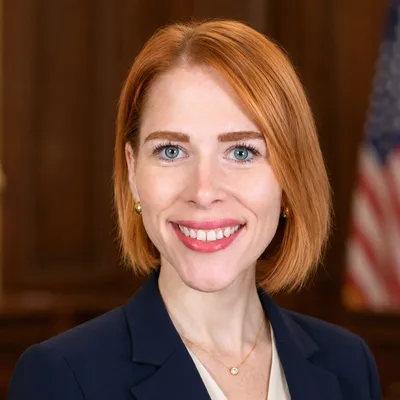
Brittany BaumanPMP®
Works on the Project Management Institute's military team, where since 2023 she's run the programs that let service members, veterans and military families earn PMI certifications at no cost to them. Joined PMI in 2021 on the enterprise operations side. The daughter of two Air Force officers and married to an active-duty airman for 15 years, she's moved through six duty stations, including a tour in Canada, and volunteers as a key support mentor in her husband's unit. Holds a bachelor's in business management, an MBA and the PMP®.
Show highlights
- Both her parents served in the Air Force. She swore she'd never marry into the military and was married to an airman by 20.
- Six duty stations in 15 years of marriage, including a short tour in Canada with a month's notice to leave it.
- Before PMI she worked retail, went to cosmetology school and did hair, until she realized a salon's clients don't move with you.
- She planned to be a crisis manager, inspired by the TV series Scandal, and found the same work inside project management.
- She joined PMI in 2021 on the enterprise operations side and moved to its military team in 2023, as that program was being rebuilt.
- Her opening line for anyone unsure they do project management: if you've PCS'd, you've handled a project. Her second: you can't put it on your PMP® application.
- A spaghetti dinner she ran for a 200-person unit, as a key support mentor, is the kind of project that does count.
- Speaking for herself and not for PMI, she thinks a PCS should count, because the family isn't the one who decided to move.
- She's had the PMP® a little over a year and has been running projects for 15, without ever holding a project manager title.
- She calls the CAPM® undervalued: useful to anyone who supports projects without running them, not just to new graduates.
- She says PMI members can join a local chapter at no cost through the end of 2026 with a military chapter guest pass.
- Her order for funding: credentialing assistance while serving, Onward to Opportunity or Act Now Education while transitioning, and the VA after that.
Brittany Bauman grew up in a military town with two Air Force parents. Her father retired as a public affairs officer, and her mother served ten years as a supply chain officer. She swore she'd never marry into the military, and at 20 she was married and moving across the country to Las Vegas with her husband, who has now served about 22 years in the Air Force. They've been through six duty stations in 15 years, the most recent move out of Canada with about a month's notice over the holidays, and they're now at Joint Base Langley-Eustis. Her career followed the moves. She was pursuing a nursing degree when they met, then worked as a cashier at Ann Taylor and went to cosmetology school because hair seemed portable, until she learned that a salon's clients don't move with you. Photography, graphic design and a lot of volunteering came after. In 2019 she decided she needed a long-term career, finished a bachelor's in business management in two years, and planned to become a crisis manager like the one the TV series Scandal was based on.
The Project Management Institute hired her in 2021, two weeks into a job somewhere else. She started on the enterprise operations side, making sure corporate clients got what they'd paid for, and in 2023 moved to a military program that had existed in pieces but had no one running it. She went back for an MBA along the way and passed the PMP® in September 2025, and she now runs the program's governance and advocacy, including the routes that get the military community certified without paying for it. She tells people she was an accidental project manager long before she had the credential. Her first line on the subject is that anyone who has PCS'd has handled a project, followed immediately by the news that a PCS can't go on a PMP® application, because on your own move or your own wedding you're the sponsor and the stakeholder. Speaking for herself rather than for PMI, she thinks a PCS should count anyway, since nobody in the family chose it. A spaghetti dinner for a 200-person unit coming off a week-long exercise, which she ran as a key support mentor, does count.
Most of the conversation is about timing. She argues that service members wait for transition assistance to tell them that civilians want certifications, when a CAPM® in the first few years of service would already help them run better projects for their unit and write stronger performance reports. Mike asks about degrees from programs accredited by PMI's Global Accreditation Center, which she says cut the experience the PMP® requires to two years. She explains the new associate's degree tier, makes a case for the CAPM® as more than an entry-level badge, and recommends local PMI chapters, which she says PMI members in the military community can join at no cost through the end of 2026. She closes with the funding she'd use at each stage: credentialing assistance while serving, programs like Onward to Opportunity and Act Now Education while transitioning, SpouseWorks for military spouses, and the VA after that. Everything she covers is collected at pmi.org/military.
Transcript
AI-assisted transcript, lightly edited. May contain errors.
Hey, everyone. Welcome back to another episode of Veterans in Project Management. Stuart Bell here, joined as always by Mike Shick. Mike, how's it going, buddy?
I'm doing well, Stuart. Thank you so much for kicking us off. Today, I am particularly pleased to speak with Brittany. Now, Brittany works for the military side of the house for PMI, f- so, Project Management Institute.
it's all on the, outreach, and I'm, and I guarantee that I am underselling the responsibilities that you all have in syncing all, the military into, the Project Management Institute structure to learn certifications and professionalize their, project management understanding. So Brittany, what is exactly...
What do you guys do over with, the, the military services office?
Yeah. So, PMI, we are the, the certifying body of project management standards, projects, programs, portfolios, and AI project management. And my role in the military side of the house really focuses on making sure our service members, veterans, and their families can access our certifications and training at no cost to them, which is my favorite part.
I think our service members and our veteran community have given so much already. We don't need them to come out of pocket, to get certified and really elevate their career opportunities. So that's what my role really focuses on.
Oh, fantastic. Now, if I'm not mistaken, when we first met, this has been a year and a half ago now,aren't you a, a brat and a military spouse?
I am. So both of my parents served on active duty. My dad retired. He was a public affairs officer, and my mom was a supply chain officer. She separated after 10 years, and then after swearing that I would never marry the military because I grew up in a very military town, I, you know, at 20 years old, found myself very married, and moving across the country to, you know, Las Vegas with my husband who's still on active duty.
that, That, that sounds somewhat similar to a lot of your stories in one way or another. So, what service, if you don't mind me asking, were your parents in?
Yeah. So both my parents and my husband, were Air Force, and my husband is still Air Force. I guess once Air Force, always Air Force, or is that Marines only?
I don't know. but my parents were both Air Force, service members, and my husband's also active duty Air Force.
Oh, beautiful. Are you, are you still in Vegas or I- No ... I'm assuming that he's moved from, that duty station.
Yes. We have done six duty stations now, in our 15 years of marriage. He's been in for about 22 years, and we are now in southern Virginia at Joint Base Langley-Eustis.
Oh, nice. Yes. How are you liking the weather there? A little bit, more humid than the first- Yeah ... duty station, right?
Yes. well, people always ask me, "Oh, which duty station is your favorite?" I always say it's the last one, because you never appreciate what you have until it's gone. and in our case, we came from Canada, so we did a short, duty tour in Canada, and now we're in Vegas, so...
or in Virginia, sorry. And interestingly, I prefer the summers of Canada, and the winters of Virginia. I think
I- The
best of both worlds.
Yes, exactly
What was your backgrounds? Did you, were you in the project management world originally before you worked for PMI, or were you-
No ... somewhere else? I have a very
I think military spouses will probably be able to relate to this quite well. I have a very sorted and, you know, jungle gym-like career background. I actually, you know, when I met my husband, I was pursuing a nursing degree, and then we moved across the country and his, you know, work took precedence, so I stepped back from pursuing that.
And when I did reenter the workforce, it was, you know, hourly type roles. I was a, you know, cashier at Ann Taylor. I supported people's acquisition of good clothing and style. And then as I, you know, grew, I decided, oh, I wanna do hair. That's very portable. I could run a salon. I could do all of this.
So I went to cosmetology school, and I did hair for a number of years until I realized that clientele don't move with you. and so- Right ... in that time I also did photography and graphic design, and really, you know, a lot, a little bit of a lot of things, and strategic volunteering. And it wasn't until, you know, 2019 that I really sat down and thought, "I need a long-term career," and it certainly wasn't gonna be in project management.
I was gonna be a crisis manager and really handle all of the crisises of the world. and then I got hired by PMI, so that kind of helped -
Right ...
shape
it a little bit That changes direction.
Yeah. And-
The crisis management piece kind of on the PR side of things, that-
Yeah ... kind of
crisis
management or pretty Yeah
on the ground? So very much, you know, there's a, a very famous crisis manager named Judy Smith. They, wrote a whole television series about her called Scandal, and I was like, "That's what I'm gonna do." joke's on me. It's not anything like the TV show. And so as I, you know, was working for PMI and learning more about what project management is as a profession, I looked back at my entire career, both my paid and unpaid experience, and I realized this is what I've really been doing all along, and there is a lot of risk management and crisis management that goes into making sure your project is successful, and it just became this very natural progression into- being, you know, within the project management space
It's
funny, isn't it? You said there's a lot of crossover. sorry, Rebecca, I was just gonna say, you said there's a lot of crossover. It really is the case that the project management day-to-day stuff that ticks over just ticks over, and then all of the rest of it is- crisis and risk management, really.
Yes. Exactly. it might not be flashy, but it's needed, and I've really grown to appreciate the behind-the-scenes aspects of project management. I don't need to be out in front of people or, you know, doing all of the things to really feel like my work is making an impact.
Got it. So y- you started with PMI in 2019, so you've been with them seven years?
no, so I've been with PMI since 2021. 20- yeah, 2021. I'm like, "Oh, I have to think about it." I went for my bachelor's in 2019, and I graduated in 2021. So I went back to school and got, you know, a business management degree.
And then as soon as I graduated, I was really fortunate to start with a different organization. And then about two weeks after starting with them, PMI found me and, you know, I took that opportunity to solidify, you know, a more long-term career opportunity with PMI. And so I've been with them ever since.
So going on, five... I think we're past five years at this point.
Oh, my goodness. So did you start working on, military affairs with PMI right out of the gate, or did you start in another role and then find your, yourself supporting, the military services side of the house?
Yeah, so that's a great question.
I did not start in the military side. There wasn't really a solidified military side of PMI when I joined. They were just kind of restarting that aspect up. So I actually started on the B2B enterprise side for post, you know, engagement operations. So very operationally heavy, making sure our clients got what they needed.
lots of task management that was rolling up into bigger projects, and it really gave me a great working understanding of what clients are needing in project management and how to manage, like, the smaller components of a project. And then in 2023, I made that switch to join the military vertical, if you will.
Oh, fantastic. So,
But that's interesting that there wasn't a strong military piece at OIC. Was it there before and then it just fallen by the wayside and they restarted it, or
from scratch? I believe so. That is my understanding, is that we had like a government piece to it, and that there w- there were people doing this work.
The, you know, the base infrastructure was there, but there wasn't a dedicated team or a dedicated person really overseeing that. It was at some point somebody started it, and then, you know, as roles changed and evolved, those- ... duties, you know, kind of just kept getting passed along to other individuals.
and then when I came and joined, you know, the North America team, and based on my background with over, you know, the two and a half years doing strict operations, it really... I- it gave me a great baseline to say, "Oh, I see what's going on here," and really wrangle that in and say, "Okay-" "... we're gonna actually develop this into a really well-oiled, machine and a really well-oiled program."
And so it really was kismet that I had that operational background to start before stepping into my current role, so I could really understand what needed to happen.
But to your point, Stuart, I, what I think is particularly interesting is, you know, project management was born, in some respects out of the military.
i- you know, not only as a profession, but from an academic perspective, s- a lot of the, the tools leverage came from government service. And so, PMI having tentacles, so to speak, into that space certainly makes sense. But w- so when did the, military services side really start formalizing then, at least this iteration of it?
So I would say probably in 20- late 2023. It's always been there. Service members have always been able to access our certifications on various programs like the VA, like COOL or Credentialing Assistance. We've always been on the Spouse Works scholarship. But the awareness of that and making it, you know, being able to provide a streamlined experience on how to use it, what steps are needed for that service member, how can we support a veteran and, you know, engaging with them, that we really started putting in the work on that in about 2023, 2024 when we realized, oh, hey, like, this is bigger than any of us could have imagined, and it's more desired than I think any of us could have imagined.
So let me ask you this, if you don't mind, Brittany. it sounds like it's very much on the certification side, which, you know, to a certain degree makes sense because most people are aware of the Project Management Professional certification, possibly the, the CAPM or Certified Associate in Project Management, as well as the other certifications that you all, govern and develop.
Now, there's another side to the educational realm, not, m- you know, just looking at a accreditations pers- per se, is the Global Accreditation Center. And, it offers a, an academic accreditation to project management programs where universities and colleges across the globe- ... can earn that certification.
and what it does is it reduces, one, it validates the quality of the education. Two,it offers, reduced experience time for those who are seeking certification- But it also gets PMI's stamp of approval. So, how much work do you all on the military services side of PMI interact with PMI GAC in...
You know, part of me thinks, "Hey, you know, certifications are great," and certainly there's a tangible, result for the organization as a whole, the enterprise as a whole. But then when we take a step back and look at it particularly in a military context, you have an undergrad and graduate degree programs that are certified, through your Global Accreditation Center.
And oftentimes the military and government type of work look towards degrees as qualifiers for promotion. And so, h- I know I set the stage with that and it was a little bit long-winded, but ultimately it comes down to the question of what kind of work are you guys doing, not on the certification side, but on the actual, education and the transformation side of education through, through and with the Global Accreditation Center?
Yeah, so our Global Accreditation Center, like they are fantastic partners. I will say they have such a well-run program over there. And while that is handled by that team, we are always looking at how can we better collaborate with them. you know, I even think about our military universities and our academies, and how can we as PMI certify not just, you know, a standard university, which we do all of the time, and that's wonderful, and there's often crossover programs like GI Bill, Yellow Ribbon programs where our GAC schools are also participating in VA, approval.
And so our service members can go to a GAC school to get their certific- to get their education and then come out prepared to sit for certification. So there's that component of it. But we're also looking at how can we engage directly with our academies, like the Air Force Academy, the Naval Academy, West Point, et cetera, because we do understand that there is this need to start early.
That is one of my... I, well, I'm a foot stomper on the earlier you get certified, the more valuable it is long-term because you learn to develop- ... those skills throughout your career, as opposed to waiting until the very end, like a lot of us do, myself included, to get that certification and now, you know, you're not playing catch-up per se, but you don't have those years of, you know, standards experience.
So we're always looking at how we can, better partner with universities. But to your question, a lot of the universities are on our GAC program are also approved for GI Bill funding for our students, and they often have a great tie-in too with our local chapters who often have military liaisons.
And it really creates, you know, for lack of a better word, a, a perfect flywheel of, you know, getting them educated, getting them involved in the community, and then getting them certified so that they can go back into the community and, one, execute, the duties of the role better, but also stay engaged with other professionals in the project management community.
Yeah. y- you know, it's, I look at this and,the- there's such tremendous opportunity because certifications are certainly, fantastic. they are a signal to, employers and coworkers that you at least at a bare minimum have that foundational understanding. it, but, then you look at the educational side, whether it be a bachelor's, and it seems like GAC is more,and of course, correct me if I'm wrong, but it seems like it- it's more towards master's degrees because, you know, and there's various reasons for that, and I'm not gonna speculate on it, all of them.
But, to be able to take a transformative experience and say, "All right. Yes, I know-" How to do the work, but now I can hone each one of these tools and techniques and understand, to go with older terms, inputs, tools and techniques and outputs, and to ultimately deliver value to the organization. And if you're in the military seeking a way to do that, it seems like, higher level education is that fantastic pathway.
And then the, the icing on the cake or the bow if you will- is a industry-recognized certification.
No, 100%. I think the way I look at it, and this is, you know, as somebody who I would consider myself a late learner, I didn't go to school till later in life or at least finished going to school later in life and then I did a lot very quickly.
You know, I got my bachelor's degree in two years. I took a year off and I actually went back and get, got an MBA. and then I eventually got the PMP a year after that. So I was, you know, very late, but very fast burning. I think when we're looking at education it really does provide that knowledge base, and the certification and this is how I talk about it with our service members and our spouses, is your degree is wonderful.
It provides you that knowledge that you might not have otherwise had, but it shows your commitment to a thing over a period of time, whereas that certification takes that knowledge and validates that you have the ability to apply it and execute on what you've learned. And so when we're partnering with our schools, and we bo- I believe currently it's bachelor's and master's programs, and even some doctoral programs are eligible.
I know that there's, you know, been discussions about expanding it even to an associate level, colleges just so that we, again, can get in early, reduce that barrier to entry. But we're looking at how can we best prepare them to execute on this knowledge that we're teaching them. And when we've got somebody coming out of, you know, university with a GAC bachelor's degree, what certification best lines up with where they're at in life?
That's probably a CAPM. They might not have had professional experience if they're a young, you know, what I might consider a traditionally aged college student. we want them to start immediately. Like, let's get you a CAPM, let's integrate that into your education. And then as you look at more master's levels programs or an MBA, for instance, how can we get them into that PMP?
Because you have that professional experience, and so you're combining truly the two best aspects, is the knowledge and the validation of execution, into one overarching program to benefit, you know, their career and their both short-term and long-term goals, whether our service members, their families, and others in the community.
Beautiful.
And talking about the getting in early, which I think we've had a couple of podcasts recently with people who kind of, "Okay, I'm transitioning. Now what?" It's kind of like that last minute I need to do something. 'Cause if it's an element of the structure that we're all involved in, it doesn't necessarily We're very comfortable with the structure and the routine and what we do in day-to-day and don't necessarily think about years down the track.
So that aspect of getting people involved early, do you think it's more of an awareness thing or an accessibility thing? Is it kind of giving people the o- options that exist or just where to go and execute on it?
I think, and this is, I'll say this specifically for, like, our currently serving members, I think it's an awareness about the value and importance.
So often, and, you know, I speak from experience as my husband has gone through TAP recently as we're preparing for, like, that next phase, in life and he's, you know, I don't know when you're considered a transitioning service member, but we are well on that way. is so often they, while you're still in, you're not thinking about how can I be better at my job in a way that translates to the civilian world?
It's what does the military look for? And what do they say is important? And like, oh, a certificate, why would I get a certification if it's not gonna get me more money right now? And but as soon as you start going to TAP, as soon as you start doing that pre-separation preparedness, it's get your certifications, get your education.
This is what civilians want. And so I think it's an awareness that the value is not limited to post-service experience, that there is value- ... in getting a, even a CAPM within the first five years of entering the service. So because you wanna be able to show your leadership, whether you're on the enlisted side or the officer side, that you can support and run a well-executed project because it's better for everybody.
It's better for you as a service member, it's better for your unit, and it's better for the military. Rather, what we often see happening is, "Oh, well, it's not gonna help me get a promotion. I'm not gonna use this every day." Or my favorite is, "That's not really my job." So they don't correlate what they're doing as project management, which I was guilty of myself, because there's nobody there to explain what you're doing is a project, and guess what?
There's a really good way to do it well.
Yeah, y- you know, Stuart, I think this is a conversation that you and I have had, on probably more than one occasion. Brittany, y- you know, what you're articulating right there is, The understanding that this ride is going to come to an end at some point.
Moreover, if you do something right now, whether it be a project management, a bachelor's or master's, or you earn your Certified Associate in Project Management or PMP, the, the fact of the matter is you're still delivering value to your organization. And while there may not be a tangible- you know, pay raise that comes from it immediately upon completion, that sets you up.
that, you know, I'd love for people to start thinking about, depending on where they are their, in their career, on, oh, I need to get a master's degree to get promoted to, say, major, or I need to have a bachelor's degree to get promoted to senior NCO or, or- ... what have you, depending on the branch of service.
That is the career focus and mindset that, that creates the planning, a- as the trigger to start doing those type of things. But when you s- take it seriously and say, "Hey, now I'm earning it earlier on in my career, I am t- following the best practices according to the Project Management Institute," if it's a certification, or, you know, leveraging the tools and understanding that transformational experience through, a higher education.
That is actual value that you're creating to your organization- ... which translates into successes, and ultimately into your, enlisted performance reports, your officer performance reports, whatever, term you, you use based on your branch. Ultimately, you're delivering value which reaps dividends in the future.
And then, oh, by the way, you get to practice your profession of project management. So when it comes time, when this ride does come to an end, which it will, you are positioned, and y- not only can you speak the language, but you can actually do the job i- in an effective and efficient manner according to principles.
So you're not just simply parroting something that you memorized in, you know, out experience, and you're now operating at a level of a senior project manager, possibly a, a program manager or portfolio manager with the credentials that justify it.
No, 100%. And I, you know, the way I look at it is I have a PMP.
I got, I personally got my PMP, last September, so I'm one year. I'm a one-year, one-month PMP. But I've been doing projects for 15 years, you know? I, whether I was employed or not, whether I had the title... And for the record, I've never had a title that said project manager, but projects were, have been a key aspect of each and every one of my roles in different ways.
And I think that's the other thing, is people not putting two and two together that the work that they're doing every day is either, A, a project in and of itself, or B, in support of a project. And- Yeah ... we wanna make sure that our service members and their families are in a position to quantify and validate their experience, and that is what the certification does.
And, you know, when you're looking at, you know, I'll use a junior NCO or an airman or an, you know, a soldier, a young soldier early in their career. While that might not lead directly to a promotion, getting the certification, it does show your desire towards professional development, and it gives you the framework to operate at the highest level, for your project success.
Which does breed in and of itself the opportunity for greatness, in that if you are doing your job well, not just, "Hey, I'm showing up and I'm doing the work," but, "I am doing it very well. I'm maintaining my metrics. I'm on time. I'm under budget. I am meeting my milestones, and I can quantify that." That's going to speak loudly when you go, you know, for promotions, when you're writing your, we call them EPBs in the Air Force, and your supervisors will be able to point to you as a subject matter expert in the area.
Which will help you both short and long-term. And then as, you know, you go through your career, whether it's, you know, a single contract term or you are a full, you go do the whole career, the whole 20-plus years, you will then be building on that throughout your entire career.
Yeah. Well, and when you were talking, you're s- you're the E4 or E5.
You earn a CAPM,Certified Associate in Project Management. You have that fundamental understanding, and you can speak the language what your senior NCOs and officers generally will speak and understand. And so now you're able to have conversations and have an understanding of what is being discussed and why the interconnectiveness of the, the discussions between communications and risk management, you know, the various different performance of it means out there, the g- overall governance,to start with, why things are talked about and the manner in which they're talked about and the way forward.
n- not to, to pivot off of this topic, because it's certainly important and the value of showing and demonstrating your understanding is certainly there. But to go to the tangible aspect that you were referring to, all right, well, let's say you're that,E4, E5, maybe an E6 that, i- is interested in a Certified Associate in Project Management.
The last numbers that I saw for published, I think this was, 2023, maybe 2024. the, the median salary was approximately 72,000. Wow. Upwards of 90,000 in the civilian market. Are you, is that still relatively accurate? Or y- or based on your numbers that you guys s- have pulled for, i- is it any different?
No. I think... So I pull these numbers actually fairly frequently for our military spouses as well, who are looking at how to, you know, quantify their own experience and, you know, look at- Readily accessible jobs that they'd be great fits for. So according to the Department of Labor from the last time I checked, a project coordinator or entry-level project manager, you are looking at, you know, not six figures quite yet 'cause you're still building that experience, but definitely 68 to $75,000 is the numbers that I was seeing.
But again, based on your experience and how you're able to express that, you know, it can be higher depending on your role and location. And of course, the responsibilities. And I think when you are positioning yourself as not just an entry-level project manager, but a certified project manager, and yeah, you might not have 5 or 10 years of experience under your belt, but you do have that certification that validates your expertise and the ability to execute on your knowledge in th- in those projects.
That is gonna place you, you know, higher in the employment pool of, "Hey, I know what I'm doing. I'm not just talk, I'm action, and I can walk in confident and prepared. My spin-up time might be less. you know, I'm gonna be able to hit the ground running with an employer," and that's valuable to our employers.
100%. And, you know, just, as a point of, clarification for folks, when we look at Department of Labor and the Bureau of Labor Statistics, just as a reminder that's always looking back a year- ... to, year plus. So that's not necessarily what people are paid today. Right ... if you really want to see, you know, you take that and then take the rate of inflation, and maybe that'll be close.
But ultimately, th- this is data that, that is at least a year old, and it's not- ... because BLS is trying to be mean about it. You just gotta collect the data, right?
Yeah. Well, and I will say, too, you know, that in that instance we're talking about the CAPM. I know the PM- PMI, we have published data about, you know, we have our annual salary survey, and I believe the last time I read it from, I believe it was our 2024 or 2025 salary survey, came out and said that the average PMP is making approximately $135,000 a year.
So, you know, as you get that experience and as you, you know, grow within that profession, there's certainly room to grow. And you have that ability. You know, I can speak for myself where I've, you know, I have received promotion, I have received pay raises within my own company due to me getting my PMP as, you know-
Yeah
one of many factors. And What that shows is not just my commitment to growing myself, but my willingness to do so in a shared framework and methodology. You know, to your point, you were talking about junior NCOs and, you know, lower enlisted being able to speak that language of their senior NCO counterparts and their officer counterparts.
Let's also talk about that civilian sector, where they are able to communicate very well, where you're speaking the same language as your civilian counterparts and your contractor counterparts. So it really is that whole, it's a 360 holistic of I'm bettering myself, I'm bettering my unit, and I'm building a, you know, stronger foundation for my project so I can communicate across branches, across ranks, and across sectors.
it's another point for doing it early as well. The idea that you may have been doing this work and then coming towards transition, you're trying to plug the gaps and build the language. But doing it early, having that language as a framework that you can not only plug in the examples as you're going along, 'cause you've just got more of a longer time frame to do it, but also orchestrate that a little bit and look for opportunities more, a little bit more proactively.
It just makes the whole job so much more easy, rather than leaving it to the last second and trying to retrofit. Just kind of be a little bit more deterministic about it and having that set from the start.
Well, and to, to that point, Stuart, you know, when you're working out or say you're getting ready for a physical fitness test, of sorts.
Yeah, you have done it in the past. you may have ran in the past. You may have done push-ups, sit-ups, pull-ups, what have you, in the past. But if you're not constantly flexing those muscles and working on it in a m- in the correct way over and over again, getting those reps in, so to speak, are you really going to be able to be proficient and effective and efficient in your operations in project management if you're not flexing those muscles or really professionalizing them or validating them until right before you walk into the test?
Which would be the interview in the civilian side. I mean, i- if we just take a step back and think about it that way, I... Yeah, you can beat a square peg through a round hole, every day of the week, you know, and bring in more bodies to get things done. But is that the right way to go about it? And are you really setting yourself up s- for success by waiting until taps or something along that lines or, you know, after taps into, straight into the job market
Yeah.
It's a great point. I think for, But people doing those jobs, I mean, we're all talking about people doing the job already, but they might just not use the same language or recognize that they're doing it already. As people are listening to this, they're probably thinking about some kind of project management element already just 'cause of the name of the show.
What- as you're starting to have conversations with people, what are some of those hooks and anchors that people can grab onto and make the realization for themselves that, oh yeah, this is something that I do, and have that confidence that this is the right path for them?
and with that, Brittany, if you wouldn't mind addressing that certainly from the military side, but from the spouse side as well.
Yeah, I think that's great. You know, as somebody that, again, the fun term I use is accidental project manager, 'cause you're not titled and probably don't even know you're doing it, is, you know, the PMI official, right, is a, a project is, something that has a start date, an end date, and a unique outcome.
The first thing I always tell people is, if you have PCS'd, you've handled a project. I then follow that up immediately with, you can't use that on your PMP application. So- ... you know, I wish we could. We can't. But a, you know, a PCS is a project. A deployment is a project. I, and you know, in the Air Force we have something called the Key Support Mentorship Program, Key Support Liaison Program.
Used to be known as Key Spouse, very similar to an FRG. but I, in my capacity as a key support mentor, I'm overseeing the support connections between our families and unit leadership. So if I'm planning a spaghetti dinner because, you know, the unit's just come off of a week-long 24/7 exercise, that's a project, and I'm being made aware of that three months in advance.
Hey, we've got this upcoming thing. That's the start of my project. I've been made aware that we need to have food on a date. Then everything up to that, that's my planning and, you know, getting the ingredients, finding volunteers, cooking the food, you know, all of that, you know, doing the planning. Who's gonna be handling all that?
Then the day of comes, and now we're cooking. That's a project all the way through- Risk
management
Oh my gosh, yes. How are we gonna carry 12 pounds of spaghetti sauce, keep it hot, and are there food concerns? That, that was a big one. Th- and this, by the way, is a real story. I did this for a 200-person unit.
and managing that start to finish is a project, and that is a project you can use on your PMP application or your other, PMI appl- applications. you can't use moves, you can't use weddings, you can't use personal home improvement projects. But those are all really tangible examples of, like, if this is a project, what else is a project?
So supporting unit leadership. I think my husband on his PMP application used developing a hybrid work schedule, as, you know, because... And again, I will say this, 'cause I say this to all of our service member friends, please don't put anything too interesting on that application. We don't care that much, okay?
We just need the s- the start, the end, and the unique outcome. We don't need- We don't need crazy details. We don't want crazy details. But very simple projects still count. Developing a hybrid work schedule for your unit, that's a project. Anything where you're starting it, you're finishing it, and there's a unique outcome is a great, easy project.
y- it's funny, that you bring up can't put weddings on. n- now, I know this is a, th- this can be a debate. l- I was looking at... I believe it was the very first project management journal. and if you're not, for those who may not be familiar, PMI published, what was called the Project Management Quarterly in the '70s and the beginning of '80s, and then it transitioned over to the Project Management Journal.
And, part of the reason that I was looking into this was because, you may or may not remember, Brittany, I'm a, an assistant professor of project management- Yeah ... at Western. And, Western's the, the editor in chief was the first editor in chief of the Project Management Journal. Well, so I was doing some archival research into, you know, the history of Western Carolina with PMI, et cetera.
and in this first journal, one of the examples used as a project was a wedding. In the Project Management Journal. I was like, "Huh. I heard this argument- It is such a good
example.
Yeah, it, well, and so here's- Right ... kind of the, like, sorry, go ahead, Stuart.
I was just gonna say, that's the thing, isn't it?
It's that translating and slowly moving towards people- ... from what they do to the frameworks that we wanna give it. So it's a perfect example. It might not be quite usable enough, but it step stones people towards the next thing that they might have dismissed or not thought about, and then takes them to the naming and the conventions and the things that are needed.
Yeah. Well, but y- you know, here's the argument that, and this is on point, though a little bit on the periphery, so I appreciate the latitude. I think if you're a wedding planner, it's certainly an operations and you can't call it a project. But a guy like me who, you know, like I'm not... That's not my space, that would certainly be a project.
It would be unique to me, to have to do all of this because I'm probab- if I do it, I'm probably only gonna do it once. And while I've participated in my own wedding, you know, I... That was not-
You were there for the ride.
So I will say this. You can use a wedding and you can use a move. You just can't use your own.
Say, just like you can't use your own home improvement project. Oh. And people are always like, "Why can't I do that?" And this is where, you know, I will go on the record as Brittany personally, not Brittany from PMI, but Brittany personally thinks you should be able to use a PCS. B- and here's why. The, when you're talking about your own move, your own wedding, your own home improvement, you know, project, you're the sponsor and the stakeholder.
So- Your metrics could be a little bit like, "Well, I think I did a great job." And so when you're, judge, jury, and executioner, you're doing a great job every day. And that's, I... My understanding is that's the thought process why you can't use your own wedding. But you can, if you are planning somebody else's wedding, that is a project.
I think the PCSs should be c- you know, counted. Again, going on record not as PMI but as Brittany, because it's not my choice that, to move. Yeah. In a traditional moving sense, I've got time to plan. I can scout the schools ahead of time. Our move from Canada, we were notified, it would happen in December and the, the, at the very end of December, 27th.
And we were wheels up, January 25th and to a, you know- Oh, wow. ... to fly to the States. So, you know, to figure out where are we going, doctor's appointments, schools, housing, all of that, is very different than a traditional personally procured mo- move where you're like, "Oh, I think we're gonna move this summer."
as opposed to the government coming in and saying, "Oh, no, you are moving, and here's three weeks notice. Good luck and Godspeed, and no help, and maybe a few broken couches."
O- over the holiday season.
Over the holiday season. And, oh, your kids... By the way, you had just moved, eight months ago, so the forms you're gonna have to fill out for DLA have the most fun.
finance is closed.
So, you know, working through all that. So I understand on, like, the traditional side. But to your point- Yeah ... you can do a wedding. You just can't do your own, 'cause you're gonna say you did a great job.
Well, you know, you do... Y- you know, this is a joke. This is not a pushback. But you do have a spouse that probably could act- Yes
as- ... a sponsor that, that will indicate whether it was a job well done or maybe not so much. Or
a mother-in-law. You know, you could have a spouse or a mother. I'm very blessed. My mother-in-law thought the wedding was great. The only thing I messed up was spelling my husband's name wrong on the invitations.
And for the record- ... we all missed it, due to the fancy font. Those double T's will get you every time. but you know, I want, I really want our service members and our veterans and our spouses to realize that, like, they're doing this all day every day. Whether it's a massive project like a process implementation or improvement, whether that's AI integration into your workforce, which I know is really big at the moment, or whether it's as simple as, you know, leading a spaghetti dinner for a unit of 200, which sounds more simple than it is.
or leading VBS. You know, putting on a, a base-wide event. Those are still projects. And- Fun fact, at PMI you don't have to have the title of project manager for your project to count, and you don't have to receive a payment. That's actually not a question. Your salary-
or your wage while completing the project is not a question that's asked.
They do ask about the project budget- ... but that's separate. And so you don't need to be a paid project manager for your experienced account.
Well, it, and I guess that kinda makes sense as well, and certainly one of the recommendations that I have if you have the, the prerequisite educational background, and then, for those people who don't necessarily know, you need certain number of years based on the level of education.
So if you have a high school diploma, you ne- and you wanna sit for the PMP, you need 60 months of- ... validated project management experience. If you have a bachelor's degree, it's three years. If you have, y- you know, and just to take a step back, 'cause this is new-
er, associates, you need 48 months.
Yes. Yes, they just expanded. Yes. 'Cause they really wanted to lower that barrier to entry is, you know, you have experience, you need a little bit less 'cause you've taken that time to get educated. And, you know- ... education is such a critical aspect. So yes, it's, five years for high school diploma, four years for associate's degrees, three years for bachelor's degrees and higher.
And if you get a bachelor's degree or higher from a global accredited, center for education, and one of our GAC schools, it's actually two years. So-
Yeah ...
they're really recognizing the value- that education plays in supporting your, you know, project outcomes.
Well, a- and even better, if you're like, "Hey, I can't justify this, I can't justify even two years 'cause I didn't go to a GAC accredited school," but CAPM, you don't need experience because- Correct
it's meant to be that entry level, certification that, that gets people used to, the lexicon, sets the foundation. And then there's a tangible outcome of- according to BLS and the data you said it was what, s- 68 to 75,000 approximately?
And I think the CAPM is such an undervalued certification.
People look at it as very entry level, so they associate that with, like, a very, like, a young generation, somebody who has no work experience. But the reality is most people m- or some people might not need a PMP. If you are not a project manager managing projects every day, what if you're just supporting your team and your team is overseeing those projects but, and you don't have any certifications?
You don't need to necessarily have a PMP, but having a CAPM still gives you that framework understanding of the PMI methodology that helps you support your team or helps you be a supporting member of a project team. If you're there as a coordinator or just a general supporting friend, you know, a supportive, teammate, you might not need the day in and the day out PMP aspect, but you do need that foundational understanding and the framework so that you can speak the language and better support their project.
I think, you know, in increasing awareness that CAPM, while it is entry level in the fact that you don't need experience, it doesn't mean it's only for people who, you know, are at the beginning of their career.
Yeah. Well, and just- Yeah ... to go back to the point, sorry Stuart, just to go back to the point- No
real quick on, not having to report your salary.
one of the, the items that I advocate for folks and when I do mentorship, get involved with your PMI chapter. Which is essentially a grouping of PMI, members, and they host events. And, you know, if you wanna get experience, it's volunteer basis, but you're gonna have a budget and you're gonna have a project, and they're c- shockingly, I'm being sarcastic on that, they're gonna use all the correct verbiage and they're gonna walk through.
And so you are preparing yourself for certifications while getting project management experience, while networking with other people in the field which, oh by the way, m- will likely know when their company's hiring for project managers or project coordinators. And so you are, you're hitting a space where you can n- not only network, showcase your capabilities, learn on the volunteer job, so to speak, and add justifications.
100%. And I think, too, it's like there's aspects of, you know, once you're certified, you know all the things you're supposed to do, right? So you have a project charter, and you're supposed to have this, have all your deliverables and your, oh, the word I'm looking for. It starts with an A. I wanna say archives, but that's not right The things that you're, you learn about that you're supposed to do for every single artifact, that's what we're looking for.
You're supposed to have all your artifacts. You might not do that every single time, but if you're involved with your local chapter, you better believe that you are adhering to that p- that PMI standard throughout the entire project. So it really gets you comfortable with doing that. I just attended this past weekend, the PMI WDC, I drove up for it, their annual conference.
That was a production. It was like a mini global summit. There was a gala. There was a whole day of professional... They had fantastic speakers. They had PMI fellows. And, you know, they had an awards ceremony, all of this. And that doesn't just happen overnight. That's a project, and it's put on strictly by our volunteers, which is just such an amazing opportunity to showcase that you don't need to be paid to be doing your work.
And again, all these people, they were, you know, got to be exposed to so many different aspects of project management and have a key supporting role in that, which will also allow them to utilize that if they're on that certification journey
I think that's, that opportunity for people to talk with like-minded people, like no matter where they are on their journey, how close they are to transitioning, whether they're thinking about that civilian career afterwards, the opportunity to engage with those people, to speak the language, to see some familiarity of what other people do doing, particularly if they've got any concerns that they're not in air quotes project managers currently.
They're doing roles that are project management adjacents. But it's a really fantastic opportunity just to be part of that community and start making connections and having conversations about things that are gonna be relevant down the track. Do you feel like the community element is less well-known than maybe just the certification as a badge?
I do, and it's such... Like, that we have very large chapters like PMI WDC, PMI Atlanta, but what I think a lot of people don't realize is that we have over 300 chapters globally with o- like I think 178 to 180 here in the US, and for our service members, their spouses, and our veteran community, that means there is a PMI chapter near you.
And even better, if you're a PMI member, you can become a PMI chapter member, at least through the end of this year at no cost because we do have a military chapter guest pass. And I love my military community. I am one of those all-in spouses. I'm a volunteer. I will do the spouses club. I will volunteer with the unit.
But I also understand that sometimes to grow professionally we need to get outside of our bubble, and we need to network with the community more broadly, and I really think that PMI does such a beautiful job of that. And many of our chapters have military liaisons so that when you do have a service member, regardless of where they're at in their career, but they're like, "I don't know how to like translate my skills.
I'm a military spouse, I don't... Does this count as a project?" They're your sounding board. You can go in and talk- ... to them in person. You don't have to, you know, wait for myself or one of my colleagues to have time on the calendar. You can go to monthly events. You can go and network and learn about how to be a better project manager, learn about what project management is, and then look holistically at your experience and your background and get- You know, mentorship and advice on what would be best aligned with where you're at and where you wanna go.
So just, for people listening, just to clarify, when you say PMI WDC, you're talking- Yeah ... about the Washington DC chapter, correct?
I am. And yeah, they're, they are a fantastic chapter. I am personally a member of the Hampton Roads chapter because that's where we're stationed. but I am very blessed to have the opportunity to travel to DC a lot.
I don't know if blessed is the right word, but it is the word we're using. But what's really cool is, it, you know, that, that's one example. the Hampton Roads chapter is another great example. I'm very close with their leadership there, and they have such a heart for giving back to our military community and being a resource.
And same, you know, I know folks at the Sacramento chapter and at the San Diego chapter, and every chapter I've interacted with has just a passion, not just for project management, but for our service members and their families to really provide a space for them to come network and learn. And I hope that our service members get more engaged.
I hope our spouses get more engaged, and it provides them a, you know, an external sounding board, if you will. So you go, "This is how it is in the military, and this is how it is when I was in or now, you know, I might still be in. But here's how it is on the outside, and how can we align, and how can you grow so that you're- Yeah
balancing both aspects of project management.
So let me ask- Yeah ... you this, Brittany. Are you... So how many people are in your section, of PMI, i- if you don't mind me asking, and what are the various different areas that you're responsible for the outreach? and I'm asking this in part so people have an understanding of what resources PMI provides to service members and how to reach out, how to get involved, and make it happen.
So hopefully, you know, if there is a one mentorship aspect, that people take away earlier rather than the last minute. but, w- tell us a little bit about your organization if you don't mind.
Yeah, so that's a fun question. Thank you.
if I stepped on a landmine unintentionally-
No, no
please, I'm sorry it's totally okay. No. So currently at PMI, we have, I would consider four people on our military team. I- there is myself, and I handle a lot of our program management, governance, advocacy, obviously for our spouse community, raising awareness for our service members, making s- sure that they're aware of the programs out there.
But I really oversee anything that helps them get their certification at no cost to them, whether that's through a federally funded program, a state-funded program, or a community-funded program, like Onward to Opportunity or Act Now education. I also do advocacy for our spouses in that regard. but we then also have Matt Quick, who's, you know, very popular on the LinkedIns.
He does all of the sharing so I don't have to. it's a beautiful partnership we have, 'cause I'm terrible at LinkedIn. but he really is our boots on the ground. Like, he goes out to bases and really talks and connects with service members. He, you know, has 25 years, in the Army. He retired as a sergeant major, and he is just very passionate about that project profession.
And so he's out there on the ground spreading the word. often we'll do webinars and things of that nature. And then we have our policy, person, so we have a dedicated individual that's focused on how can we enhance project management, long term, and what policies can we work on developing with our federal partners, and how can we help our service members retain access to this long term?
And then we have somebody that handles more of our enterprise solutions, so if we have organizations that wanna fund these programs, if they wanna certify their workforce, and he's strictly focused on public sector engagement, so federal partners, state partners. but when it comes to, like, the specific military team and really operating th- those day to days, it's, you know, two and a half, 'cause we do have...
You know, I have a fantastic coworker who helps me do, like, more of the back-end operational aspects. But it's a tiny team. We're small but mighty.
Yeah, it sounds like it. So what are some of the resources, I know you, you threw those out, and, not only are we program agnostic, we're, we're- we're organizational agnostic.
w- we just have a passion for project management, and certainly with Stuart coming from the United Kingdom and a, a PeopleCert PRINCE2,practitioner background, you know, we've seen goodness across all sides. But what are some of the resources that our veterans can leverage to either have a reduced cost or a,or free training, quality training?
Yeah. So the first one that I mentioned is, would be Chapter 31. So we are an approved VA partner, meaning our certifications for Chapter 30, 33, 35, and 1606 are all reimbursable. Th- and that's the exams only. We're currently working on getting our prep courses added, but that's a reimbursement program.
So I always say, "If you need it, it is there, but let's look at some other options." So for our veterans, there's, Chapter 31 Veteran Readiness and Employment Funding, and that will cover your training, study hall, and your exam fee. federally funded programs will not cover membership. I'm required to say that due to US code number five.
but thankfully that-
I was like, "Leslie's talking about to say those words."
Yeah. I... Th- then I did a series of emails. I'm like, "By the way, I would love for you guys to be able to access this, but due to this, you know, ask- I can't do that." But, for our community-funded programs, there's also Onward to Opportunity, and they provide no-cost training to our veteran and spouse community, and transitioning service members.
And if you're an unemployed veteran and you're approved for their program, they will also cover that exam cost and membership cost for you, which is fantastic. So, like, that's my, you know, my number one plug. I love our partnership with Onward to Opportunity. they're a fantastic partner, and they offer wonderful training, and that's out of the University of Syracuse.
and so the, a grant, a wonderful grant-funded program with the Institute for Veteran and Military Families. There's also Act Now Education, which is another community-funded program headed up by, Jay Salter, who's Navy. And so he really has, you know, first-hand experience, and he offers a wonderful training program.
I believe it's under, like, their Cert to Success program. so that's, again, another no-cost resource for service members, and spouses and veterans. other opportunities, I mean, there's so many. There's obviously state-funded opportunities, if we can figure out the bureaucracy of a federal program managed by the state, implemented at the local level.
It's called WIOA. But that will also, cover the cost of training and certification for our service members.
Beautiful. Beautiful. Yeah.
Do all of those offers typically cover spouses as well, or is there a big difference between the two groups?
Yeah, so, WIOA will cover for spouses. Onward for Opportunity will cover for spouses.
Chapter 33, if approved, will cover for spouses. And, the federally funded program for spouses is known as Spouse Works, and they actually just expanded their eligibility to spouses of active duty service members or those on Title 10- orders regardless of rank. It used to be rank-based, and so now any military spouse, as long as their sponsor is on Title 10 or active duty orders, they're eligible to use that.
So it's $2,000, per year with a $4,000 lifetime cap. very similar to the credentialing assistance for our active duty service members or, branch-specific, funding
That's what always pops up when we talk about this, is it's so surprising how much funding is available for people.
Yeah.
I mean, there's always this, the off-the-cuff response of, it's too difficult or there isn't anything.
But actually, even just a little bit of digging and then coming to resources like you guys- ... I mean, there's so much opportunity that people can get right across the ranks and the timeframe that people are in. Do you find that people are surprised once they start looking into it?
I think they're like me, where I had heard of some of these things and I was like, "That can't be real, and it might be a scam."
That's what I thought SpouseWorks was, when it was formerly known as MyCAA back in the day. I was like, "You're not just gonna give me money." ... so I think it's, like, an understanding of which program to use when. I always say, if you're- ... active duty or currently serving, use your credentialing assistance first.
When you're transitioning and you have a good idea, use that onward opportunity, that Act Now Education. And then once you know, use all that, then go to the VA, partly because the VA can be a bit cumbersome, but we are approved. But, you know, really being able to maximize your benefits based on where you're at in your career.
Beautiful.
And again, another example of jump in there sooner rather than later, 'cause some of these things do have timeframes on them and they expire. So- ... if you have to sort of act on it quicker rather than trying to get to it later and some of those- Exactly ... opportunities disappear.
So, Brittany, is there a, a webpage or a particular website other than pmi.org that specifically talks to the resources that you're referring to today?
Yeah, so it's still with all the PMI website, but it's pmi.org/military, and that's gonna have, information for currently serving, for military spouses, and for our veteran community.
Fantastic. Now, y- if you were talking to young Brittany in Vegas, newly married, new military spouse, and yes, you had experience as a brat, but, you know, y- you're navigating your space.
And what would you tell her about the project management field, certifications, how to get started, et cetera?
Yeah, so this is something I reminisce on quite a bit and kick myself. you know, I always say I'd be a lot further along in my career if I would've known more earlier. So hindsight's always 20/20.
But I would say get engaged outside of your military community. And again, I love my military community, but having an awareness starts with expanding your network And don't be afraid to do some research. And if it doesn't sound exactly like what you want to do, that doesn't necessarily mean it's, you know, a bad thing or something not worth pursuing.
So often we're waiting for that exact perfect opportunity to present itself to us rather than just kind of growing into a role. And that's really, you know, looking back, I'm like, there were so many opportunities where I could have, you know, pursued certification earlier because I, you know, clearly I had the time.
I went and got a whole cosmetology degree. But having awareness about professional certifications at the jump is really, you know, a v- a very valuable piece of information I wish I would have had back then. Would have saved me, you know, tens of thousands of dollars. So it's incredibly, it's significantly cheaper than a cosmetology degree or any other college degree for that matter.
but it also is something that employers look for. And so really understanding about certifications, their value, and the programs that are, that exist to support our community in this way.
Beautiful. Thank you. I think that, that topped it quite nicely. Stuart, did you have anything else before we shut down today?
No. It's just another example of the opportunities that are out there, and being able to bridge the gap from what people do day-to-day into a framework that has legs beyond. It's yeah, opportunities all around to start earlier, really echo what Brittany said, start earlier. Those... Time goes regardless, kind of make the most of the moment now and it just sets you up for the future in a fantastic way.
So thank you. Thanks, Britt. And thanks for your time. It's been really great.
Yeah. Thank you both so much. Thank you, Michael. Thank you, Stuart. This has been wonderful.
Fantastic. I really enjoyed it. Love to have you on, sometime in the future as well. and what we'll do is we'll,close it at that, but thank you so much for the work that you do in support of our veteran, our active duty, Guard Reserve, and, spouse network.
it really is, helping people pursue items that they're good at from a professional s- perspective. And, you know, it delivers value. It delivers value. So thank you so much.
Thank you.